
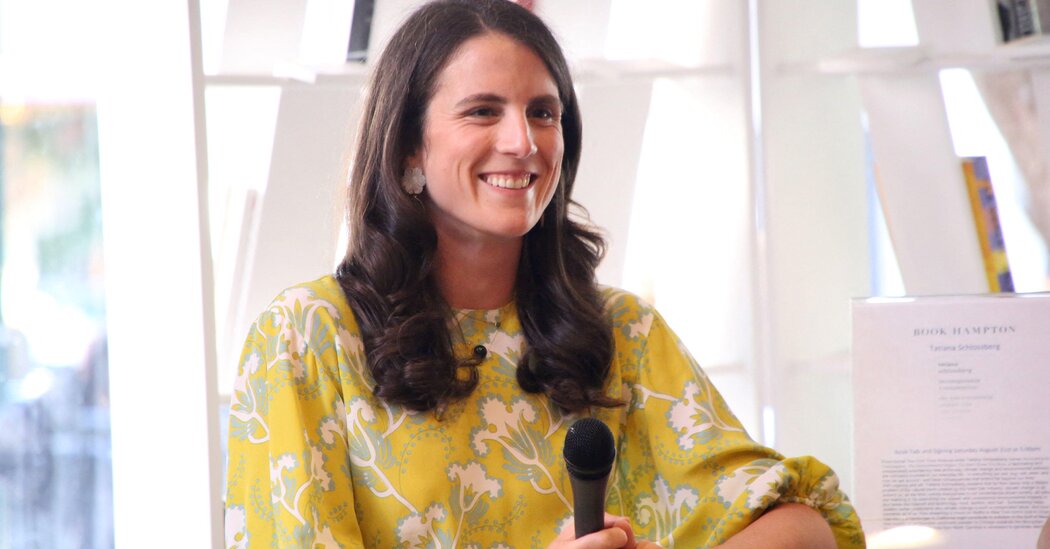
She went into remission, had more chemo, relapsed and joined a clinical trial. There were blood transfusions, another stem cell transplant, from an unrelated donor, more chemo, more setbacks. She went into remission again, relapsed, joined another clinical trial and contracted a form of the Epstein-Barr virus. The donated cells attacked her own, a condition called graft-versus-host disease. When she came home after a stint in the hospital in October, she was too weak to pick up her children.
Her oncologist told her that he thought he could, maybe, keep her alive for another year.
“For my whole life, I have tried to be good,” she wrote, “to be a good student and a good sister and a good daughter, and to protect my mother and never make her upset or angry. Now I have added a new tragedy to her life, to our family’s life, and there’s nothing I can do to stop it.”
Tragedy, of course, has trailed the Kennedy family for decades. Caroline Kennedy, a former ambassador to Australia and Japan, was just 5 when her father was assassinated on Nov. 22, 1963; she was 10 when her uncle Robert F. Kennedy, a presidential candidate in the Democratic primary of 1968, was murdered. Her brother, John F. Kennedy Jr., died in 1999, when the plane he was piloting crashed off Martha’s Vineyard, killing him, his wife, Carolyn Bessette Kennedy, and her sister, Lauren Bessette. He was 38 years old, and Tatiana had been a flower girl at his wedding three years earlier.
Having grown up in the glare of her parents’ glamour, and her family’s tragedies, Ms. Kennedy largely succeeded in giving her own children a life out of the spotlight — a relatively normal, if privileged, upbringing, along with a call to public service that was the Kennedy legacy.