
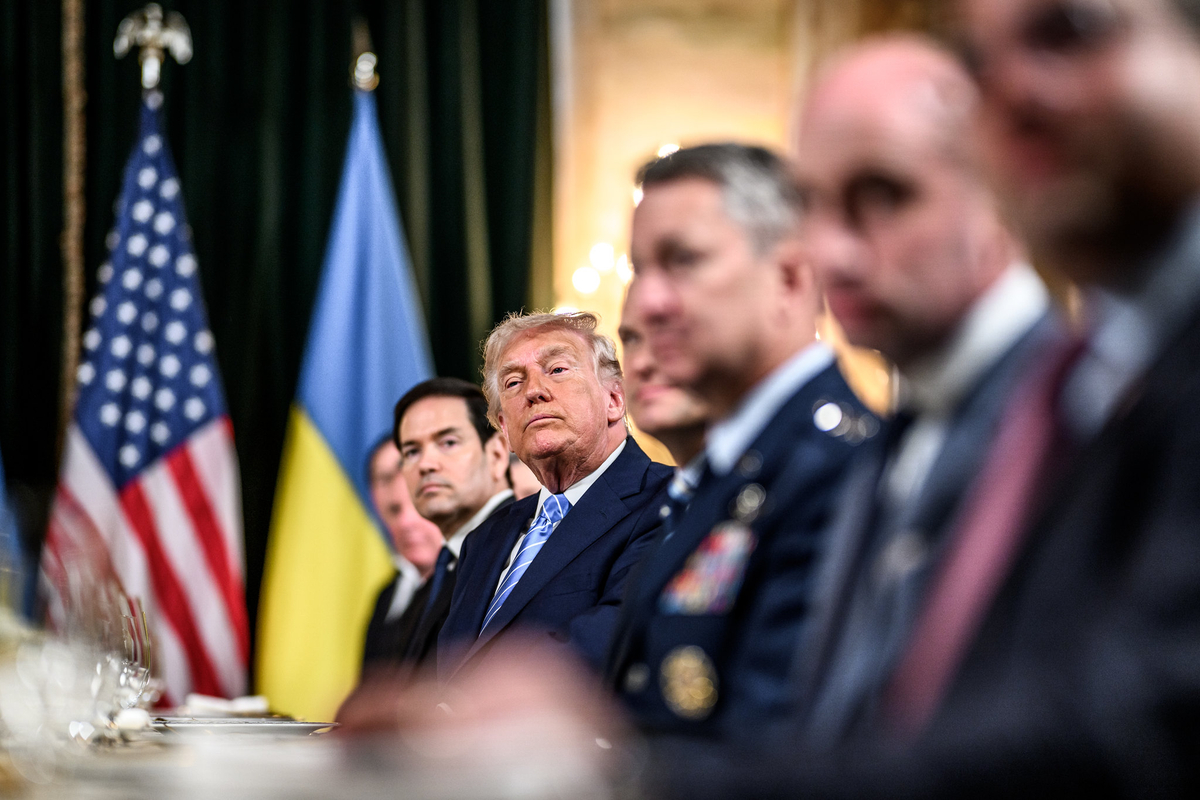
WASHINGTON, DC – Just as the White House was attempting to choreograph a fragile diplomatic breakthrough, the Kremlin reached for an old script.
Russia’s unsubstantiated claim early this week that Ukraine launched a massive drone swarm at President Vladimir Putin’s Valdai residence – an allegation Kyiv flatly dismisses as a “typical Russian lie” – has injected fresh volatility into the most serious peace talks in years.
JOIN US ON TELEGRAM
Follow our coverage of the war on the @Kyivpost_official.
The timing appears anything but accidental. Moscow is now using the alleged incident to “toughen” its negotiating position, according to Russian officials, a move that could complicate Donald Trump’s high-stakes bid to end the war before the close of his first year back in office.
“91 drones” mystery
According to the Kremlin, Ukraine “launched” 91 long-range drones at the presidential residence in Russia’s Novgorod region on Monday, a claim offered without independent verification.
Kyiv was blunt in its response. “Russia has a long record of false claims – it’s their signature tactic,” Ukrainian Foreign Minister Andrii Sybiha said.
The diplomatic fallout was immediate. Kremlin spokesperson Dmitry Peskov framed the supposed attack as an attempt to “collapse” the peace process itself.
That rhetoric landed amid a flurry of diplomatic activity just as Trump hosted President Volodymyr Zelensky in Mar-a-Lago to declare that a deal to end the war could be wrapped up “within weeks” – a trademark burst of optimism regarding a conflict that has defied four years of sanctions, surges, and failed summits..
Other Topics of Interest
Ukrainian Intelligence Claims Strike on Oil Refinery on Russia’s Black Sea Coast
According to sources within Ukrainian intelligence, Tuapse Oil Refinery’s primarily oil processing unit, along with a nearby marine oil terminal, were struck in the early hours of New Year’s Eve.
Despite his own polished optimism, Trump on Monday appeared to give Putin’s account initial weight. He told reporters that the Russian leader had personally briefed him on the incident and that he was “very angry” about the alleged attack.
Other US officials struck a more cautious tone. Ambassador to NATO Matthew Whitaker said Tuesday that the reports remained “unclear,” adding that such a reckless act – if true – would be diplomatically “indelicate” given how close the parties appear to a deal.
View from “Trump world”
Despite the rising friction, figures familiar with Trump’s national security worldview argue that the diplomatic momentum still favors Washington.
Alexander Gray, who served as chief of staff of the National Security Council during Trump’s first term, believes that the media is misreading the US President’s engagement with Putin.
“I do not believe the president is unclear about who Putin is or what his regime stands for,” Gray, now a non-resident senior fellow at the Atlantic Council, told Kyiv Post on Tuesday.
Gray argued that Trump is deliberately shaping the conditions for a settlement by focusing on Russia’s structural weaknesses – military, economic, and demographic – rather than chasing symbolic concessions.
Trump’s willingness to consider American security guarantees for Ukraine, a move often unpopular with his political base, represents an “extraordinarily statesmanlike act,” Gray said, designed to underpin a durable final agreement.
“The longer the conflict continues,” Gray added, “the greater the damage to Russia’s already bleak future.”
Pattern of procrastination
Other seasoned analysts are far more skeptical of Moscow’s intentions.
Paul Goble, a former State Department special adviser and CIA analyst, told Kyiv Post that the recent high-profile meetings – including talks hosted in Florida – have produced “little progress.”
In Goble’s view, Putin is executing a familiar “delay and advance” strategy: signaling openness to a settlement to placate Washington, while manufactured crises like the Valdai drone claim buy time for Russian forces to continue incremental advances on the battlefield.
“The coming weeks – and maybe months – will feature more of that,” Goble warned.
Trust gap
For Kyiv, the path forward hinges on more than a signature beneath a 20-point plan.
President Volodymyr Zelensky is now publicly calling for an international monitoring mission to be embedded into any agreement.
The mission would be tasked with detecting ceasefire violations and, critically, identifying Russian false-flag operations before they can derail the process.
Zelensky’s demand for “direct guarantees” from the US lasting up to 50 years remains a central sticking point.
While Washington has reportedly offered a 15-year guarantee, the White House is simultaneously pressing European allies to shoulder the financial burden and maintain a “direct presence” on the ground.
As negotiators head into January, the peace process is moving in two directions at once: toward a formal framework in Washington, and toward a renewed cycle of brinkmanship in Moscow.
Whether the Valdai claims prove to be a genuine obstacle or merely another Kremlin ghost story, it has already served its purpose, reminding negotiators that in this war, the hardest thing to neutralize isn’t a drone. It’s a pretext.
At Mar-a-Lago, the deal is described as 95 percent done. In the Kremlin, the remaining five percent is where the fire gets lit.