
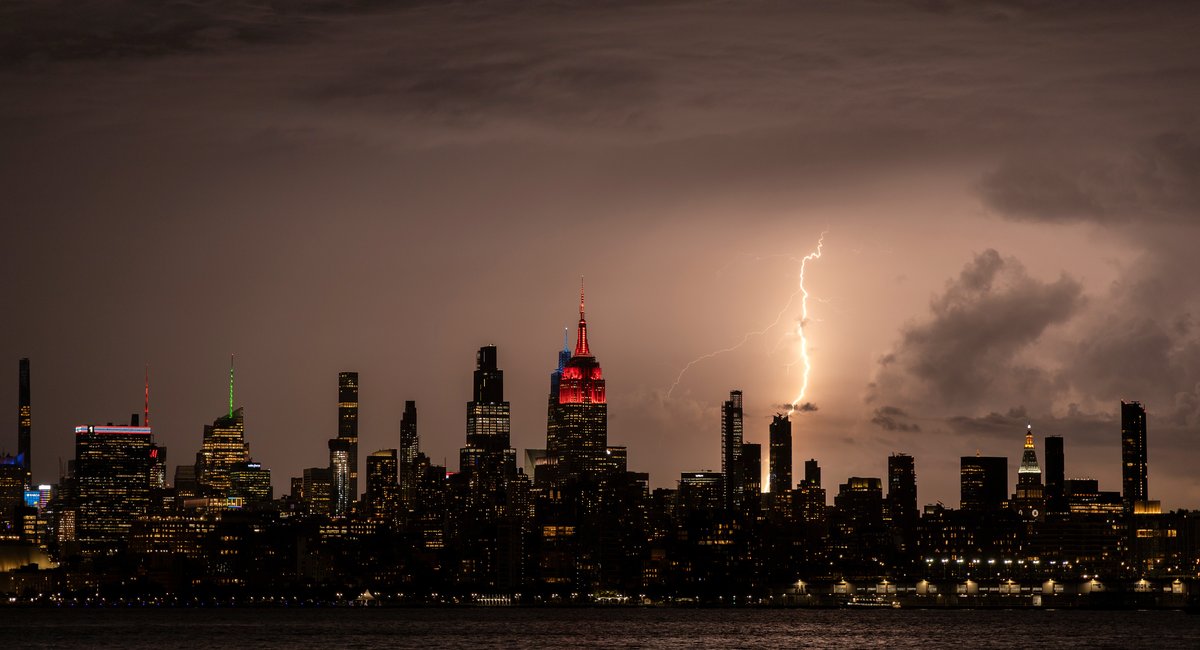
New Yorkers got a stark reminder Monday night that the city’s antiquated infrastructure can’t handle the changing climate.
The downpour dropped 2.7 inches of rain on the city in just an hour — second only to the record 3.15 inches of rain in an hour during Hurricane Ida in September 2021. The storm created familiar scenes of chaos that replayed on social media, including a geyser of water bursting from the floor of the 28th Street subway station, rainwater pouring into a subway car, and drivers stuck on flooded expressways.
MTA Chair Janno Lieber attributed flooding in the transit system to the city’s combined sewer overflow system, which expels a mix of raw sewage and rainwater into waterways during heavy storms. The system has limited capacity, and the rainwater has to go somewhere, Lieber said.
“ The bigger fix is the overall city sewer and storm water management system needs to be upsized to have more capacity to deal with these torrential sudden rainfall events,” Lieber said. “The sewer system gets backed up and then a manhole gets popped and you see that geyser-like condition.”
But that “bigger fix” has a hefty price tag. Gothamist reported last year it would cost more than $36 billion to modernize the sewers to prevent the sewage runoff into the Hudson River, East River and other local waterways.
Currently, the city’s Department of Environmental Protection spends $1 billion a year on sewers and stormwater management, according to Commissioner Rohit Aggarwala. The city is also pursuing green flood mitigation projects, like rain gardens and tree pits, to serve as sponges that better absorb rain.
The MTA announced last year that it would spend $6 billion over the next decade to flood-proof the system, including adding new pump rooms and drainage capacity. Stormwater is a major threat to public transportation. On a dry day, the MTA pumps about 14 million gallons of water out of the subways.
“We’re working with our friends in city government to say, ‘Let’s upsize the capacity because this is the era of climate change,’” Lieber said.
The heavy precipitation resulted in 78 calls to 311 about sewer backups, 52 complaints about catch basins, 10 calls about flooded manholes and six complaints about water drainage, according to an Office of Emergency Management official.
“A widespread high-impact storm system brought prolonged heavy rain, localized flash flooding, and strong winds to New York City, causing widespread travel disruptions across subways, highways, and regional rail,” the city agency posted on X.
Service was disrupted on the Metro-North Railroad and the 1, 2, 3, 4, 5 and 6 subway lines. Portions of the FDR, Cross Bronx Expressway and Harlem River Drive were also temporarily closed. The city’s airports experienced significant delays and hundreds of customers lost power across the five boroughs.
The problem is only going to get worse.
The sea level around New York City is rising twice as fast as the global average. When the ground is easily saturated, more stormwater will run off into streets and homes.
The city’s average annual rainfall is increasing at a rate of almost an inch per year, according to the Department of Environmental Protection.
”At the heart of what we are facing, the rule book seemed to have changed drastically,” Mayor Eric Adams said during a press conference on Tuesday. “In order to change and build out our sewer systems, it’s going to take time and money. That’s something that we’ve allocated to doing so, so this is catching up to the change in our climate.”