
Every year, copyright expires on intellectual property, releasing more into the public domain where anyone can use it. As time marches on, more and more recognizable figures from the 20th century will become available, including Mickey Mouse’s first appearance as Steamboat Willy, Winnie the Pooh, and, as of January 1, 2026, the world’s first animated sex symbol, Betty Boop.
The black-and-white songstress made her debut and was once the most popular character in Hollywood, but the catch is that it wasn’t her 1930 debut that made her a star. It was her 1931 short, “Silly Scandals,” and Fleischer Studios still owns that version for two years.
Boop-Opp-A-Doop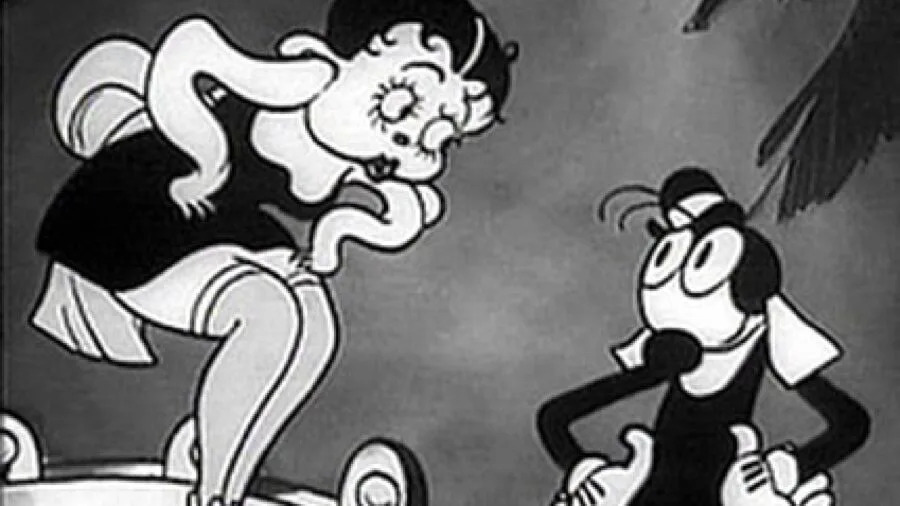
Betty Boop’s Original Apperance
On August 9, 1930, Betty Boop first appeared in the animated short “Dizzy Dishes” as a singing anthropomorphic dog based on a French poodle. The hair is the same, but the ears and, in particular, her nose, are significantly different from the version you remember. Over the course of a year, the dog ears and nose became the classic hoop earrings and button nose, but the flapper-style and sweet personality remained.
Betty Boop 1931-1934
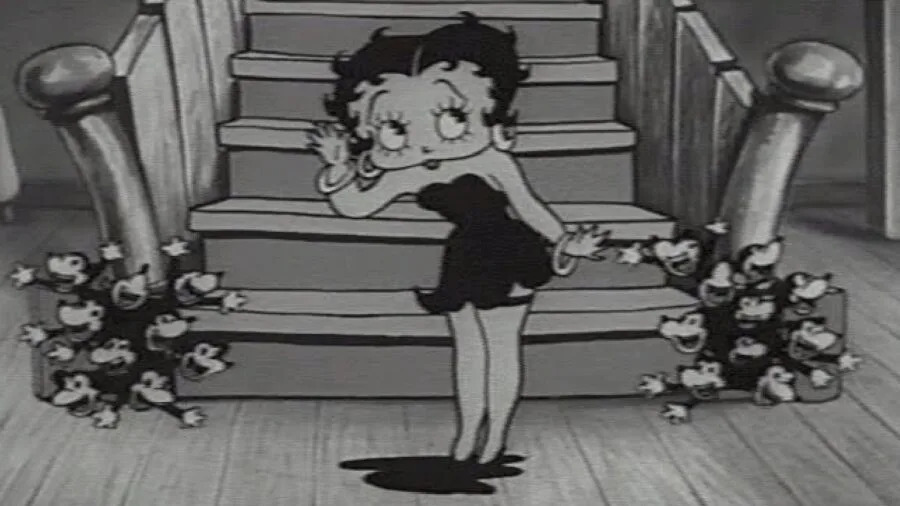
Betty Boop’s time as an openly sexual cartoon character, complete with cleavage, was groundbreaking but also incredibly short, spanning her debut in 1930 to 1934, when the Motion Picture Production Code (more commonly known as the Hays Code) imposed strict, puritanical restrictions on Hollywood. Overnight, Betty Boop started to appear as a housewife, and her boop-oop-a-doop was taken away. Turns out, Betty Boop’s audience was adults, and the new, child-friendly version plummeted in popularity as soon as 1939.
A Web Of Copyright Claims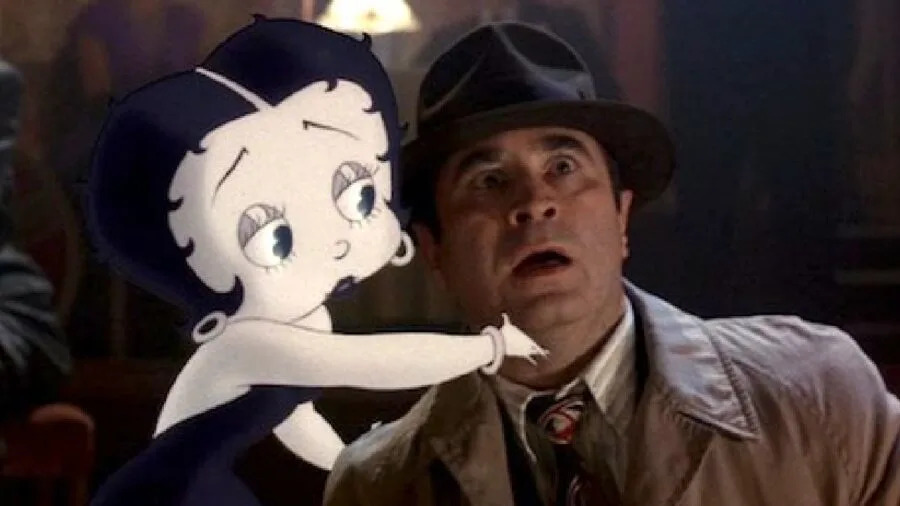
Betty Boop In Who Framed Roger Rabbit
Betty Boop experienced a small resurgence in the mid-80’s with a new comic based on 1930s comic characters, two direct-to-video movies, and a memorable appearance in Who Framed Roger Rabbit, voiced for the final time by Mae Questel, the woman who made her an icon. Now that she’s joining Mickey Mouse and Winnie the Pooh in the public domain, expect her to show up all over the place, and yes, a low-budget horror film titled Boop has already been announced for 2026.
The catch is that since only Betty Boop’s original version is available in the public domain, anyone trying to use her can’t include the earrings, and according to Fleischer Studios, even the name “Betty,” not used until 1931, is off-limits. The studio was actively fighting her inclusion in the public domain because of her lucrative merchandising, which has far outgrossed her appearances in shorts and movies, and will be closely watching to see how she’s used over the next two years to ensure no one uses the parts of her still under copyright.
American copyright changed in the late 90s from life of the author plus 70 years, to 95 years from publication (or 128 years from creation, whichever is shorter). Championed by Sonny Bono, it’s commonly called the Mickey Mouse Law since it was enacted specifically to prevent Mickey, who first appeared in 1928, from entering the public domain in 1998. Though it can be argued that restrictive copyright laws stifle creatives and can leave characters languishing in limbo, the glut of cheap horror films whenever a new character is available is an argument that maybe greedy executives and politicians knew what they were doing.