
A local plumber in Pimicikamak Cree Nation says it may take up to a month to fix burst pipes and other plumbing issues after water froze during a days-long power outage in extreme cold temperatures.
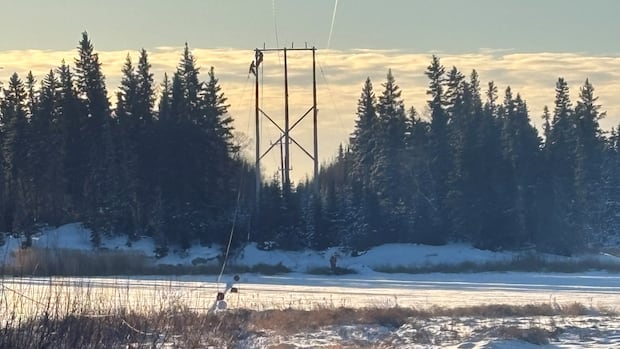
Power went out in the northern Manitoba First Nation, about 530 kilometres north of Winnipeg, on Sunday, when a power line that crosses the Nelson River snapped.
Manitoba Hydro began restoring power in stages on Thursday. Spokesperson Peter Chura said power had been fully restored as of 1:30 p.m. on Friday.
But since the restoration began, residents began reporting burst pipes, leaks and sewage backups, Coun. Shirley Robinson told CBC News Network on Thursday evening.
Randy Spence, one of 10 plumbers working in the community, estimates about 70 per cent of homes there have had damage to their plumbing. He said he’s seen multiple flooded crawl spaces and water pooling in homes’ main living areas — sometimes rising to more than an inch high — during recent service calls.
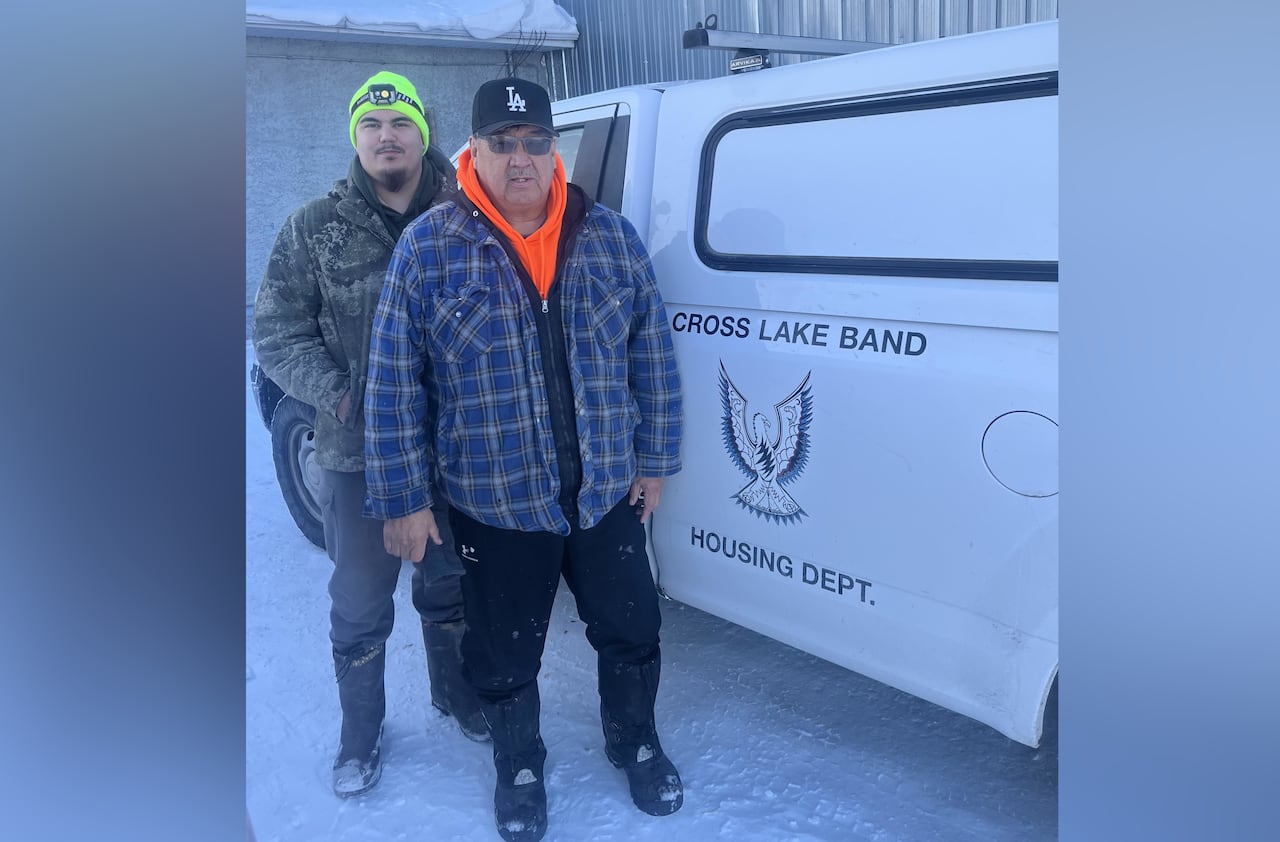 Plumbers Randy Spence, right, and Dawson Robinson, left, were helping Pimicikamak Cree Nation residents with burst pipes on Friday. (Submitted by Randy Spence)
“Oh my goodness, it’s been hectic here,” said Spence, who received more than 50 calls for service within two hours on Friday morning.
He said it may take three weeks to a month to fix everything if the community can’t get more plumbers from outside the Cross Lake area to help.
“Right now, nothing is under control,” he told CBC News, saying he’s seen “devastation” inside residents’ homes.
Spence said pipes began freezing when the power went off late Sunday night, hardening and expanding over the course of nearly four days as temperatures dipped well below the –20 C mark.
“The pipes had frozen and expanded and started busting,” said Spence, adding “everything is leaking” since the thawing process began after power was restored.
“If a pipe cracks, it sprays water all over [and causes] damages to the house,” he said.
But Spence said there’s so much work to be done that plumbers are largely focusing on turning off main valves to prevent further damage.
Chura said Manitoba Hydro is “not responsible for damages caused by outages,” but the utility is “assisting in any way we can,” including redirecting contractors to search for leaks.
Indigenous Services Canada said its emergency management assistance program will provide financial support to fix damaged infrastructure in Pimicikamak.
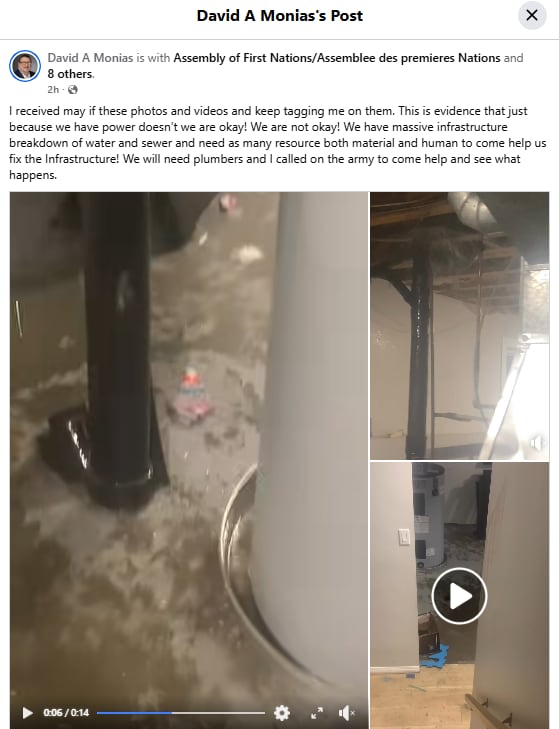 In a Friday morning Facebook post, Pimicikamak Cree Nation Chief David Monias shared videos from a community member whose pipes were spewing water as water pooled on the floor. (David A Monias/Facebook)
Pimicikamak Cree Nation Chief David Monias said the community is dealing with “massive infrastructure breakdown” in a Friday morning Facebook post sharing videos from a community member whose pipes were spewing water as water pooled on the floor.
“This is evidence that just because we have power doesn’t [mean] we are okay! We are not okay!” he wrote.
Monias previously warned that the extreme cold could negatively impact community infrastructure, including home plumbing, as well as water and sewage plants.
Pimicikamak residents are asked to contact band council members if they notice any leaks in their plumbing lines, Monias said in a Thursday video update.
Spence said repairing one house often takes between 1.5 to two hours and he’s already got a long list of people who need help.
“Outside help would be great but it’ll be a slow process if it’s locally done by us,” Spence said.
Monias said Friday afternoon the community is seeking help from licensed plumbers across Manitoba, Saskatchewan and Alberta. He also requested assistance from engineers.
“They won’t be able to fix the stuff right away, but we need people to come in and actually do an assessment of the damage that’s been happening in the community, so we can start making a list in terms of what needs to be done, what needs to be fixed,” the chief told CBC.
Evacuees’ return uncertain
A provincial government spokesperson said about 1,400 people left the community, which has an on-reserve population of about 7,000 residents, after a state of emergency was declared on Monday. Residents evacuated to hotels and sought warm shelter with loved ones across the province.
Despite power being restored, it remained unclear as of Friday morning when evacuees can return home.
“Everybody thinks you can go home right away because there’s power,” Monias said Thursday.
But “we have to assess the damage. I don’t want you to go home and your house is full of leaks and there’s water everywhere, and there’s ice everywhere,” he said, adding that lack of access to clean, running water is “becoming a health issue.”
George Paupanekis has been staying at a hotel in Winnipeg since Tuesday.
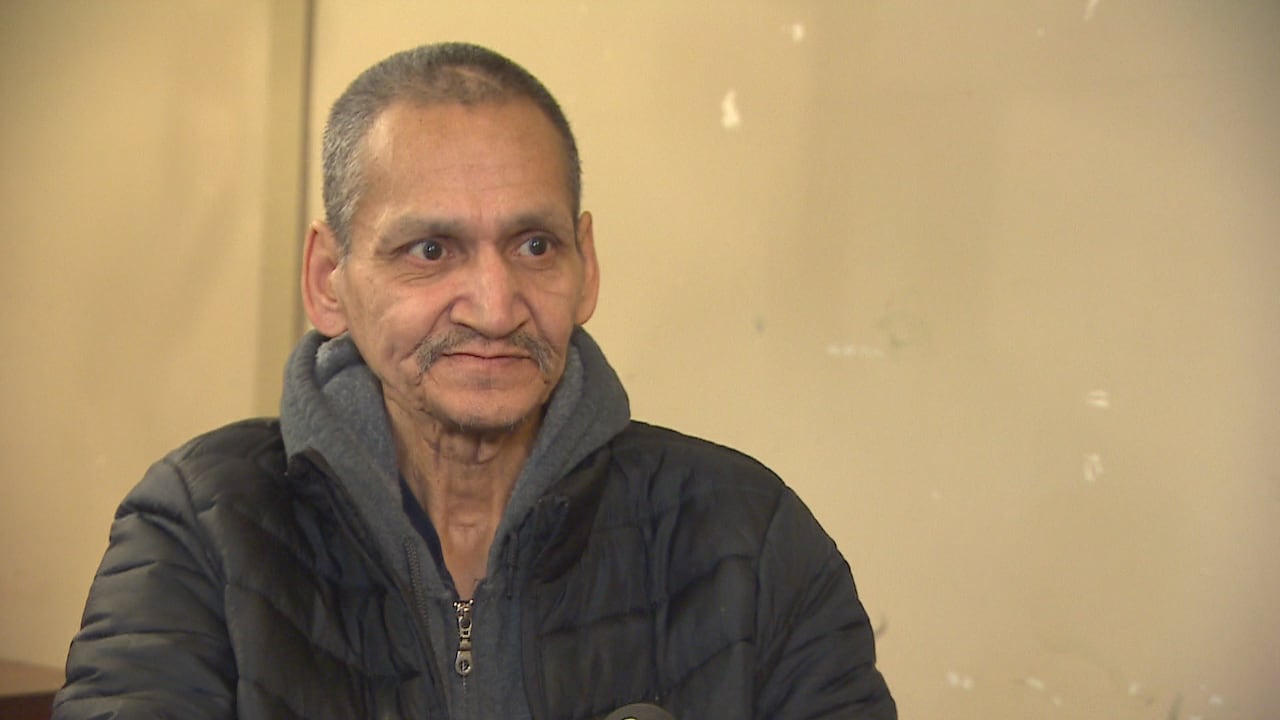 George Paupanekis says his home in Pimicikamak Cree Nation got cold enough that he could see his breath during a days-long power outage. (Travis Golby/CBC)
His home got cold enough during the outage that he could see his breath, he said. Paupanekis said the only way to stay warm during the first few frigid days was to pile on three or four blankets and keep moving.
“It was cold, I’m telling you. Freezing. Freezing cold,” he told CBC News on Thursday, before the power was restored in the community.
He said he was worried about bursting pipes.
“We only have so many plumbers back home,” Paupanekis said, and he thinks it will take a long time before the community’s plumbing issues are fixed.
“I have no idea when we’re going back home. I don’t know how long it’s going to take for our plumbing, because I know it’s going to take a little while,” he said.
For community members who left, the latest evacuation would have been the third in 2025, after they were forced from their homes due to wildfires in May, and again in July.
Monias says leaving and returning to the community so often in such a short period of time has been difficult for many.
“A lot of people are really traumatized by being displaced,” he said Friday.
“A lot of them are feeling lonely … having to be removed from their community. They didn’t want to leave, but unfortunately, you can only withstand the cold so much, and not being able to have water or food.”
Food and water is also being brought in to residents who are still in Pimicikamak, he adds.