
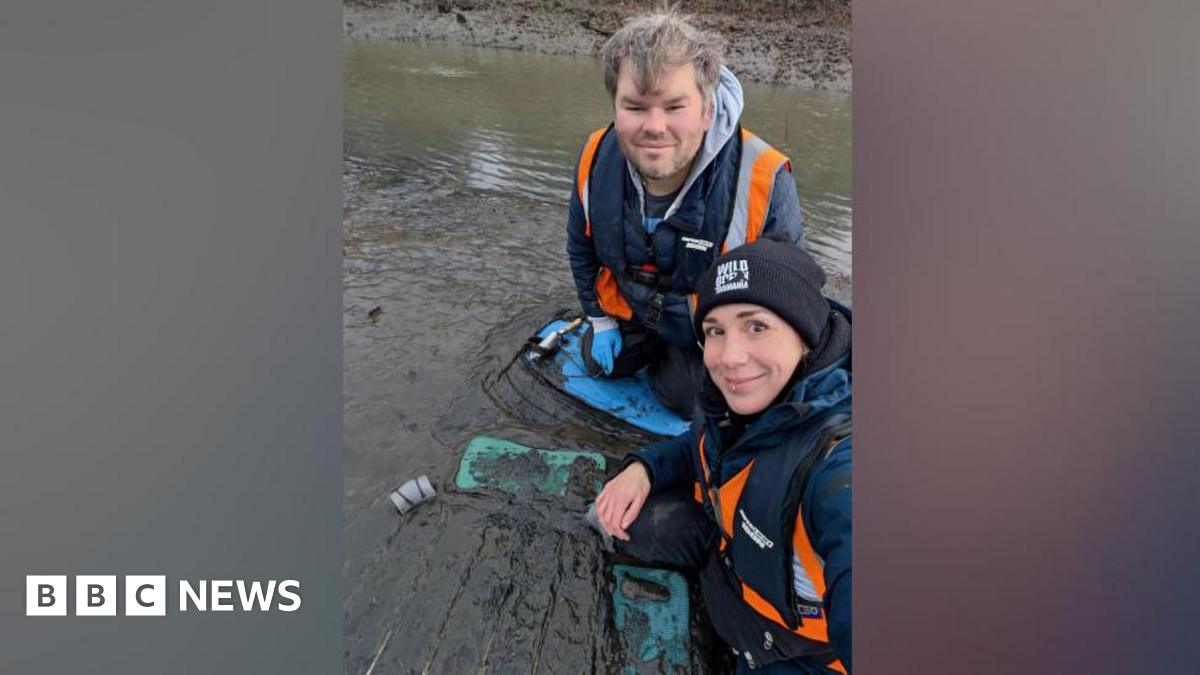
The young plants spent a year at the Hartlepool nursery before being transported to the trial sites, where they undergo biosecurity checks before being planted into custom-made frames sunk in the mud.
The frames help protect the plants as they become established and allow environmental sensors to be securely attached, helping the team track conditions on the mudflats.
Dr Bristow said that, during a recent visit at the River Aln, researchers found plants had remained both on the frames and in the mud.
“Seagrass is considered a bit of a miracle plant,” she said.
“It’s the only flowering plant that’s truly marine. It captures carbon at a really impressive rate.
“It provides habitat for a huge number of species and it also cleans the water, so it helps improve water quality.”