
Laura Kuenssberg,Sunday with Laura Kuenssbergand
Jennifer McKiernan
 Jeff Overs/BBC/PA Wire

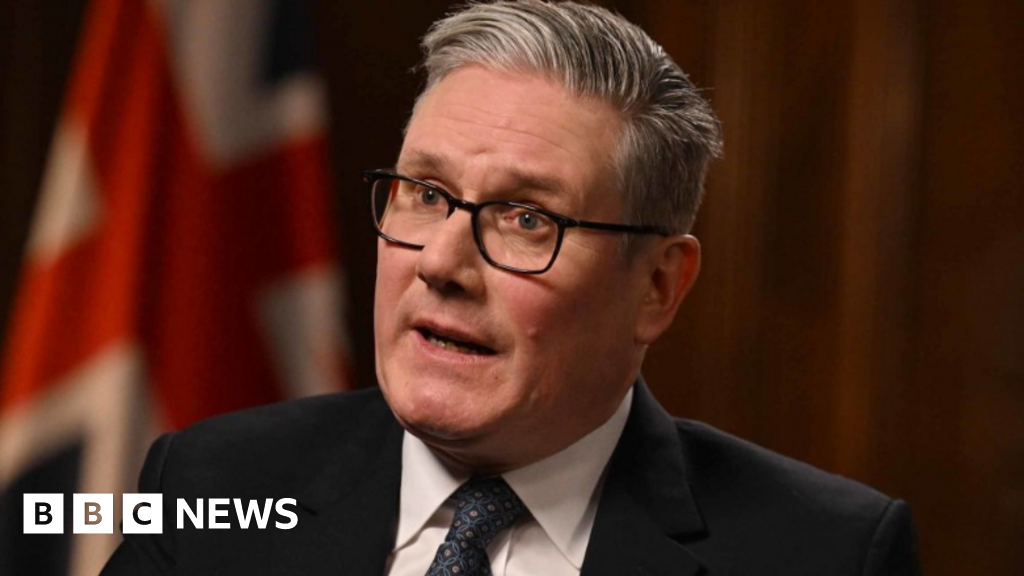
Prime Minister Sir Keir Starmer has told the BBC the UK should move towards closer alignment with EU markets “if it’s in our national interest”.
Sir Keir told the BBC’s Laura Kuenssberg it would be “better looking to the single market rather than the customs union for our further alignment”, in order to protect trade deals with India and the US.
But he was clear he was not revisiting manifesto promises not to rejoin the EU single market or customs union, or to end freedom of movement.
The comments are the clearest indication yet that Sir Keir wants to pursue a closer relationship with Europe in a broader number of areas.
The UK is already lining up with Brussels on some rules around food and agriculture to allow access to the giant economic European trading zone known as the single market.
Sir Keir told Laura Kuenssberg: “I think we should get closer, and if it’s in our national interest to have even closer alignment with the single market, then we should consider that, we should go that far.
“I think it’s in our national interest to go further.”
He added: “I actually think that now we’ve done deals with the US, which are in our national interest, now we’ve done deals with India which are in our national interest, we are better looking to the single market rather than the customs union for our further alignment. And it wouldn’t be in our interest now to give up.”
Downing Street said in December that the government would be sticking to its “red lines” on the EU relationship – which include not rejoining the single market, customs union or returning to freedom of movement.
These are the prime minister’s strongest comments yet on how the UK’s post-Brexit re-set with Brussels could evolve, and follows pressure from within the Labour movement to go further.
Stressing that building closer economic ties was a “sovereign decision”, the prime minister said that doing so had led to the best relationship with the EU “for 10 years”.
“What I’m saying is, there are other areas where we should consider whether it’s in our interest to do the same and align with the single market,” he said.
“Now, that needs to be considered on an issue-by-issue, sector-by-sector basis, but we’ve already done it with food and agriculture and that will be implemented this year.”
Reminded of his promise that “Brexit is safe in my hands”, the prime minster insisted this was not an attempt to reverse it – because nobody wanted to be “picking over the bones of Brexit” but rather “looking forward” at what was in the national interest.
Concerns have been raised that current negotiations around a youth mobility scheme for British and EU students could end up requiring the UK to sign up to the free movement of EU citizens to come to the UK.
Sir Keir said: “That is not the return to freedom of movement, we’re not going back to freedom of movement.
“But I personally think that young people having that opportunity is a very good thing.
“And when we announced just recently that we’re going back to the Erasmus scheme so that young people can study, exchange, research can be done in a much better way than it is now – that was widely welcomed.”
At the end of last year, the UK’s most senior trade unionist, Paul Nowak, told the BBC “the closest possible economic and political relationship with the European Union” was “essential” to boost economic growth by lowering barriers with the UK’s biggest market.
Deputy prime minister David Lammy also told the News Agents podcast last month that rejoining the EU’s customs union was “not currently our policy” – but highlighted that Turkey had seen growth as a result of its own union with the bloc.
Turkey’s deal does not apply to agricultural goods or services but removes point of origin checks, which have proved troublesome for the post-Brexit UK, and has been suggested as an alternative for the UK.
