
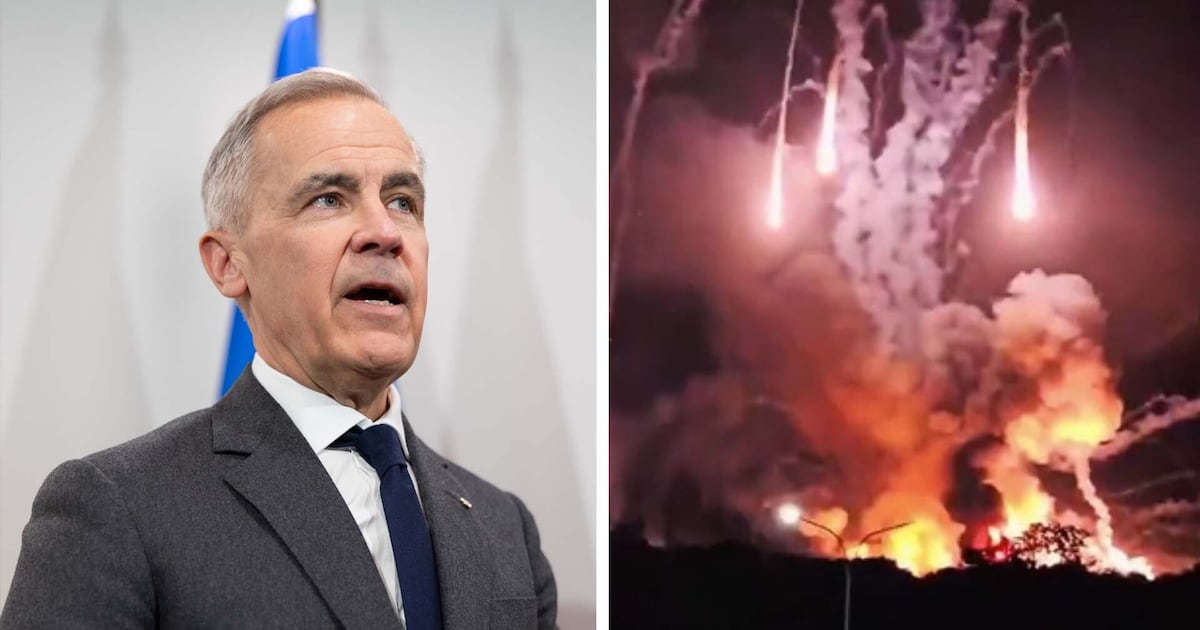
Kamil Karamali reports the U.S. claims Maduro ran a narco-terrorist operation, while Canada warns the strike sets a troubling international precedent
Canadian Prime Minister Mark Carney called for a “Venezuelan-led transition process” away from what he called the criminal regime of President Nicolás Maduro in a Saturday post on X.
It was just one of his requests following the U.S. incursion into Venezuela to remove Maduro from power early Saturday Morning. He also called on “all parties” to respect international law, mirroring a previous statement from Foreign Affairs Minister Anita Anand. Neither response mentioned the United States directly.
Two observers who spoke with CTV News Channel said the prime minister’s response should have gone further.
One of the first actions taken by Canada’s new government in March 2025 was to impose additional sanctions on Nicolás Maduro’s brutally oppressive and criminal regime — unequivocally condemning his grave breaches of international peace and security, gross and systematic human…
— Mark Carney (@MarkJCarney) January 3, 2026
“He looked like he was trying to hold a Fabergé egg as he walked across ice,” remarked CTV News political commentator Scott Reid in a Sunday interview. Reid previously served as communications director for former Liberal prime minister Paul Martin.
“It’s very, very delicately composed” to not be “overtly critical of Trump,” he added – suggesting Carney may be doing damage control against jeopardizing trade negotiations with his American counterpart. You saw Carney and other European leaders react very carefully in that respect.”
“I think it was too weak, personally. I think the consequences of what occurred here are very, very significant and need to have some condemnation.”
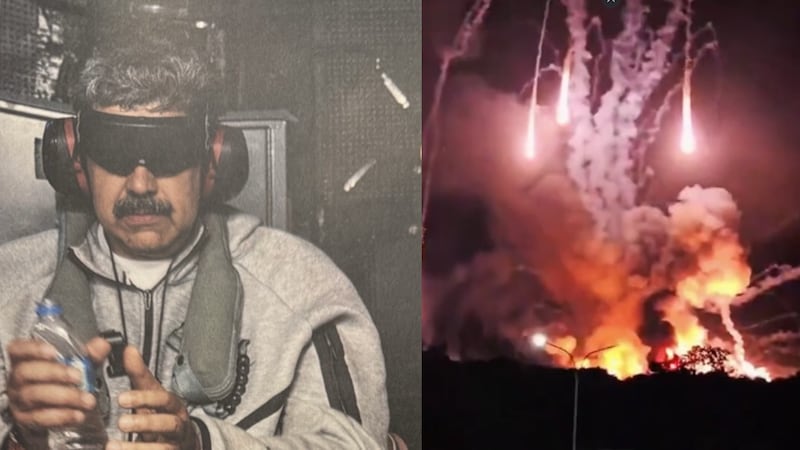 Maduro news Left: Venezuelan President Nicolas Maduro is seen in U.S. custody. Right: a screengrab of the U.S. operation in Venezuela on Jan. 3, as shared by U.S. President Donald Trump. (Image screenshots via Truth Social)
Carney is expected to travel to Paris on Monday to meet the so-called “coalition of the willing” – an association of countries aligned with Ukraine – with hopes of pushing forward a ceasefire agreement in that country’s war with Russia. The meeting was announced earlier this week, though the agenda is now likely to include Venezuela, said Reid. Ahead of the U.S. incursion, Russia pledged “full support” for Venezuela against U.S. “hostilities,” Agence France-Presse reported.
Peter Mackay, former foreign affairs minister under ex prime minister Stephen Harper, called Carney’s response “slow and lethargic.” Carney posted the response on X at 5:15 p.m. ET Saturday. Trump announced Maduro and his wife had been captured shortly after 4 a.m. ET that morning.
Mackay said the statement was “reflective of foreign policy that was ambivalent, waiting to see how other countries react.”
Former foreign affairs minister questions Canada’s response to Venezuela arrest Peter MacKay says Ottawa’s muted reaction to the U.S.-led arrest in Venezuela may strain ties with Washington, as wider geopolitical and energy impacts unfold.
How did opposition MPs react?
Conservative Leader Pierre Poilievre congratulated Trump and called Maduro a “narco-terrorist and socialist dictator … who should live out his days in prison.”
Bloc Quebecois Leader Yves-Francois Blanchet wrote in French that Maduro’s regime “defies fundamental freedoms” but expressed concern with regard to American “military force at the peril of civilian lives.”
Interim NDP Leader Don Davies condemned the U.S. on X, calling the operation “totally illegal and a breach of the UN covenants the U.S. has agreed to uphold as a Member State.”
U.S. strike hits military sites, airport in Venezuela Multiple explosions knocked out power in parts of the city as officials report civilian and military deaths following a rapid overnight attack
How did other countries react?
International reactions to the American incursion were varied.
Mexico published a communique on its website accusing the U.S. of breaking Article 2 of the Charter of the United Nations.
Article 2, in part, states: “All Members shall refrain in their international relations from the threat or use of force against the territorial integrity or political independence of any state, or in any other manner inconsistent with the Purposes of the United Nations.” It also instructs member nations to “settle their international disputes by peaceful means.”
Gustavo Petro, president of Colombia, did not mention the U.S. directly, but wrote in Spanish that his country “reaffirms its unrestricted commitment to the principles enshrined in the Charter of the United Nations, in particular respect for the sovereignty and territorial integrity.”
Argentinian President Javier Milei, a prominent Trump ally, wrote in Spanish that he celebrates the fall of the “narco-terrorist dictator Maduro.”
“Here there are no half-measures or grays. You are either on the side of GOOD, or on the side of EVIL,” he wrote.
French President Emmanuel Macron wrote that the Venezuelan people were rid of Maduro’s “dictatorship and can only rejoice.”
German Chancellor Friedrich Merz wrote Maduro’s election victory was the result of a rigged vote. He also said a legal assessment of the U.S. intervention “requires careful consideration,” and that “international law remains the guiding framework.”