
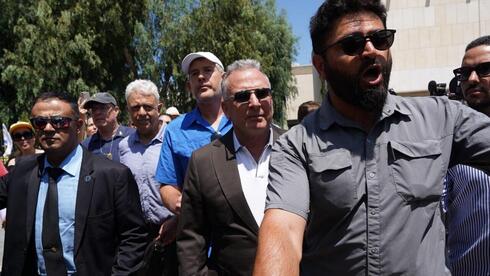
The families of Israeli hostages held by Hamas expressed deep anguish Saturday following recent videos showing hostages Rom Breslavsky and Evyatar David in severely deteriorated physical and mental states after 666 days in captivity. The protest took place as U.S. special envoy Steve Witkoff visited Tel Aviv’s Kikar HaKhatufim (Hostage Square) amid a bleak mood regarding near-term hostage resolution prospects.
Gathering at Hostage Square, surrounded by barbed-wire installations symbolizing the hostages’ dire conditions, relatives called for urgent action to secure their loved ones’ release.
3 View gallery
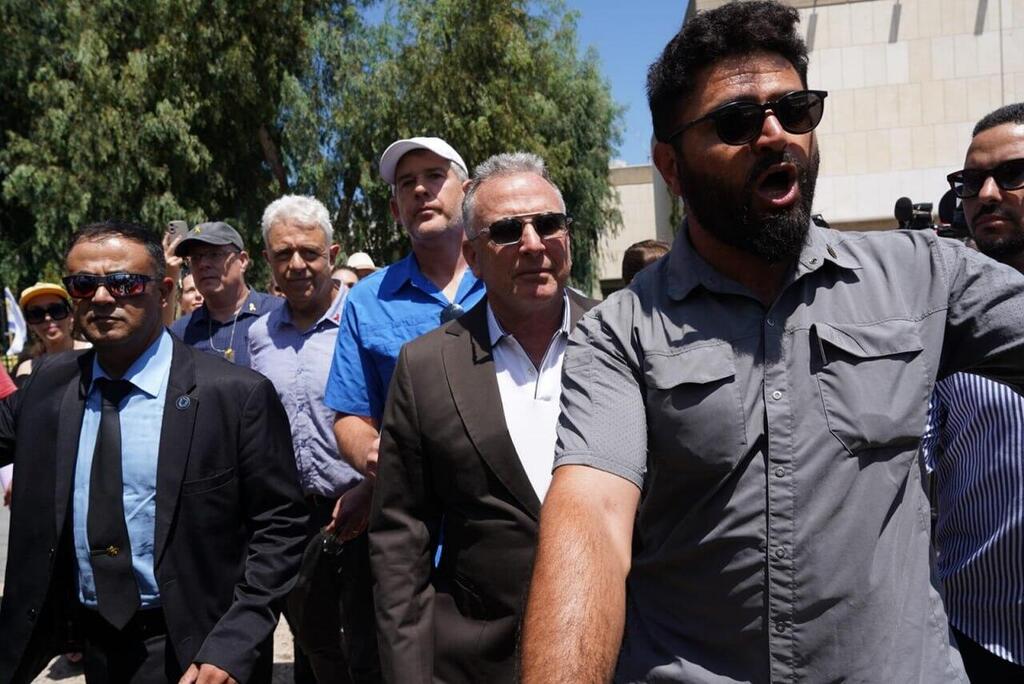
U.S. special envoy Steve Witkoff
(Photo: Dana Ra’ani)
“They broke Rom—he fought for this nation,” said Adam Breslavsky, Rom’s cousin. “Others live because of him. Watching the video once was enough—my nightmares worsened and death felt preferable.”
Einav Tsangauker, mother of hostage Matan Tsangauker, compared their suffering to a current-day Holocaust, urging: “This could have ended long ago if not for political failures. Our children are wasting away while politics prevail.”
Other family members voiced despair and frustration at the government’s handling of the crisis. Michel Iluz, father of Guy Iluz, who was killed and whose body remains in Gaza, lamented: “I’ve lost my trust in the state. Some families are too broken even to attend.”
3 View gallery
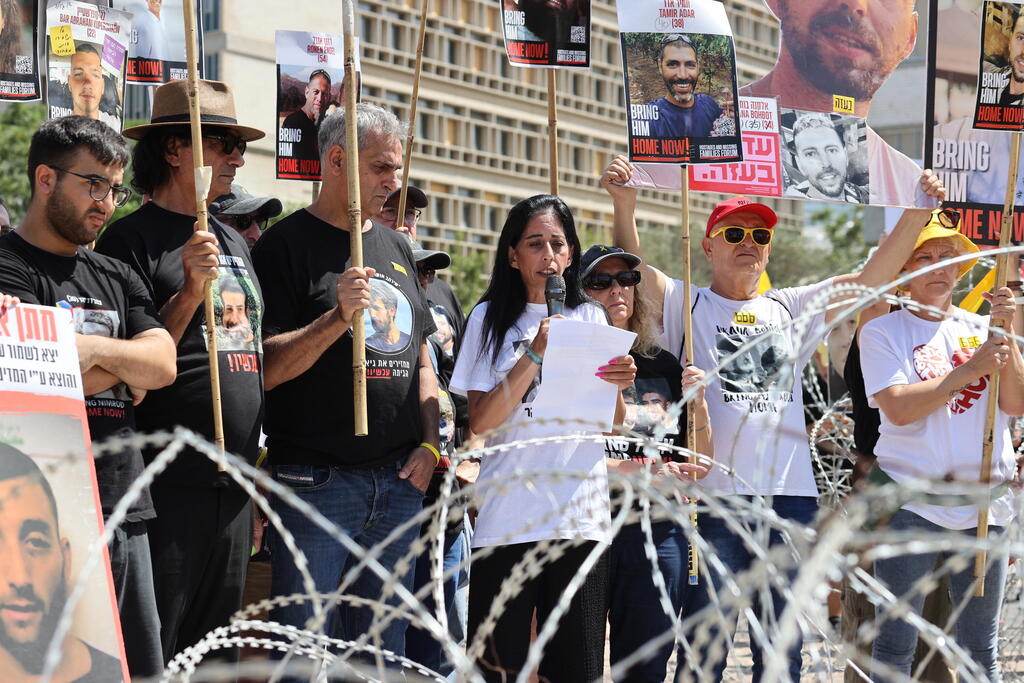
Hostage families at Hostage Square in Tel Aviv
(Photo: Yariv Katz)
Anat Angerest, mother of hostage Matan Angerest, shared a chilling account of contacting Israel’s military coordinator for hostages, Gal Hirsch, who dismissed evidence of her son’s deteriorating condition as “Hamas propaganda” and ceased communication after she criticized the authorities’ failures.
The families erected a barbed-wire installation at Hostage Square to highlight the severity of the hostages’ plight, calling on officials to “stop the madness” and reach a comprehensive deal to bring them home.
Hamas intensified pressure by releasing a recent “sign of life” video of Evyatar David in extremely poor condition, viewed by families as a tactic to push Israel to increase humanitarian aid into Gaza. Publication of such videos is controlled strictly by family consent.
Survivor Omer Wankert, who was held underground with Evyatar for 250 days, described the harsh conditions, denying Hamas claims of starving children and sharing that captives lost significant weight, underscoring the dire reality.
On Thursday, Islamic Jihad released a video of Rom Breslavsky, purportedly filmed before communication was lost with him and others. Rom’s mother, Tami Breslavsky, demanded an urgent meeting with Prime Minister Benjamin Netanyahu, Defense Minister and IDF Chief of Staff, lamenting officials’ lack of contact.
Despite stalled talks and a Hamas delegation moving from Doha to Turkey, Israel remains open to resuming negotiations if Hamas shifts stance.
Military operations in Gaza continue, with Israel expanding humanitarian aid to the Strip. However, internal assessments suggest that shifting Hamas’s position will require prolonged patience—time Israel says it lacks. On the same day, the IDF announced the conclusion of operations by its 98th Division in Gaza.