

Listen to this article
Estimated 5 minutes
The audio version of this article is generated by AI-based technology. Mispronunciations can occur. We are working with our partners to continually review and improve the results.
B.C. municipalities have long complained senior levels of government have offloaded a medley of costs and responsibilities onto them. Now some cities are trying to quantify how much they’ve taken on — and they’re reporting millions of dollars in “downloaded” costs.
The municipalities say downloading costs can strain local budgets and make it harder for them to pay for core services like roads, parks and community centres as they take on more responsibility for increasingly complex issues historically managed by the provincial and federal governments.
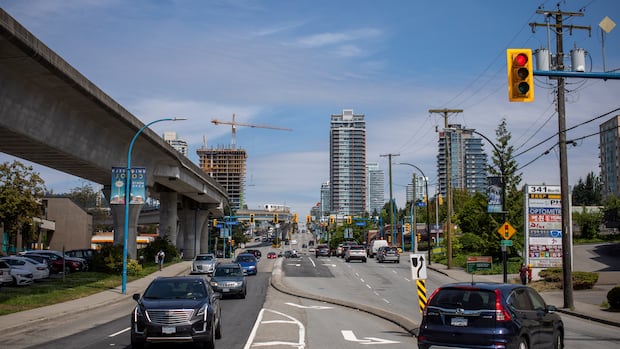
Coquitlam, a Vancouver suburb home to about 150,000 residents, estimated the financial impact of provincial government downloading on the city was $37.6 million from 2021 to 2024, according to a report in November.
The amount would be equivalent to an 18 per cent cumulative tax increase over the four-year period.
“Our dollars are stretched doing our job,” Coun. Robert Mazzarolo said at the council table.
“The money that we already can get is barely enough to take care of what we already are obligated to take care of.”
Coquitlam says it’s absorbing a range of costs, including increased spending on RCMP and fire rescue due to “inadequate backing” on housing and mental health, higher expenditures as provincial support for libraries declines, and expanding obligations around climate resiliency.
It cited examples such as spending about $17 million on affordable housing projects, and $1.55 million on police and fire response to a provincially-operated mental health and addiction centre.
Coquitlam isn’t the only municipality that has calculated the dollar value of downloading.
In 2024, the B.C. Interior city of Kamloops found $13.1 million in costs attributed to downloading — and an additional $122 million in “future impacts” if it is found to be responsible for orphan dikes and inherited dams.
Kamloops flagged investment in shelters and supportive housing and increased spending on emergency responses to social issues like the toxic drug crisis, and also pointed to legislative changes resulting in additional costs.
The updated Traffic Management Manual in 2020 required the city to add flashing arrow boards to the tops of 25 vehicles at a total cost of $75,000, and another two portable traffic signals for $57,500 apiece.
“These are all positive changes from a safety perspective, but come with a cost to the city,” staff wrote in the report.
In 2022, Vancouver calculated $353.1 million in downloading costs, offset by $44 million in revenue from senior governments, and the City of Penticton tallied $4.6 million in provincial downloading just for public safety between 2019 and 2023.
Victoria councillors threatened to bill the province for a $100,000 grant it provided to a non-profit that works with the local homeless community.
But in New Westminster, a proposal to calculate downloading was rejected in November. A councillor said the exercise would result in a “made-up number because there isn’t a comprehensive definition of what downloading is — it is whatever definition we give to it.”
Funds are flowing, say senior gov’ts
B.C.’s Ministry of Municipal Affairs says the province has provided a range of support to local governments.
It highlighted a $1-billion one-time grant program for infrastructure distributed among all B.C.’s local governments, as well as $51 million in support for new housing legislation.
It also funds the Local Government Climate Action Program at $24 million annually, providing $71.7 million upfront (equivalent to three years of funding) in March 2024.
The federal government plans to invest $51 billion over the next 10 years, followed by $3 billion per year to improve local infrastructure.
Certain streams of the program will require provinces and territories to cost match federal funding and “substantially reduce development charges and not levy other taxes that hinder housing supply.”
Change revenue tools: civic advocates
The Federation of Canadian Municipalities, which lobbies the federal government on behalf of municipalities from across Canada, has advocated for reform around how cities can generate revenue.
Rebecca Bligh, federation president and Vancouver city councillor, said the various downloading reports showcase how municipalities are “picking up the slack, in terms of being a frontline service.”
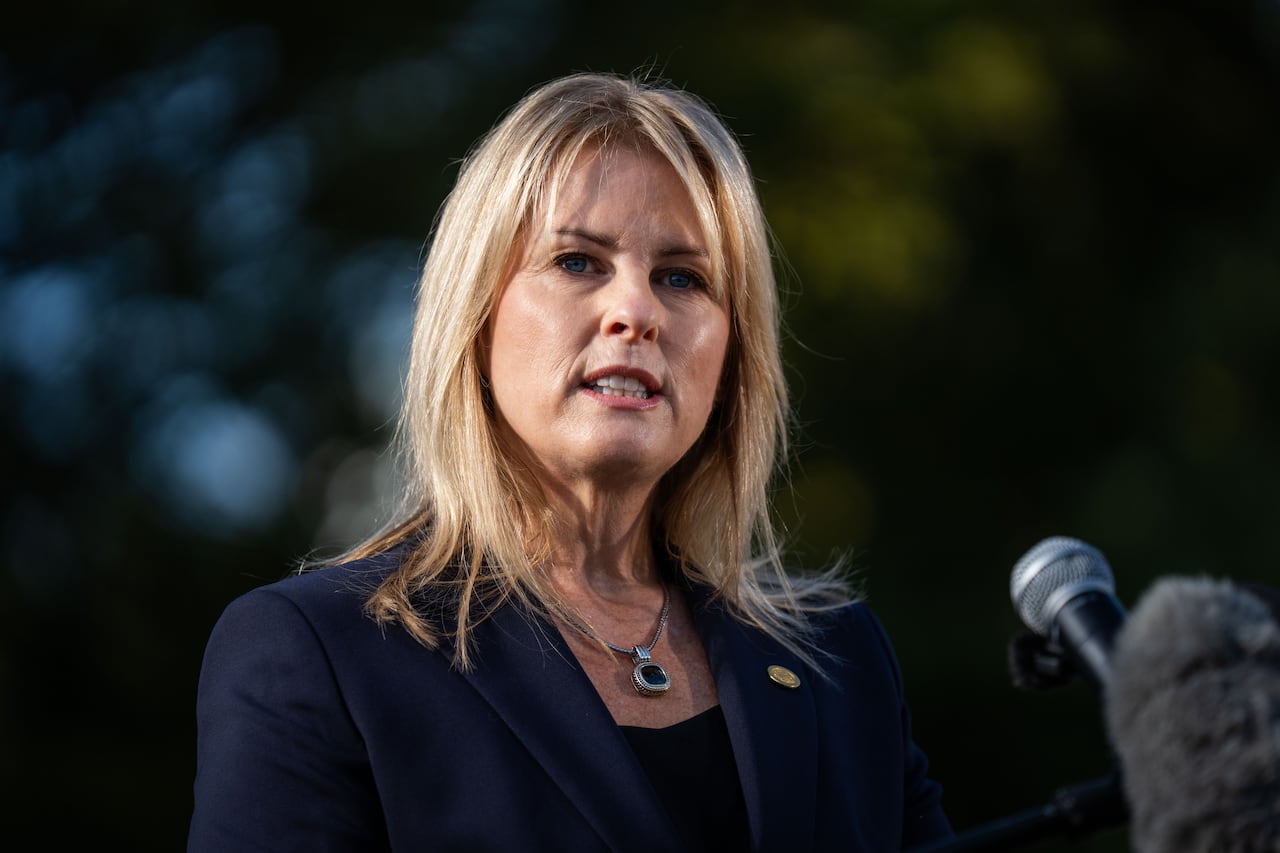 Rebecca Bligh, Vancouver city councillor and president of the Federation of Canadian Municipalities, says Canadian municipalities own and manage about 60 per cent of the country’s public infrastructure. (Ben Nelms/CBC)
Bligh said she frequently hears from cities that funding is inadequate for housing, health care, mental health and addiction supports — and the “nuts and bolts of what it means to actually govern.”
“Municipalities are nation builders,” Bligh said, noting municipalities own and manage about 60 per cent of the country’s infrastructure.
“Yet our revenue tools and how municipalities are funded dates back to Confederation — 1867.”
The federation wants the federal government to index direct transfers to municipalities to GDP and population growth, as well as expand the ways municipalities can use federal transfers.
The federal government is finalizing its funding program design.