
Residents of Calgary are “living in a new reality of water usage,” warned Mayor Jeromy Farkas as city officials provided an update Monday on repairs to a major water main that ruptured last week near 16 Avenue and Sarcee Trail in the city’s northwest.

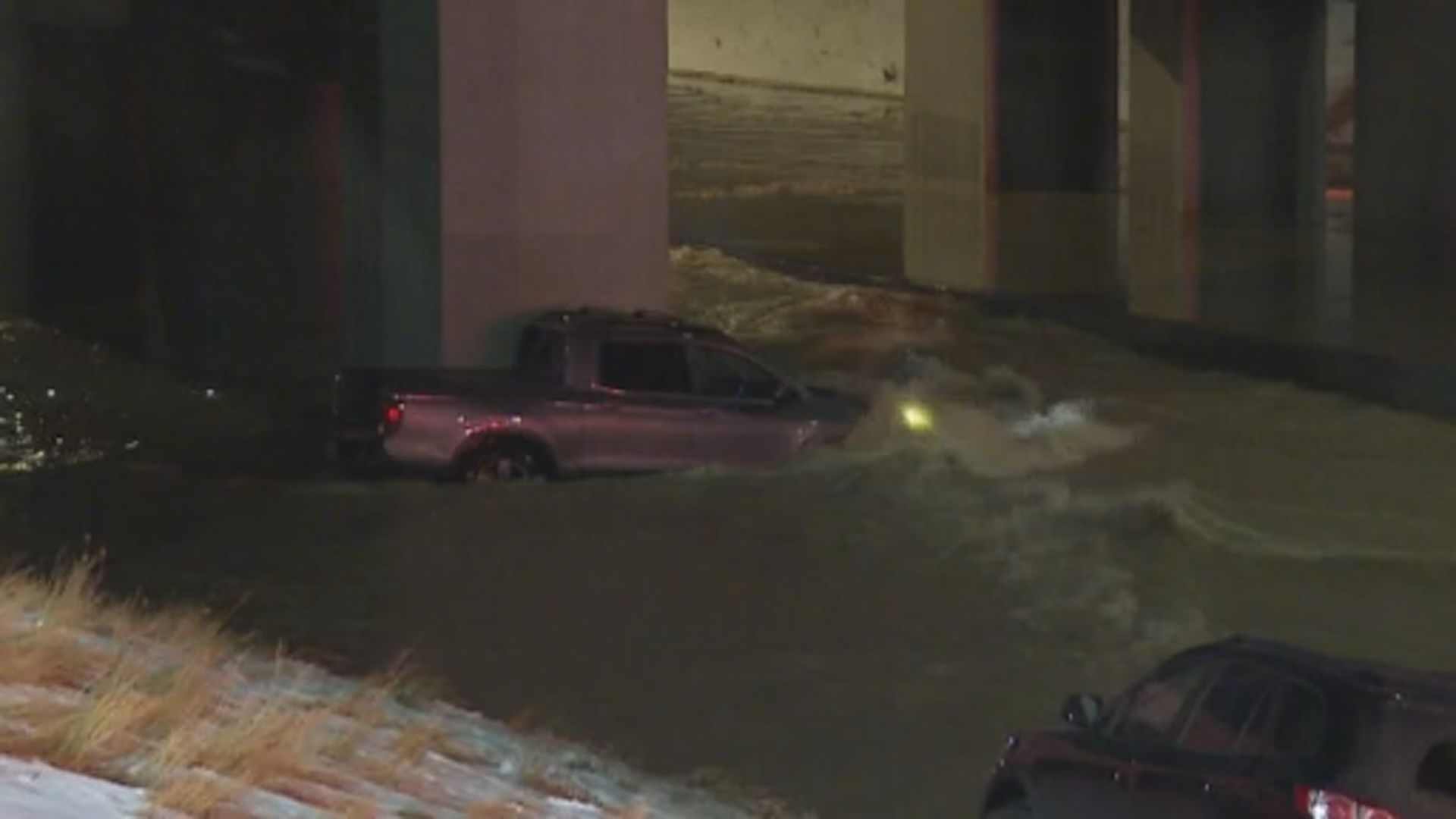
The break in the Bearspaw South Feeder Main, which normally supplies about 60 per cent of the city’s drinking water, flooded several busy streets, forced emergency crews to rescue more than a dozen people from their vehicles, left 2,000 homes and businesses temporarily without water and resulted in boil water advisories being issued for 3,000 people in the area.
Last week’s rupture of the Bearspaw Feeder Main was the second time in a year and a half that there has been a catastrophic failure of the system that provides most of Calgary’s drinking water.
Global Calgary
Since then, the city has had to rely on the much smaller Glenmore Water Treatment Plant to supply the bulk of the city’s water, which is operating at close to three times its normal winter capacity.
Story continues below advertisement
3:55
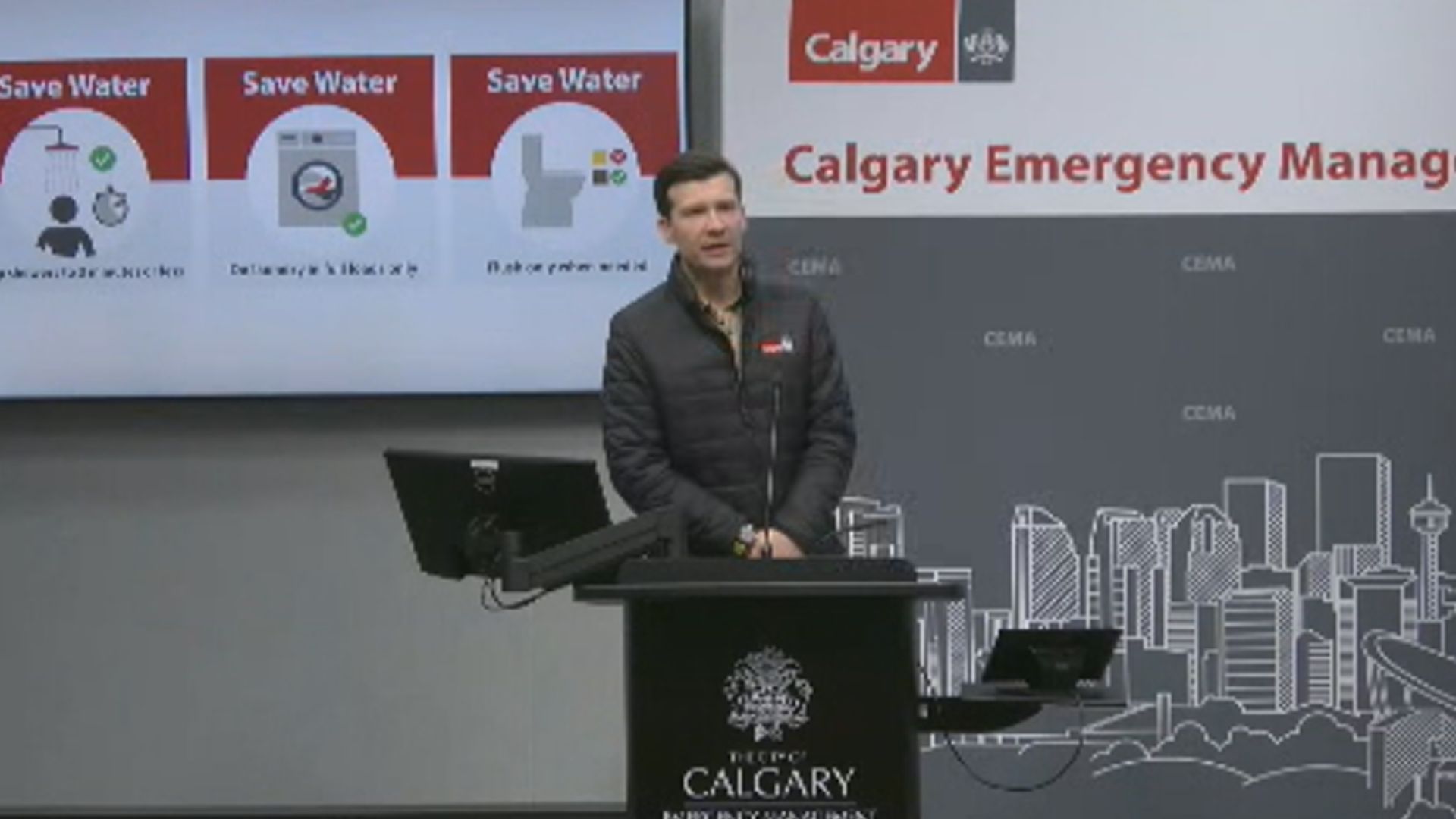
Calgary urges strict water conservation as crews repair major feeder main break
The rupture of the Bearspaw Feeder Main happened just a year and a half after a similar break in the same area prompted months of water restrictions, tens of millions of dollars in emergency repairs and forced the city to launch an independent review of the entire aging water system that Farkas called “a ticking time bomb underneath our streets.”
“Yesterday, we lived in a world where water was something that we could take for granted,” said Farkas, during Monday’s update. “Yesterday, water was something that most of us didn’t even think about. We turned on the tap. We ran the dishwasher. We took a shower, and we moved on with our day. Today, that has changed.”

Get weekly health news
Receive the latest medical news and health information delivered to you every Sunday.
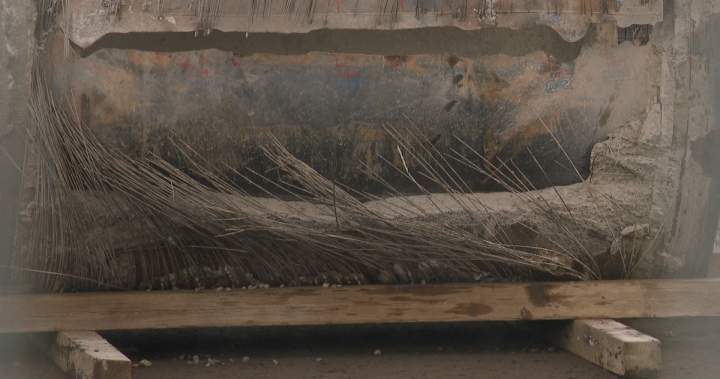
The city’s general manager of infrastructure services, Michael Thompson, said repair crews were able to remove the damaged section of pipe from the ground on Sunday, and it and other nearby sections of the watermain are being closely examined.
Story continues below advertisement
A section of the ruptured Bearspaw Feeder Main sits on a truck in northwest Calgary after crews were able to remove it from the ground on Sunday.
Global News
A video shared by the city on social media shows a severely damaged section of pipe being pulled from the ground by city crews.
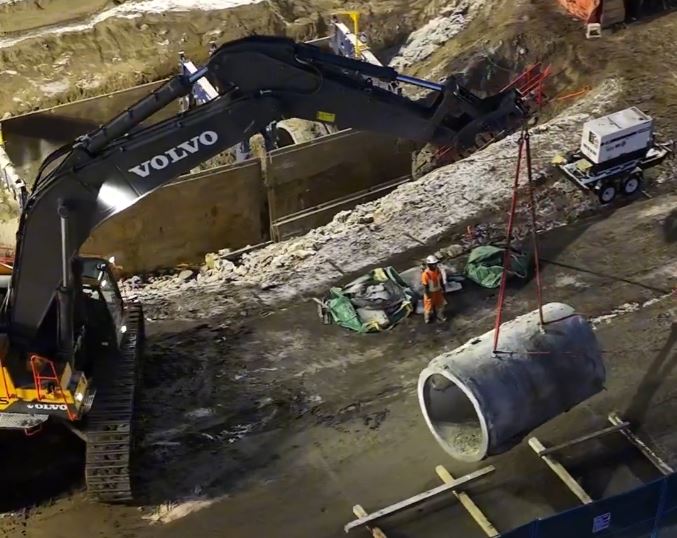
While progress is being made on repairing a massive watermain that burst last week, Calgary’s mayor says the city’s water usage is ‘unsustainable.’.
Source: City of Calgary
“Crews are now inspecting the pipe in the ground using both human and robotic inspection methods,” said Thompson. “Once the pipe inspection is complete, we will start installing the repair section of new pipe. If everything goes well, we are planning to have the repair complete and the pipe operational by early next week.”
Story continues below advertisement
In the meantime, the city warns Calgarians need to do a better job of conserving water and reducing their individual water usage.
3:55
Calgary urges strict water conservation as crews repair major feeder main break
“For the past three days, our water use has been too high,” warned the chief of Calgary’s Emergency Management Agency, Sue Henry.
According to the city, Calgarians used 510 million litres of water on Sunday, well above the sustainable level of 485 million litres.
“This affects the health of our entire distribution system, our plants and their ability to produce enough treated water, our underground storage, which needs to be refilled each night and our ability to move water around the city to everyone who needs it. A single (house) fire can use 4.5 million litres of water,” Henry added.
“The water that you use at home is the same water firefighters rely on when an emergency happens in our neighbourhoods,” said Farkas. “Our new reality is to conserve water, to keep people safe.”
Story continues below advertisement
An aerial view of the section of the Bearspaw Feeder Main along 16 Avenue northwest that ruptured last week, forcing the City of Calgary to ask residents to limit their water use.
Global News
While the city has now removed the boil water order for homes and businesses in the area, Farkas says future water restrictions will be part of the new reality for all Calgarians, as the city works to repair the Bearspaw Feeder Main.
“This will require shutdowns in the spring and in the fall, when Calgary’s water intake from the (Elbow and Bow) rivers is more reliable,” said Farkas. “There will be times through the next two years where we will be asking Calgarians to help support this work.”
In 2026, Calgary plans to spend about $1.1 billion on water infrastructure projects, more than triple the amount of money that was budgeted just a few years ago.
Despite the money being spent and the accelerated effort to repair Calgary’s aging water infrastructure, Farkas says there’s no guarantee there won’t be another rupture at the water main.
Story continues below advertisement
“It could break again tomorrow. It could break again next week. It could break again next month. So that means that we need to change our tolerance for risk as an organization. We need to be as proactive as possible for preventative maintenance.”
2:15
Calgary drivers trapped, work underway after another water main break