
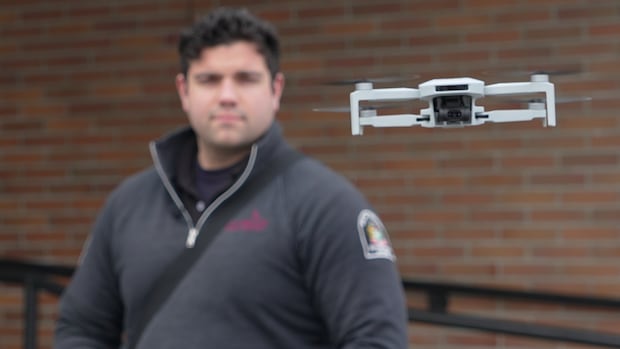
The City of Cranbrook is now using drones to monitor former encampment sites and wooded areas where unhoused people were living amid public safety concerns in the East Kootenay community.
It’s part of a larger public safety strategy the city is rolling out with bylaw officers working in tandem with RCMP, that also includes adding more bike patrols.
Dawna Chamberlain, a community member who accesses support services related to mental health and addiction, said the drones raise concerns about residents’ human rights.
But city officials say Cranbrook has been dealing with public safety issues far greater than typical for a small city, tied to homelessness, addiction and mental health.
“If we just turned a blind eye, it would be complete chaos,” said Cranbrook Mayor Wayne Price.
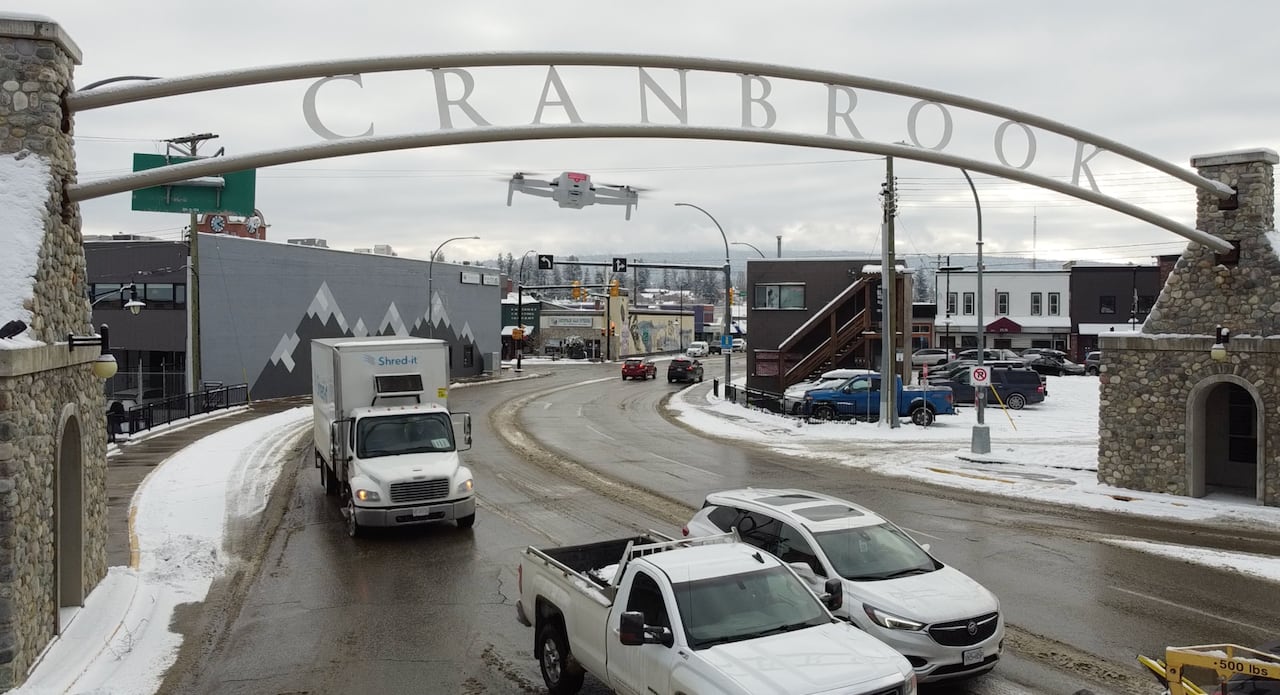 A drone flies near the Cranbrook archway above a downtown roadway. City leaders say increased patrols and new tools are aimed at improving co-ordination and visibility in public spaces. (Amber Wang/CBC)
City officials say the concerns driving the drone program are not about the presence of unhoused people alone, but about specific safety risks tied to encampments that they say they have encountered repeatedly in the past.
Bylaw enforcement officer Kyle Trenholm said officers have seen fire hazards and structural dangers during previous responses, including loose propane tanks, campfires near shelters and unstable structures.
“Before we even spoke about obtaining a drone, we had tons of encampments burned down, catch on fire,” Trenholm said. “We’ve had tanks explode. We’ve had people injured.”
WATCH | Cranbrook uses drones for public safety monitoring: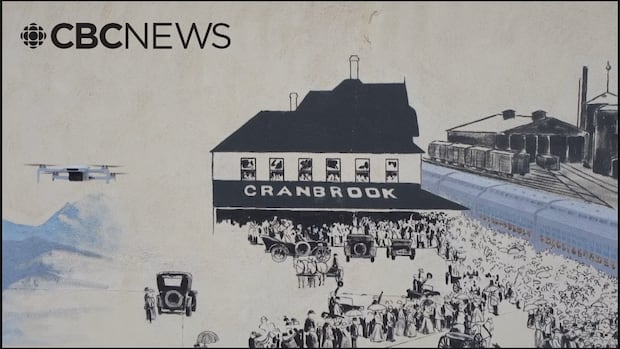
City of Cranbrook proactively addressing public safety through patrols, drones
Cranbrook is changing how it addresses issues of crime, homelessness, and open drug use. As the CBC’s Amber Wang tells us, the city says it’s taking a proactive approach to public safety.
Prior to the new safety strategy, responses to encampments were typically triggered by individual complaints or specific incidents, rather than co-ordinated monitoring or advance planning.
“It was one-off,” Price said. “You’d get a complaint, you’d go and deal with the one individual.”
He said different departments often responded separately, depending on the issue.
Price said encampments were often dealt with case-by-case, appearing near creeks, schools or commercial areas, with different departments responding separately and little shared awareness of broader conditions.
“The police take care of its policing problem, and if it’s a drug-related problem, it’s going to be the ambulance or a fire service that responds,” Price said. “So it was basically just a responder-only thing, right? So basically crisis management.”
This approach, he said, led to inconsistent responses and poor co-ordination.
“One resource didn’t know what the other was doing,” Price said. “We were stepping over each other.”
Price hopes the new approach will increase enforcement visibility and reduce response times by closing these gaps..
“In today’s world we have to be very innovative,” Price said.
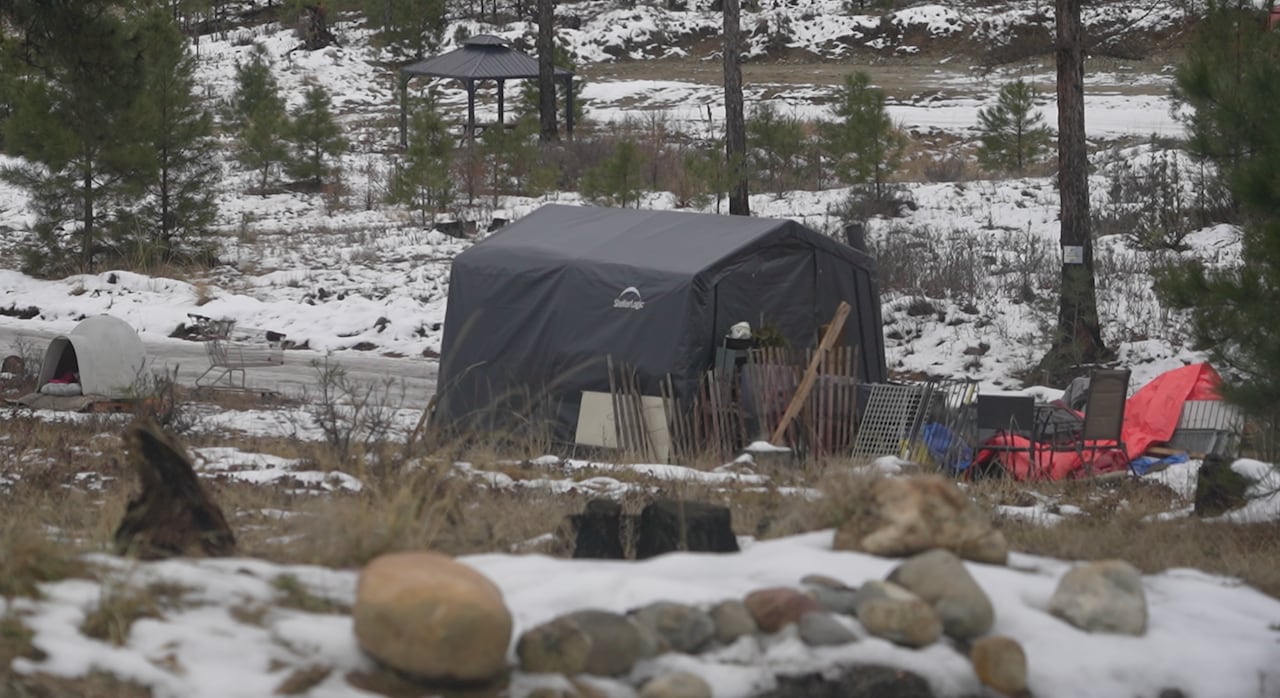 Cranbrook encampment sites. The city says it is working with police and bylaw officers to respond more proactively to safety issues in such locations. (Amber Wang/CBC)
Trenholm said the aerial perspective has been transformative since they started flying drones in June.
“The drones give us real-time eyes on spots we couldn’t access safely before,” he said. “They help us respond faster when something changes on the ground.”
Trenholm said drones are typically deployed before officers or city staff enter an encampment, particularly when complaints mention hazardous or flammable materials.
“Before we may do a foot patrol encampment with local police or RCMP, we may do a drone flight beforehand,” he said. “That way we can see how many people are there, what kind of structures they have, if they’re stable, any kind of hazardous materials like propane fire.”
Trenholm said the drone flights help determine whether it’s safe to attend a site in person and what level of risk responders may face.
“It’s about knowing what we’re getting into before we go in on foot,” he said. “That way we can figure out if it’s safe, how close we should be, and what protective equipment might be needed.”
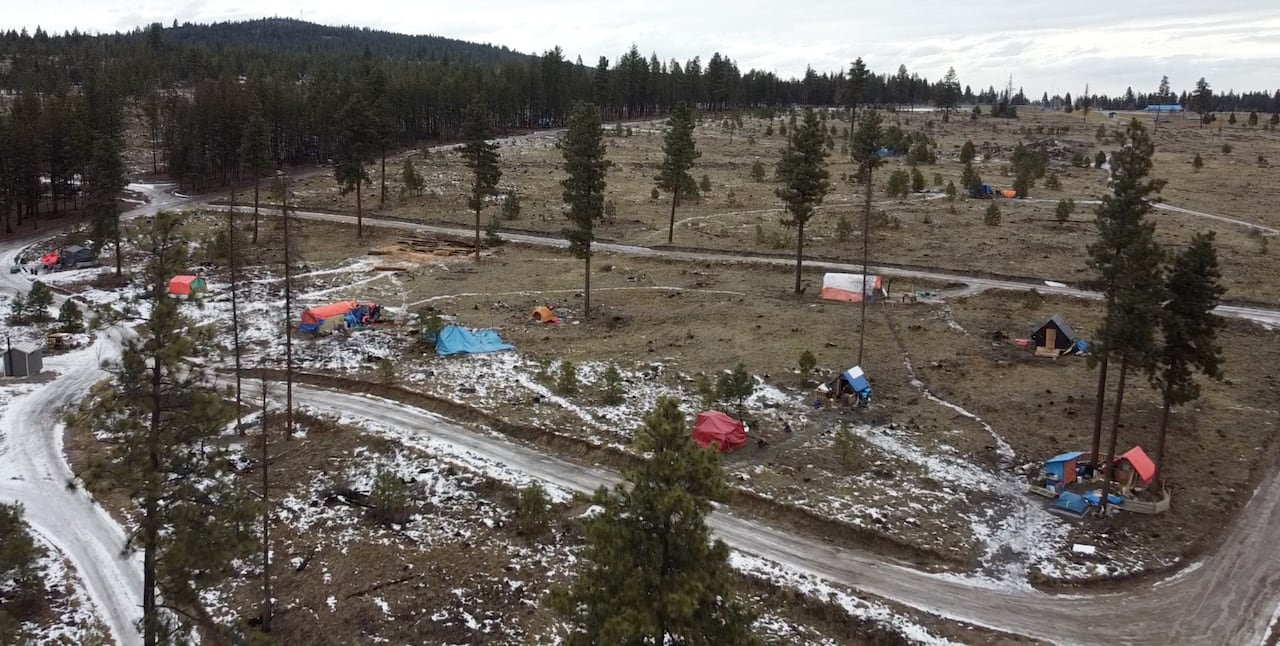 Drone footage shows a wooded area on the outskirts of Cranbrook where encampments have previously been set up. (Amber Wang/CBC)
RCMP detachment commander Barry Graham says integrating bylaw officers into daily operations has strengthened communication.
“Traditionally, we didn’t overlap very much with bylaw services,” he said. “As circumstances in the community changed and evolved, so did our partnership.”
But some residents are raising concerns about privacy, and that enforcement on its own won’t resolve deeper issues tied to homelessness, addiction and mental health.
“I don’t feel safe, necessarily, not at all,” said Chamberlain.
“We got drones following us and we have to, like, watch our every movement.”
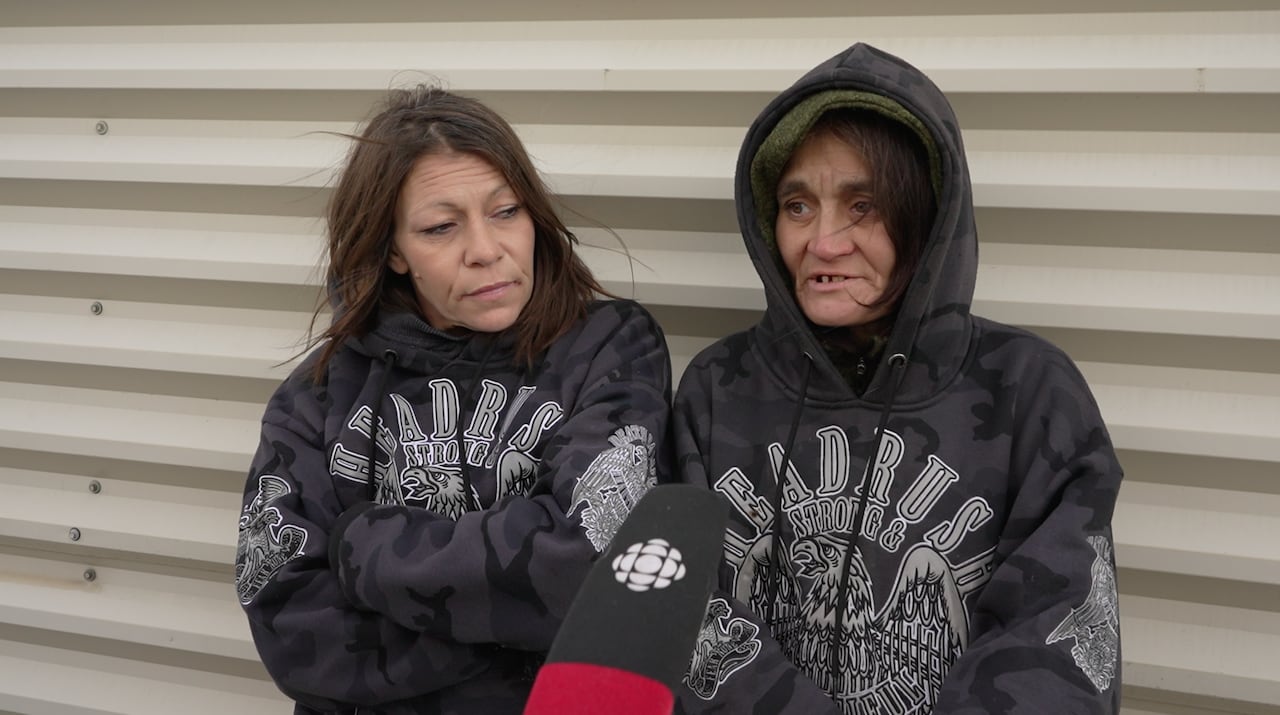 Dawna Chamberlain, right, says she questions who’s funding the drones, and that residents now have to watch their every move. (Amber Wang/CBC)Privacy concerns
Other communities have tried using cameras to monitor people and there have been legality questions.
B.C.’s privacy commissioner, Michael Harvey, says any public body collecting personal information must be legally authorized to do so.
“‘Let’s just put in more surveillance and that’ll help our problem,’ can be more of a reflex than it is an actual response,” said Harvey.
“I think public bodies need to evaluate when they’re deciding to do this, whether or not these programs are actually effective in achieving the goals that they want to achieve.”
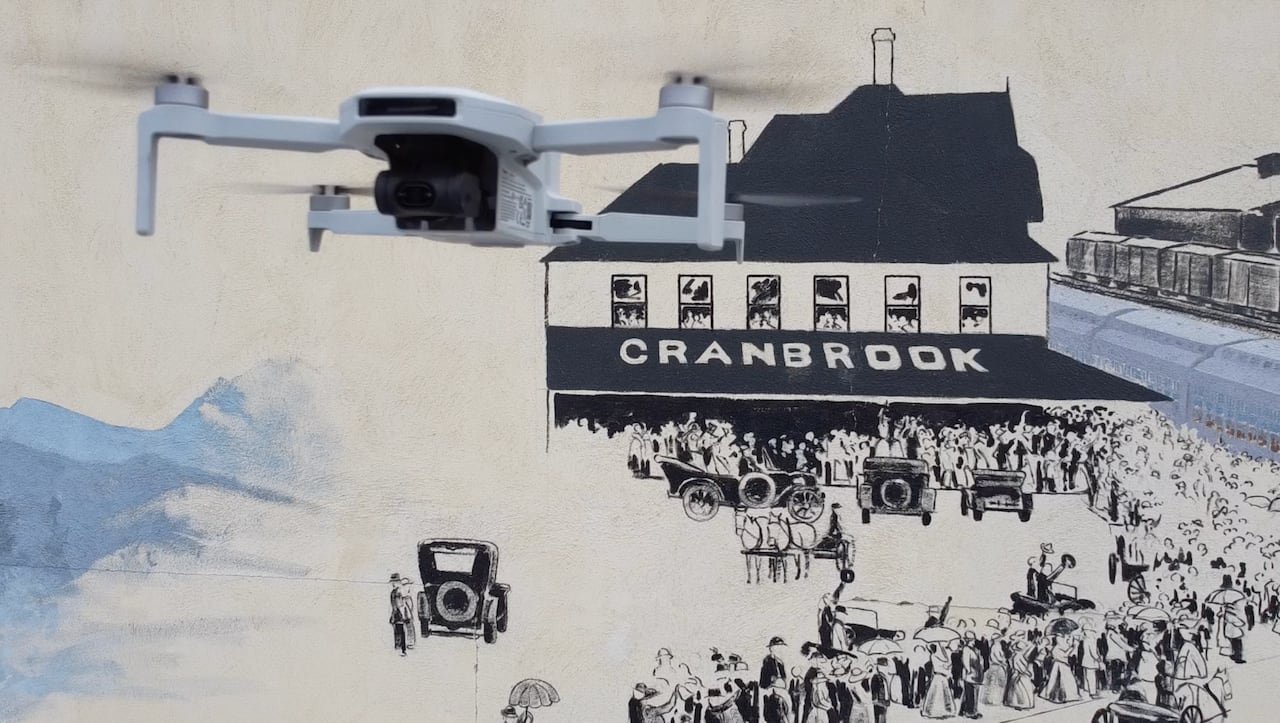 A drone hovers in front of a mural depicting Cranbrook’s early history. City officials say new technology is being used as part of a broader shift toward more proactive public safety measures. (Amber Wang/CBC)
Price acknowledges the challenges are deeply rooted and shaped by factors beyond municipal control.
“There could be a mental health challenge, there could be a drug challenge or a housing challenge,” he said.
“These are complex issues, and they require everyone working together.”
A long-term shift, not a quick fix
City officials say the new model is still in its early stages and will take time to evaluate.
They expect residents will begin noticing clearer communication, more co-ordinated patrols and greater engagement with businesses and neighbourhoods.
Price says the goal isn’t to eliminate complex social pressures overnight, but to replace a fragmented system with one that balances compassion and accountability.
“That’s fairly proactive where we’re moving,” he said. “I think people in town will notice the change.”