
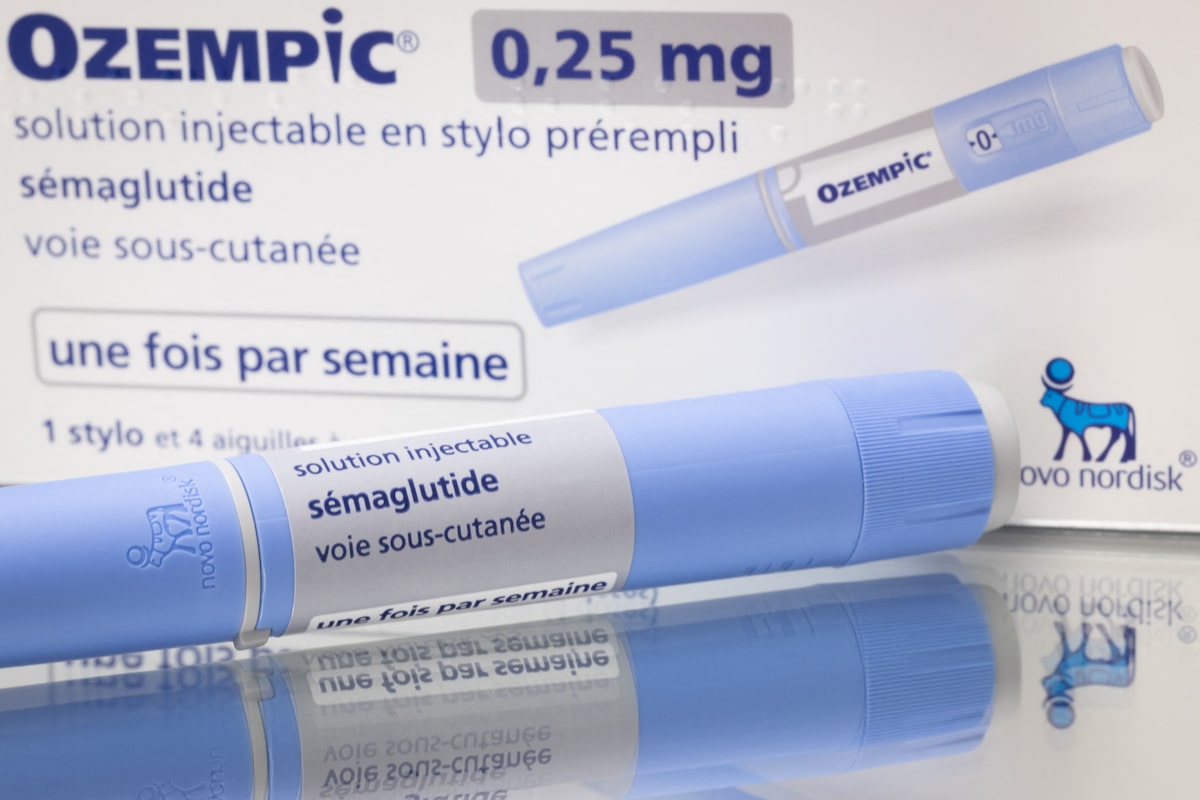
Health Canada has received nine applications from five named companies to sell duplicates of semaglutide, the active ingredient in Ozempic.JOEL SAGET/AFP/Getty Images
Danish drug maker Novo Nordisk is preparing to introduce a new version of its blockbuster drug Ozempic to compete with cheaper generics that became legal on Monday, but which are not expected to hit shelves immediately because of delays at Health Canada.
Ozempic is one of the most-prescribed drugs in Canada, with more than a million people taking it, according to Novo Nordisk. It was the highest-selling drug by revenue in the country last year.
Anticipation has been building for months about the launch of generic Ozempic in Canada, the first country where official copies of the top-selling medication can be sold legally. The last legal barriers preventing generic Ozempic expired on Sunday.
Health Canada has received nine applications from five named companies to sell duplicates of semaglutide, the active ingredient in Ozempic, which is marketed for Type 2 diabetes, and Wegovy, a higher-dose version approved specifically for weight loss. None had received approval as of Monday.
In the meantime, Novo Nordisk is preparing to launch new drugs that are medically identical to Ozempic and Wegovy, but sold under new names and likely at a lower price.
Generics of Ozempic and Wegovy expected to lower insurance costs for employers and workers
Kate Hanna, a spokeswoman for the company’s Canadian branch, told The Globe and Mail on Monday that it is considering competing in the generic market with versions of semaglutide called Plosbrio and Poviztra.
Health Canada approved the new brand names for semaglutide on Dec. 22. Mark Johnson, a spokesman for Health Canada, said the only difference between the old and new versions is in the products’ name and packaging.
“To be clear, these are not generic semaglutide products and have no connection to Health Canada’s review of the generic semaglutide submissions,” Mr. Johnson said by e-mail.
Michael Law, a pharmaceutical policy researcher and academic director of the Centre for Health Policy at the University of Calgary, said this type of product launch is unusual but would give Novo Nordisk new ways of competing for market share when generics come on the market.
The company could maintain Ozempic and Wegovy at their current brand-name pricing, while setting prices for Plosbrio and Poviztra that are close to that of the generics, he said.
“There’s a lot to be captured in the generic market, even at lower prices, because there’s so many people using these drugs and there’ll be even more when it’s cheaper,” Dr. Law said.
Opinion: The transformation of risk in the Ozempic era
Meanwhile, the head of the generics industry association said that Health Canada’s failure to approve any of the generic semaglutide submissions – some of which were made nearly two years ago – means that health plans and patients are paying higher than necessary prices.
“That’s costly to the drug programs,” said Jim Keon, president of the Canadian Generic Pharmaceutical Association.
“If the price came down by 65 per cent then we think that some patients that aren’t getting the product now could, and could benefit from the diabetes treatment and or the weight-loss treatment.”
Health Canada acknowledged in a statement that there is “considerable interest in lowering costs associated with this highly prescribed drug by introducing generic versions,” but said it couldn’t comment on approval timelines while evaluating submissions.
However, the federal regulator noted that the review process for copies of semaglutide is more “complex” than for typical generics.
That’s because the original semaglutide is a biologic drug derived from cells. Generic companies are applying to make chemically synthesized copies. “The manufacturer must show that these differences do not affect the safety, efficacy, or quality of the drug compared to the brand name drug,” Mr. Johnson said.
Eli Lilly & Co. cuts price of popular diabetes and weight-loss drugs in Canada
Mr. Keon of the CGPA, which represents 17 companies, said the challenge is that Health Canada – unlike some of its international counterparts – hasn’t published blanket guidance about what should be included in generic semaglutide applications.
“We have talked to them about this for quite a while, and they say: ‘Well, we haven’t got the resources to develop guidances on all these complex products,” Mr. Keon said. The result is that Health Canada asks companies for additional information and clarification after an initial submission is filed, delaying the process, he added.
Ozempic is the top-selling drug by revenue in the country. Nearly $2.15-billion worth of Ozempic was sold at Canadian retail pharmacies between January and September of last year, according to IQVIA Canada, which aggregates prescription sales. Just over $440-million of Wegovy was sold in the same period.
Health Canada’s website lists the names of five companies who have applied to sell generic semaglutide: Apotex Inc., Aspen Pharmacare Canada Inc., Sandoz Canada Inc., Taro Pharmaceuticals Inc. and Teva Canada Ltd. None had updates on their submissions when contacted by The Globe on Monday.
Two other companies applied before April of 2024, when Health Canada updated its policies to identify companies with submissions under review.
One of those is the Indian pharmaceutical company Dr. Reddy’s Laboratories Ltd., which revealed in a regulatory filing in late October that Health Canada had given an initial negative response to its initial application and asked for additional information and clarifications.
The second company has not been publicly identified.