
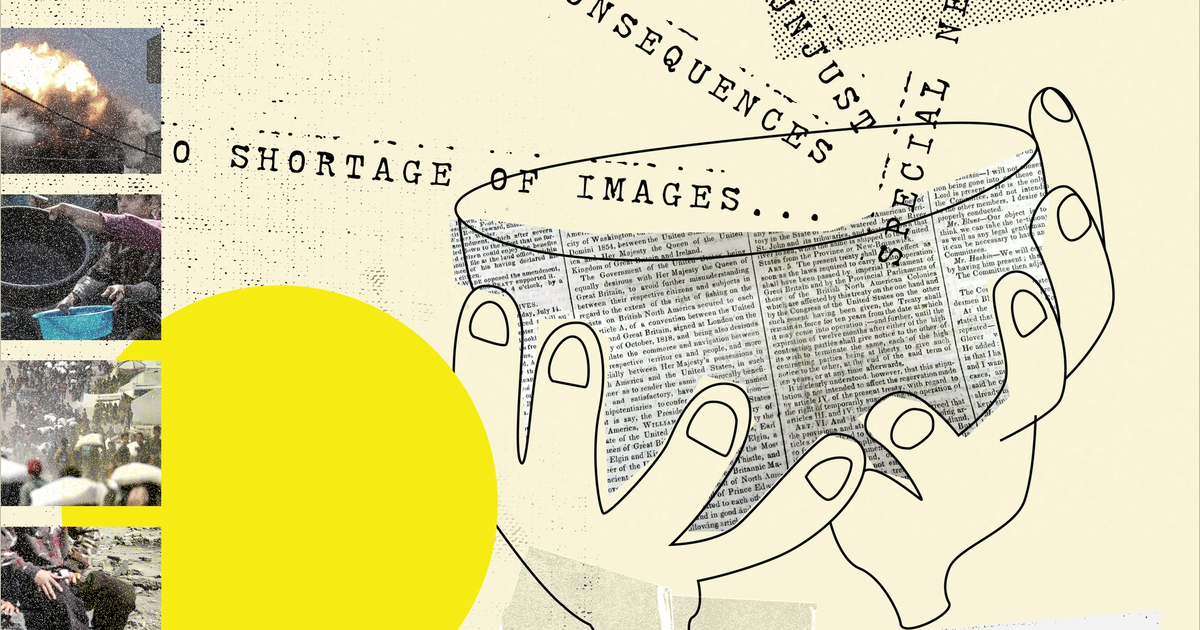
The Times’ caution came at a turning point in US coverage of the war in Gaza. Some of the largest Western media outlets, many of which have tried for years to cover the war through a removed lens — and have been shut out from reporting independently in the territory by the Israeli military — now appear nearly singularly focused on the widespread hunger in the war-torn zone.
In recent days, NBC News and CNN both ran stories with shocking visuals of malnourished children, along with numerous segments about the suffering of Palestinians in Gaza and Israel’s restriction of aid coming into the area. The New York Times columnist Ross Douthat shifted his stance to write of “how Israel’s war became unjust.” And center-left writer Matthew Yglesias posted that “Since the start of Donald Trump’s second term, Israel has pivoted tactics in Gaza in a direction that is provoking mass famine. These new tactics have prompted condemnation from people who had not condemned earlier tactics.” This was a shift from earlier in the war: A researcher at Syracuse found that in the first nine months of the war, CNN’s digital coverage was notably supportive of Israel. This week, a CNN producer described the situation as “absolutely catastrophic,” with “no access to food, clean water, or medical care” and “bombings [that] never stop.”
The alternative media spaces, intensely attuned to young audiences left and right who are increasingly hostile to Israel, have shifted more dramatically. Joe Rogan reportedly turned down an opportunity to have Prime Minister Benjamin Netanyahu on his podcast, while podcast host Theo Von told Vice President JD Vance in June that he believes Israel is committing genocide in Gaza. Piers Morgan, now a YouTube sensation, moved from defending Israel to brutally grilling its diplomats, writing that they’d crossed a line.The Nelk Boys, a goofy, right-leaning Canadian YouTube outfit, embarked on a kind of apology tour after their own softball interview with Netanyahu: It was a moment they would “always regret,” one of the group’s founders, Kyle Forgeard, told the Egyptian comic Bassem Youssef, who they invited on the show to reprimand them after an enduring wave of backlash from their audience. The group should have pressed Netanyahu “100 times harder,” Forgeard said.
Even The Free Press, the most high-profile independent media outlet with a friendly attitude towards Israel, acknowledged the alarming food shortages in Gaza, referring to it in one piece as a “hunger crisis,” and acknowledging in another that many Palestinians had not eaten meals in days (which the publication blamed on Hamas, and, to a lesser degree, Israel).
This shift comes as the American public turns against the Israeli campaign, with just 32% backing the action in Gaza, a new low, according to Gallup.
And while the Times took heat over its update last week, the existence of a major New York Times story, with all its accompanying urgency, seemed to illustrate a shift in coverage away from a focus on conflict between two sides equally and towards one about the suffering of Palestinians.
Zeteo founder Mehdi Hasan said there had been a “clear tonal shift in media coverage and political reaction.” Ryan Grim, the editor of Drop Site News, a digital news outlet that has covered the war from a perspective critical of Israel, said he sensed a shift from the legacy and broadcast outlets that had often made painstaking attempts to weigh both the Israeli and Palestinian sides with equal measure.
“I think for the normal media they see that we are witnessing a crime of historic proportions and are beginning to ask how they will look in retrospect,” Grim said.