
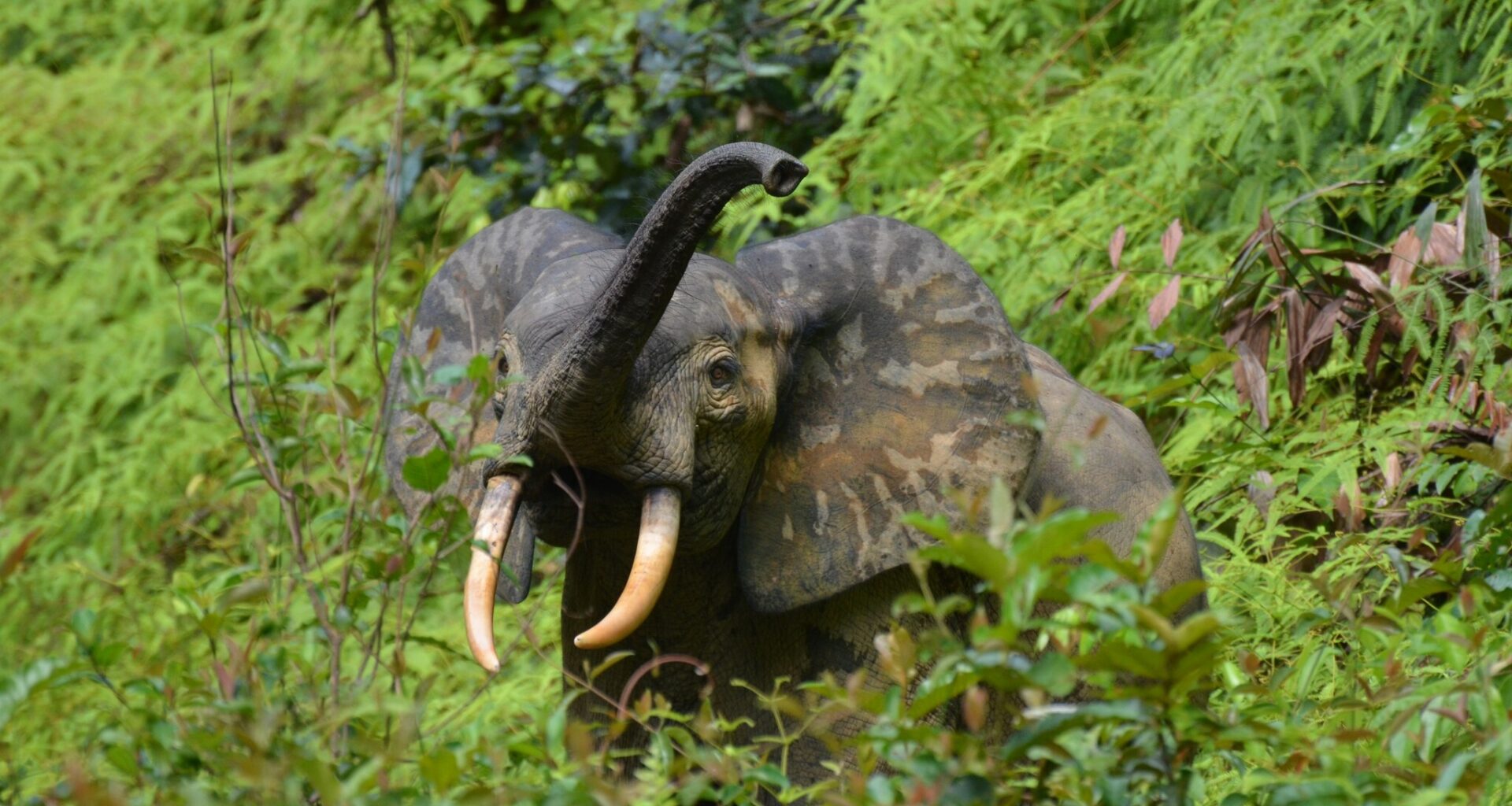
The first authoritative population assessment for African forest elephants estimates there are more than 145,000 individuals.Researchers say new survey techniques relying on sampling DNA from elephant dung provide the most accurate estimate of a species that’s difficult to count in its rainforest habitat.Central Africa remains the species’ stronghold, home to nearly 96% of forest elephants, with densely forested Gabon hosting 95,000 individuals.Conservationists say the findings can help inform the design of targeted conservation actions and national plans for forest elephants.
See All Key Ideas
More than 145,000 African forest elephants roam the rainforests of Africa, according to a recent population assessment. Published in December by the African Elephant Specialist Group at the IUCN, the global wildlife conservation authority, the survey relies on improved DNA-based techniques to provide the first estimate for these critically endangered pachyderms since they were recognized as a distinct species in 2021.
African forest elephants (Loxodonta cyclotis) are found primarily in the dense rainforests of Central Africa, with significant but dwindling numbers remaining in West Africa, and small populations in East and Southern Africa. Hybrids with their close cousins, savanna elephants (Loxodonta africana), also occur infrequently where both forest and savanna elephants are found.
Counting these shy and elusive giants is a challenge for researchers as they blend into their surroundings or vanish into the dense understory of their forest habitat.
 A forest elephant with calf in Gabon. Image by Rhett A. Butler/Mongabay.
Some 153 population surveys, carried out between 2016 and 2024 across roughly three-quarters of L. cyclotis’s known range, counted 135,690 forest elephants. The IUCN’s assessment included 22 elephant populations, mostly in Central Africa, that had not previously been surveyed. The researchers estimate there are as many as 11,000 more elephants in the remaining parts of the species’ range, pushing the total to just over 145,000 individuals.
“This report is the first one that shows forest elephant numbers,” report author Fiona Maisels, a conservation scientist with the Wildlife Conservation Society (WCS), told Mongabay by email. “In previous iterations, the two species were treated as one, so it was not possible to tease them out from the report.”
The encouraging numbers are largely attributed to newer DNA-based survey methods. Previously, researchers estimated the number of elephants in an area by counting the dung piles they left behind. But dung decays over time, and the decay rate, which depends on the environment, must be correctly calculated for every single site to accurately estimate elephant densities.
In the current assessment, researchers instead relied on DNA extracted from the dung to count individuals in an area, which led to more accurate counts, according to IUCN African Elephant Specialist Group co-chair and report co-author Benson Okita-Ouma. He said researchers have a very high confidence in the numbers presented as they’re “scientifically robust and can stand the test of time.”
Most of the elephants the researchers found — about 96% of them — were in Central Africa. Gabon has two-thirds of the population at 95,000, followed by the Republic of Congo with 19%. Just 3% of the forest elephant population was found in West Africa, where expanding agriculture and extensive poaching for ivory have greatly reduced elephant numbers. L. cyclotis numbers in East and Southern Africa combined make up less than 1%.
In 2016, Gabon’s national parks agency created a 240-strong special forces unit to tackle poaching and other wildlife crimes in national parks. The government is also working with WCS to install 1,800 mobile fences and provide “elephant insurance” to compensate villagers for crop losses to the elephants.
“Gabon has made quite significant efforts to be the stronghold [for elephants],” Okita-Ouma said. “We commend them for that.”
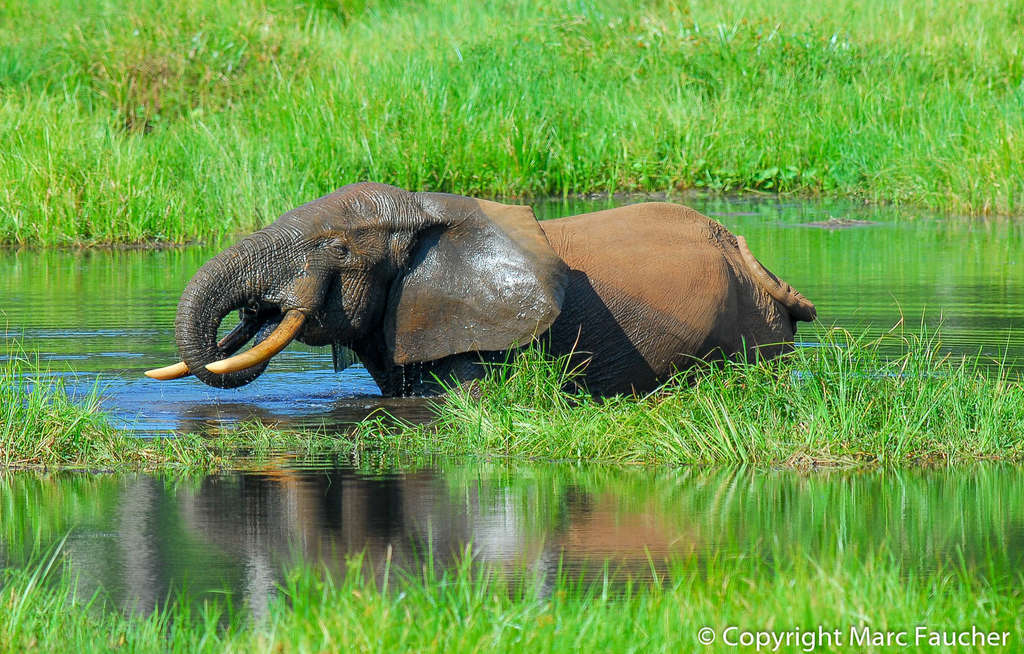 A forest elephant near Ouesso, Republic of Congo. Image by Marc Faucher via iNaturalist (CC BY-NC 4.0)
Interpreting the new elephant numbers
Besides the new survey methods, the IUCN elephant group’s report also notes a decrease in poaching numbers over the past decade. A 2013 study by Maisels and colleagues estimated that the forest elephant population fell by an alarming 62% between 2002 and 2011, a loss of about 7% each year. But between 2016 and 2023, that decline slowed to 0.7% each year; most of that — as many as 5,000 elephants — occurred amid the jihadist-led insurgency in Burkina Faso’s portion of W-Arly-Pendjari, a vast network of protected areas that extends into neighboring Benin and Niger, Maisels said.
According to the latest data from the CITES-MIKE program, which monitors the illegal killing of elephants and does not differentiate between the two African species, poaching levels of African elephants were stable between 2020 and 2024.
“The situation has improved for forest elephants, evidenced by both the lower number of sites with drastic declines (just two this time) than in the last status report and the CITES [data] that shows poaching rates have gone down,” Maisels told Mongabay by email. “Poaching is still happening, albeit at much reduced rates from before.”
She said China’s ivory import ban of 2017 may have played a role in reducing demand.
While poaching may be on the decline, forest elephants also face other threats as industrial agriculture and mining penetrate into once-remote forests. “The planning of land use, the corridors, the connectivity of habitats, are so important,” Okita-Ouma said. “We have erred in disconnecting the habitats. I think we can correct them if there’s a will.”
The disappearance of connected corridors has brought these pachyderms closer to humans with increased human-elephant conflicts, where elephants are killed in retaliation. “We are seeing a surge in conflict-related deaths,” Okita-Ouma said, adding that these are now surpassing the numbers killed for ivory.
The report’s findings, which identify population trends in different countries and regions, can help authorities focus their national plans, tighten their laws against poaching, and design better land-use plans, the authors say.
For Okita-Ouma, the report offers hope. As awareness grows that elephants are more valuable alive than dead, contributing to ecotourism, forest regeneration and carbon sequestration, he said he believes poaching will continue to decline. “I’m very hopeful that poaching, in the near future, will be the thing of the past.”
Banner image: A forest elephant near Ngounié, Gabon. Image by marcusgmeiner via iNaturalist (CC BY-NC 4.0)
Spoorthy Raman is a staff writer at Mongabay, covering all things wild with a special focus on lesser-known wildlife, the wildlife trade, and environmental crime.
Congo Basin’s elephants boost carbon capture, but need salt-licks to survive
Citations:
Laguardia, A., Bourgeois, S., Strindberg, S., Gobush, K., Abitsi, G., Ateme, H. B. B., . . . Stokes, E. (2021). Nationwide abundance and distribution of African forest elephants across Gabon using non-invasive SNP genotyping. Global Ecology and Conservation, 32, e01894. doi:10.1016/j.gecco.2021.e01894
Maisels, F., Strindberg, S., Blake, S., Wittemyer, G., Hart, J., Williamson, E. A., . . . Warren, Y. (2013). Devastating decline of forest elephants in Central Africa. Plos ONE, 8(3), e59469. doi:10.1371/journal.pone.0059469
FEEDBACK: Use this form to send a message to the author of this post. If you want to post a public comment, you can do that at the bottom of the page.
