

Listen to this article
Estimated 4 minutes
The audio version of this article is generated by AI-based technology. Mispronunciations can occur. We are working with our partners to continually review and improve the results.
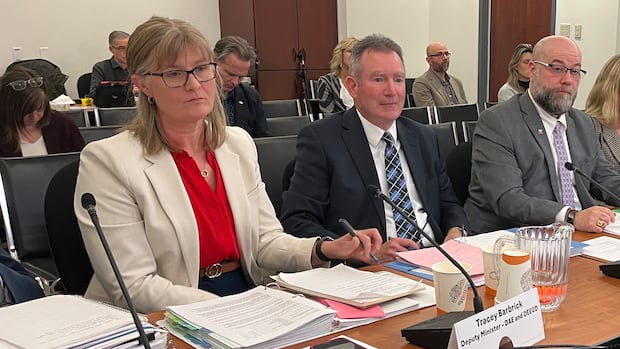
Nova Scotia’s deputy minister of education says her department is reviewing a policy that promised jobs to new graduates of teaching programs because it could inadvertently remove job security during a person’s second year in the profession.
Tracey Barbrick made the comments Tuesday during a meeting of the legislature’s human resources committee.
Speaking to reporters following the meeting, she said the policy was brought in almost three years ago because the province was “in dire need of additional teachers.”
“Our substitute list was quite small at that time,” said Barbrick.
“Conditions were quite different three years ago than they are today, so we just need to make sure that we’re still up to date on what we need.”
What a job promise means
Premier Tim Houston announced the policy at the same time he announced a plan to allow people to enter education programs without having completed an undergraduate degree. The latter plan never came to fruition, in part because such a change cannot happen without the agreement of the teachers union.
Nova Scotia Teachers Union president Peter Day said that along with concerns about what the policy has meant for teachers during their second year in the field, it also meant people already working in the system were in some cases passed over for work in favour of new graduates.
“It is an issue and a very real concern for us,” he told reporters.
Interim Liberal Leader Iain Rankin, who raised the issue during the meeting, welcomed news of the review but said “it’s problematic” that the current policy promises new grads a job when that job might not be there for them during their second year in the field.
“What that means to an everyday Nova Scotian going to school is that that job would continue and it’s a career, and not just a one-year thing and then your job is at risk,” he told reporters.
A plan to collect more data
MLAs heard in the fall that the population boom in recent years that drove the teacher shortage has cooled.
Barbrick said the department is beginning to gather more data to help get a better sense of job needs across the system so planning can help give everyone — including universities that offer teaching programs — an expectation of what will be required down the road.
Still, Day called for the creation of a comprehensive recruitment and retention plan that makes clear how people can get into the education system and stick around once they’re there. Union representatives for other people who work in the same system made their own case for enhanced retention efforts.
A call for more transparency
Barbrick said a working group made up of government and union officials has already produced a set of recommendations focused on recruitment and retention. Although she said the document contains “no state secrets,” she also said it was never the intention to make the information public.
NDP education critic Paul Wozney, a teacher and former union president before entering politics, struggled to understand why that information wouldn’t be shared with the public, especially given that both the government and union seem pleased with the contents.
“What is the harm in making public common goals that the union and the government will collaborate on so everybody understands the solutions that are being worked towards?”
Wozney said the creation of a formal plan, along with increased data collection, would help prevent future workplace challenges that the system has experienced through the years.
MORE TOP STORIES