

Listen to this article
Estimated 4 minutes
The audio version of this article is generated by AI-based technology. Mispronunciations can occur. We are working with our partners to continually review and improve the results.
The snow blanketing B.C.’s north Okanagan has created slippery conditions for the region’s working horses.
But, when suited with custom and creative shoes, horses have no trouble pulling loaded sleighs and wrangling cows, say the farriers who keep the large animals ready for work in all conditions.
Caitlin MacDonald is a farrier who lives at Armstrong’s Caravan Theatre for several months each winter. There, she tends to the feet of working animals weighing more than 900 kilograms and drives horse-drawn sleighs full of cozy passengers around a live theatre set three times every night.
When not pulling sleighs at the theatre, the massive horses work on farms, in the mountains in the most rugged and remote parts of the region for the logging industry and pull carriages around Vancouver’s Stanley park.
WATCH | These women are keeping Okanagan horses on their feet: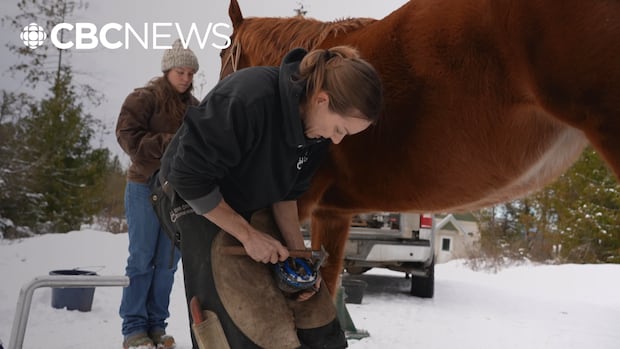
Meet the women keeping horses steady in the Okanagan
Motorists on B.C. Interior highways have been required to have snow tires for months. Just as truck drivers need chains, working horses need specialized winter gear too. CBC’s Jacqueline Gelineau spoke with the farriers who keep horses clip-clopping through the Okanagan winters.
“They don’t even break a sweat,” said MacDonald.
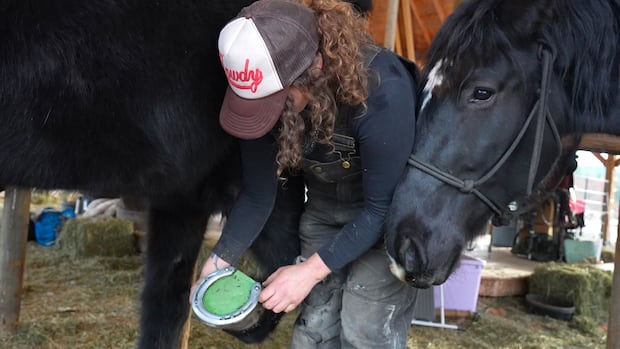
She custom-makes special winter horse shoes used for traction, so the horses don’t slip, and to prevent buildup of snow and ice.
MacDonald said each working horse requires a unique shoe with custom additions depending on their size, specific job, age, foot type and medical concerns.
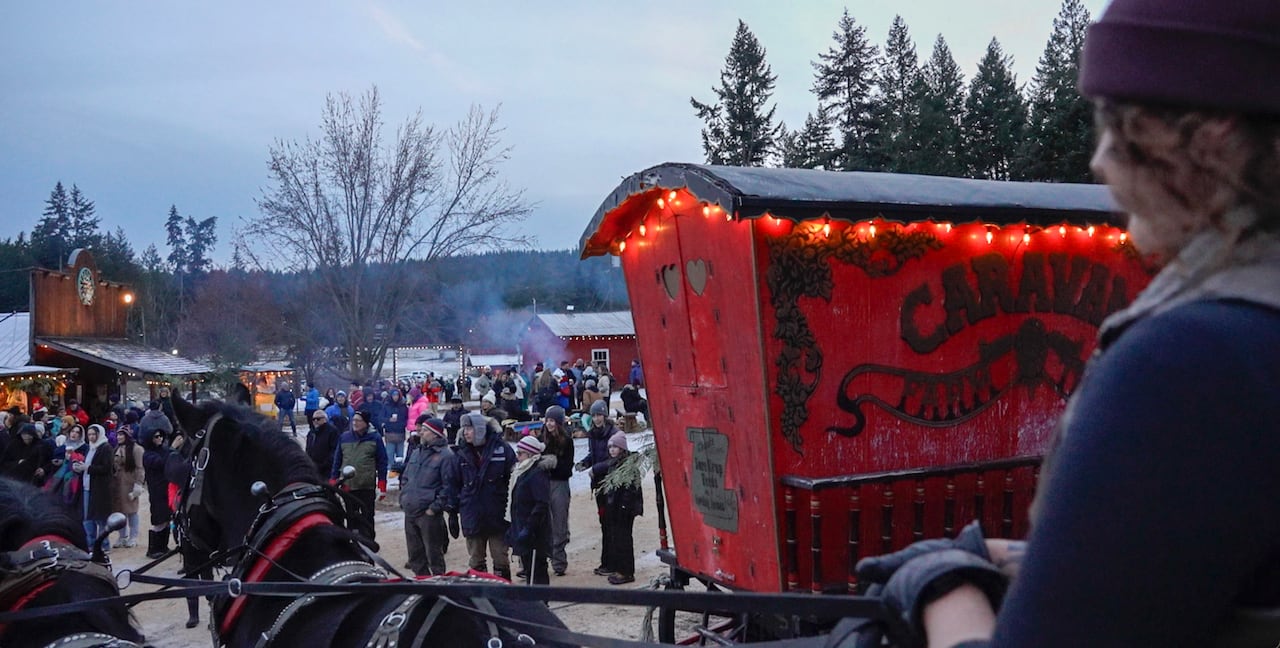 Caitlin Macdonald is a driver at the Caravan Theatre, and a full-time farrier. (Jacqueline Gelineau/CBC)
In slippery conditions, she welds tungsten carbide in a brass matrix on to the shoe to make grippy cleats, sometimes adding tungsten nails for added bite.
She also adds a hot pink snow pad to his shoe to prevent buildup of snow and ice in the crooks of his hoof. Macdonald will also use plastic crazy carpet to keep the snow out.
Some of the horses at the Caravan theatre, like the Percherons, a renowned breed of French draft horses, are so large that they use antique or handmade traction aids called corks — since their size is no longer commercially manufactured.
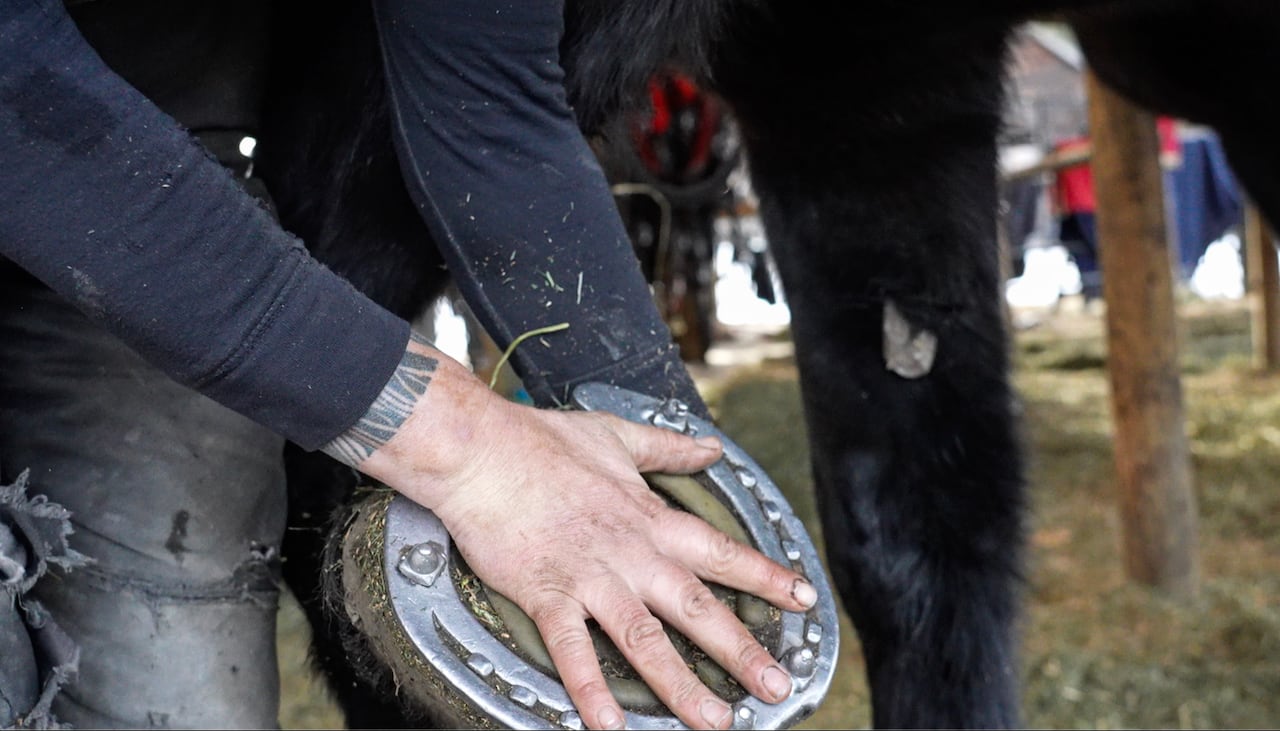 MacDonald uses antique corks in the horse shoes of the 900-kilogram Percheron horses that work at the Caravan Theatre. (Jacqueline Gelineau/CBC)Tides turning
When Macdonald was in school, she was the only woman in her class.
Now, after gaining knowledge, experience and strength, she shoes massive draft horses on a regular basis — a job not all farriers will do because of how physically challenging it is.
“It is three times as much work. It’s a lot more steel to move,” said MacDonald. “They’re very large horses, so it’s a lot harder on the body.”
In recent years, the tides in the industry have turned and now the majority of farriers in the Okanagan are women, who all support one another.
Through her career, she has helped and leaned on others, like Jenn Thiele, a farrier of 20 years based in Salmon Arm, B.C.
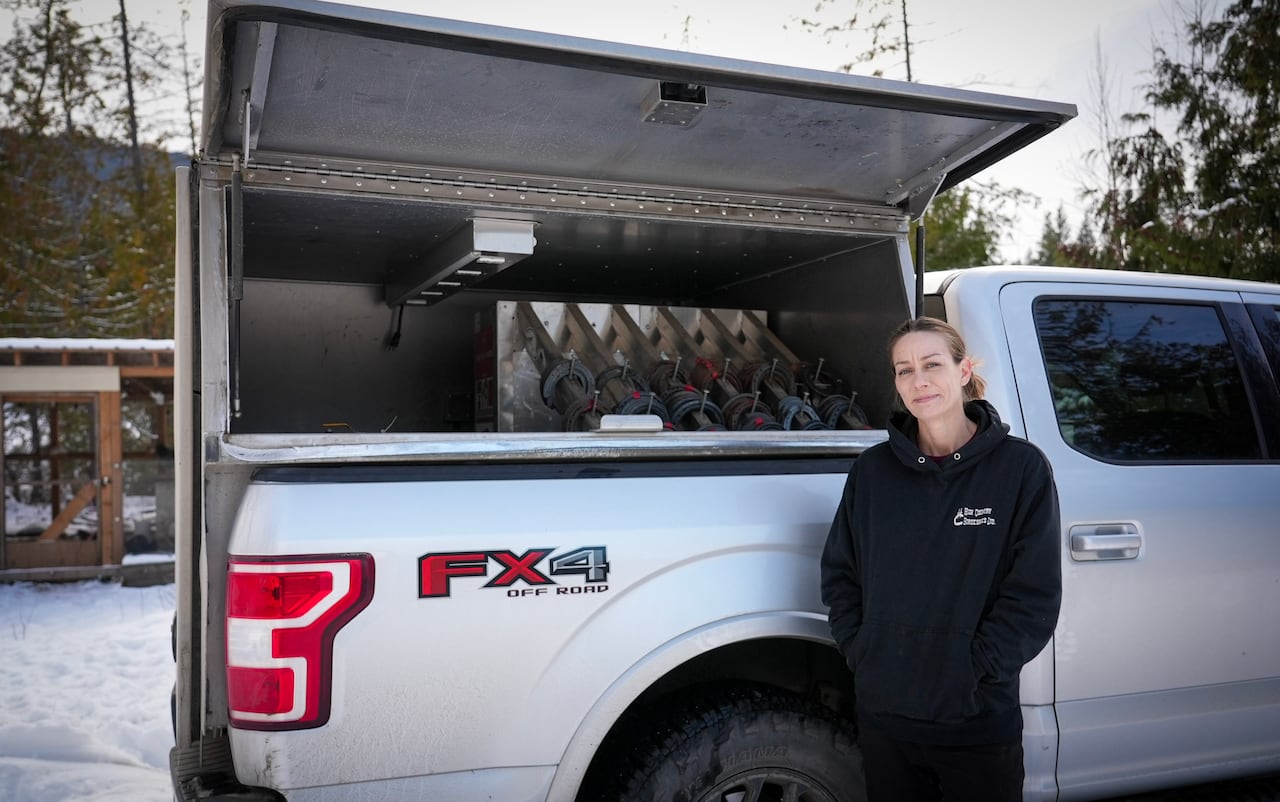 Jenn Thiele has been a farrier for 20 years and says she loves the collaborative and creative nature of her career. (Jacqueline Gelineau/CBC)
Thiele said the best part of being a farrier — other than the horses and the money — is working with and supporting others in the industry. Last year, when she needed to take time off, others stepped in and took on her clients until she was able to return to work.
When other farriers have difficult cases and are in need another set of eyes on a shoe, she always answers their calls and will even go to the field to help out.
Thiele said even though most farriers are entrepreneurs and typically work alone, in the north Okanagan the women she works alongside regularly send horse foot x-rays back and forth, and discuss shoe ideas to come up with the best, sometimes creative solutions.
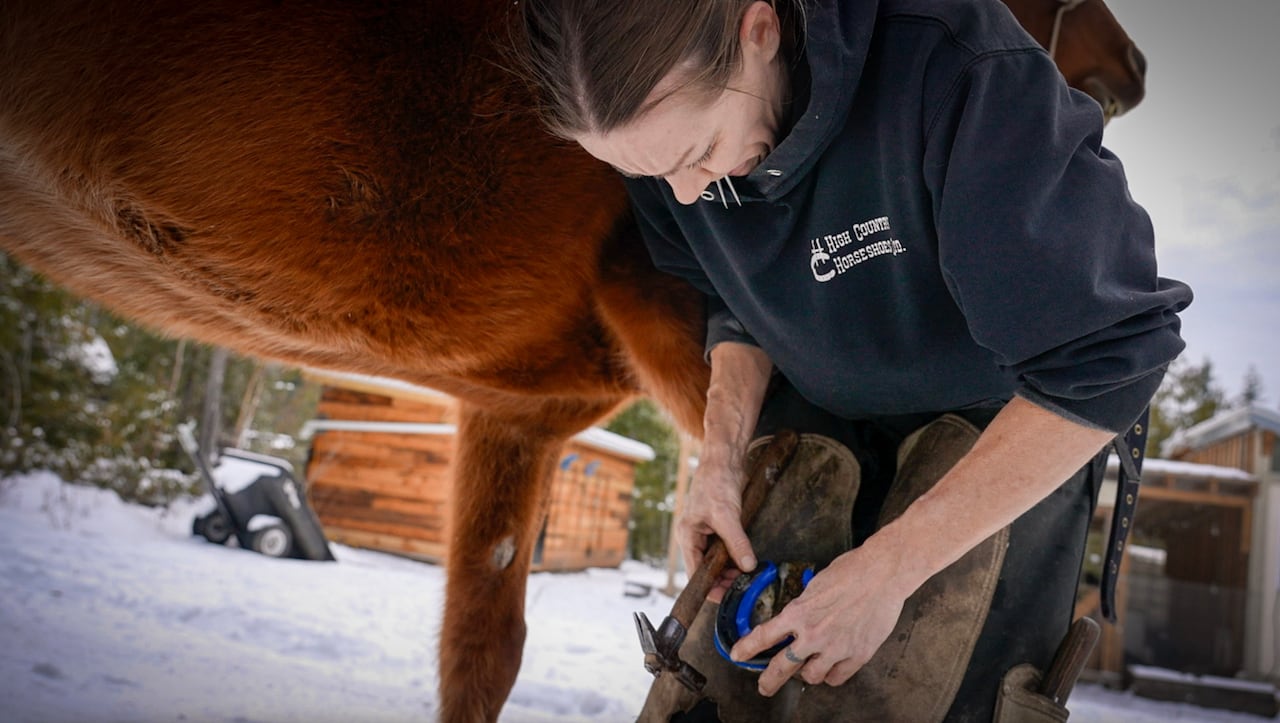 Jenn Thiele adds a snow pad to a horse’s shoe. (Jacqueline Gelineau/CBC)
She said sometimes in the industry she feels it is automatically assumed that men are competent, while women have to prove themselves.
So, she has achieved the highest level of certification possible in Canada, and is a journeyman.
“People trust me way more now. They know that I’ve gone through the process and proven myself and they they ask less questions.”
As a competitor in shoeing competitions herself, she has seen how men dominate when raw strength is the limiting factor.
But, in the real world, Thiele says women more than hold their own, and she has loved watching and helping the new farriers in the region grow, learn and kick butt.