
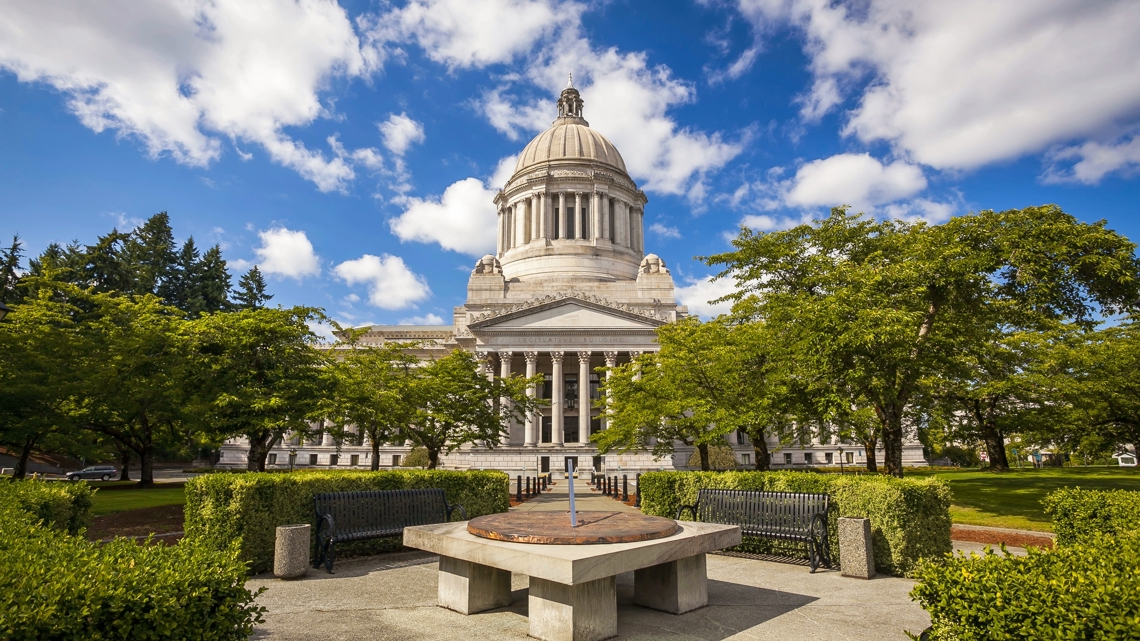
The department originally reported that 7.5 million metric tons of greenhouse gas emissions would be reduced. The actual amount is around 78,000.
OLYMPIA, Wash. — Washington’s Department of Commerce has corrected a major error in its greenhouse gas emissions reporting, saying a “data entry error” vastly inflated the climate benefits of several state-funded rebate programs.
The mistake affected emissions estimates for eight projects funded through the state’s Climate Commitment Act. The programs, focused on helping low-income and vulnerable households electrify homes and upgrade appliances, were originally projected to cut emissions by about 7.5 million metric tons. The updated figure is closer to 78,000 metric tons over the lifetime of those projects, according to the department’s correction.
“We made an error in reporting data for this program,” said Jennifer Grove, assistant director of energy at the Department of Commerce. “The Climate Commitment Act is a vital part of the state’s efforts to control carbon emissions, and we’re committed to ensuring that the information we share is complete and accurate.”
The corrected data were sent to the Department of Ecology and will appear in an upcoming update to the state’s climate spending report. That document outlines how more than $1.5 billion in revenue from the Climate Commitment Act has been allocated during the 2023–25 budget cycle.
Todd Myers with the Washington Policy Center was the first to point out this mistake in a blog published Tuesday. In an interview with KING 5, Myers said he believes this error erodes the public’s trust in the state’s climate programs.
“Despite the fact that we talk about all the time that we are leaders in fighting climate change and things like that, our climate policies aren’t really very effective,” Myers said. “I think this report was very indicative that what we’re being told about our climate policy doesn’t match the results of the real world.”
The Department of Ecology is now reviewing emissions data from all state agencies. The report includes details from more than 3,600 projects administered by 37 agencies. Officials said a revised version is expected in the coming weeks.
Grove said the department has strengthened its reporting processes to “prevent similar errors in the future.”
Ecology officials said they are also tightening oversight of emissions reporting.
“Accurate data is essential to guiding our state’s work to reduce carbon pollution,” said Joel Creswell, manager of the Department of Ecology’s Climate Pollution Reduction Program. “We’re updating our processes to more thoroughly check data reported by agencies so this doesn’t happen again.”
Commerce officials said agencies will soon use a new reporting system designed to “reduce the potential for human error.”
The Climate Commitment Act, approved by lawmakers in 2021, sets a cap on statewide emissions and requires major polluters to buy allowances corresponding to their output. Those allowances decline over time, with proceeds invested in climate projects aimed at cutting emissions by 95% by 2050.
State officials said the current version of the report remains useful for understanding how act’s investments are helping communities, even as the emissions data are being corrected.