
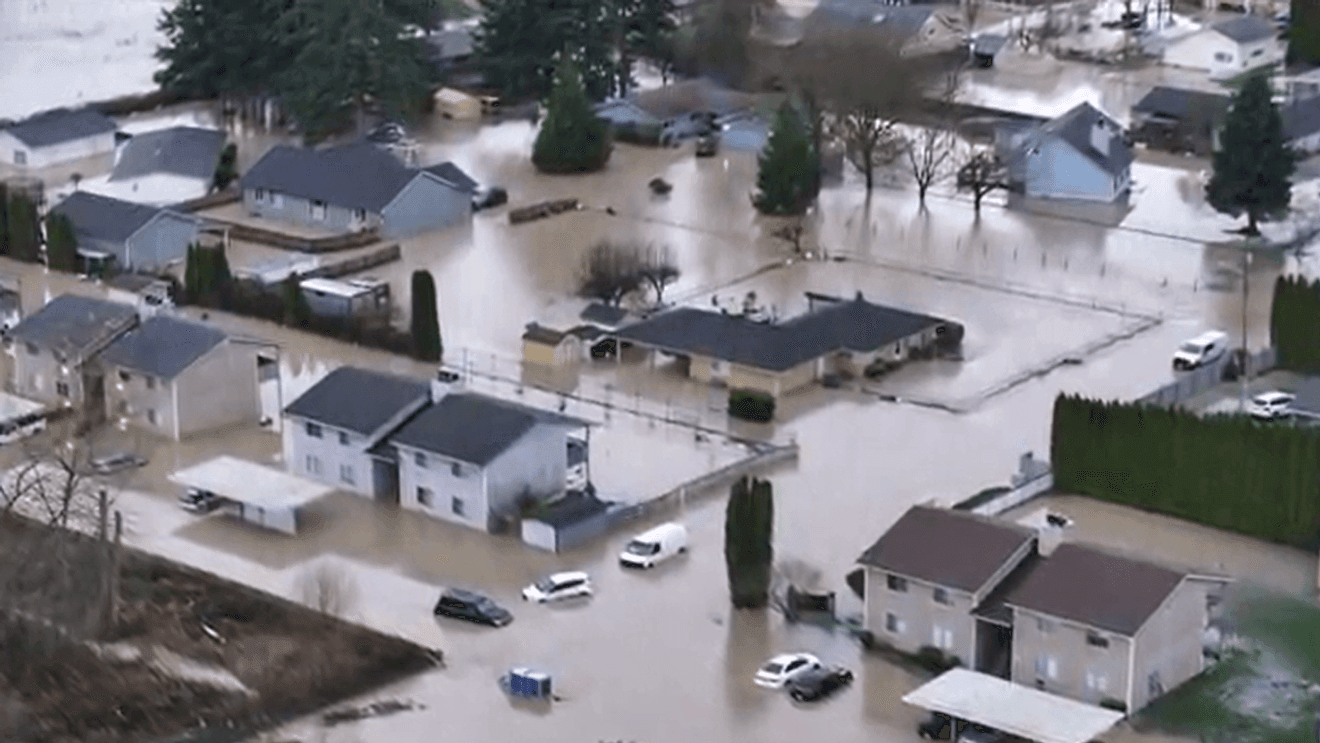
SEATTLE — Record rainfall in December brought temporary relief to Washington’s drought-stricken regions, but the Washington Department of Ecology says it wasn’t enough to secure the state’s water future.
Despite the deluge, which filled reservoirs in the Yakima Basin to 63% of capacity, the state’s snowpack remains critically low, raising concerns about water supplies for 2026.
RELATED | Cascade mountains brace for 2-4 feet of snow with wind, widespread rain in lowlands
The Natural Resources Conservation Service’s Snowpack Telemetry (SNOTEL) monitoring stations report that, as of Jan. 5, statewide snowpack is at just 63% of normal. Specific areas, such as the Olympics and the Southern Cascades, are faring even worse, with snowpack levels at 50% and 45% of normal, respectively. In contrast, the Upper Columbia Basin and Northern Cascades have snowpack levels above 100%, but these figures mask significant variations between monitoring stations.
Caroline Mellor, Ecology’s statewide drought lead, emphasized the ongoing challenges: “The warm December temperatures led to too much precipitation coming as rain and not enough as snow. This means that we still have ground to make up to avoid water supply concerns next summer.”
The December rains, while substantial, failed to build the snowpack needed to sustain water supplies through the warmer months. The state’s reliance on snowpack as a natural reservoir underscores the importance of winter snowfall, which gradually melts to replenish rivers and aquifers.
Looking ahead, a major winter storm is forecasted to hit the Cascades, offering a glimmer of hope for increasing snowpack. However, experts caution that one storm won’t suffice to make up for the deficit. Climate change continues to alter precipitation patterns, turning snowy winters into rainy ones and causing snow to melt more quickly.
Washington’s water supply challenges are compounded by infrastructure and water use habits designed for past climate conditions. As climate change models predict more frequent snow droughts, the state must adapt by developing flexible water management tools and improving its ability to capture precipitation in all forms.
The path forward requires tailored solutions for different watersheds and a collaborative effort to build resilience against the dual threats of winter floods and summer droughts. With La Niña expected to bring wetter and cooler weather through January, there is still time to bolster snowpack levels, but the state must remain vigilant in its long-term water management strategies.