

Listen to this article
Estimated 3 minutes
The audio version of this article is generated by AI-based technology. Mispronunciations can occur. We are working with our partners to continually review and improve the results.
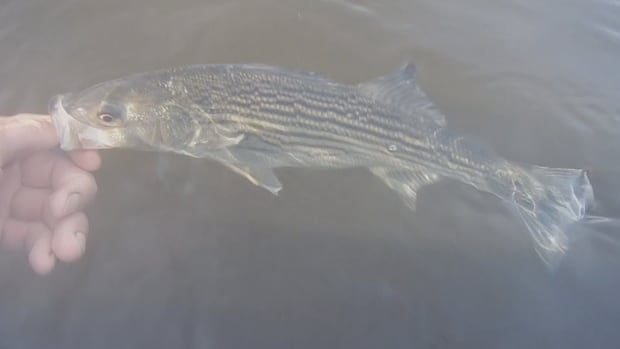
While the stock of striped bass in the southern Gulf of St. Lawrence has increased in the past year, Department of Fisheries and Oceans scientists are urging a cautious approach to the species.
On Wednesday, the department released preliminary data about stripped bass in the region that stretches from the Gaspé Peninsula to the tip of Cape Breton Island.
In 2025, the department estimated there were 547,300 spawning striped bass in the southern gulf, up from 340,300 from 2024.
Another indicator of a resurging stock are the number of eggs, jumping from an estimated 22 billion to 40 billion.
 Cindy Breau, a research scientist at the department, said striped bass in the southern Gulf of St. Lawrence are considered to be in the cautious zone (CBC)
Still, the stock is considered in the cautious zone.
“There is a lot of variation from year to year,” said Cindy Breau, a research scientist at the department.
While an increase in stripped bass may be good for that species, its rising numbers are a concern for a group trying to protect Atlantic salmon, especially in the Miramichi River.
David Roth, program director at the Atlantic Salmon Federation, said Atlantic salmon stocks continue to plummet in the region, with one of the major factors being the increasing number of striped bass.
“We clearly can see the decline in the survival with the rise of the striped bass population,” said Roth. “The main reason for the low survival rates is predation by striped bass.”
 David Roth, program director at the Atlantic Salmon Federation, said consumption of salmon by striped bass is a reason salmon stocks have declined. (CBC)
By listing striped bass in a cautious zone, DFO is suggesting, according to its presentation, that any decisions about the fishery “should promote growth.”
But Roth said striped bass fishery limits are too conservative and should increase to help Atlantic salmon.
“We for sure say that the reference points are placed too high, that the population of spawners doesn’t need to be where it’s currently set,” Roth said.
“The model has a very wide range … due to that range within the model … the population might very well also be in that healthy zone.”
DFO said stripped bass, unlike small-mouth bass, are a native species, and thriving fisheries existed in the past, but not in recent memory.
There were commercial fisheries since 1917, but the stock collapsed in the late 20th century.
Roth said the Miramichi River was at one time one of the largest producers of Atlantic salmon in the world, but at last count there were only 5,000 in the river, a fact he called “scary.”
“What they’re so proud of, this striped bass recovery … it’s a fantastic recovery story,” Roth said.
“But now Atlantic salmon in the Miramichi and southern gulf are kind of where striped bass used to be.”