

Listen to this article
Estimated 4 minutes
The audio version of this article is generated by AI-based technology. Mispronunciations can occur. We are working with our partners to continually review and improve the results.
Despite repeated claims that Saskatchewan is the country’s first “carbon tax-free province” the provincial government continues to pay hundreds of millions of dollars to cover its obligations on large emitters.
Last year, Premier Scott Moe proudly proclaimed that Saskatchewan would eliminate the carbon tax rate under the province’s Output-Based Performance Standards (OBPS) program, which taxes large industrial emitters.
“We’re going to defer the requirement for carbon tax payments, so what Saskatchewan families will notice is it won’t be on their SaskPower bill,” Moe said at a March 27 news conference.
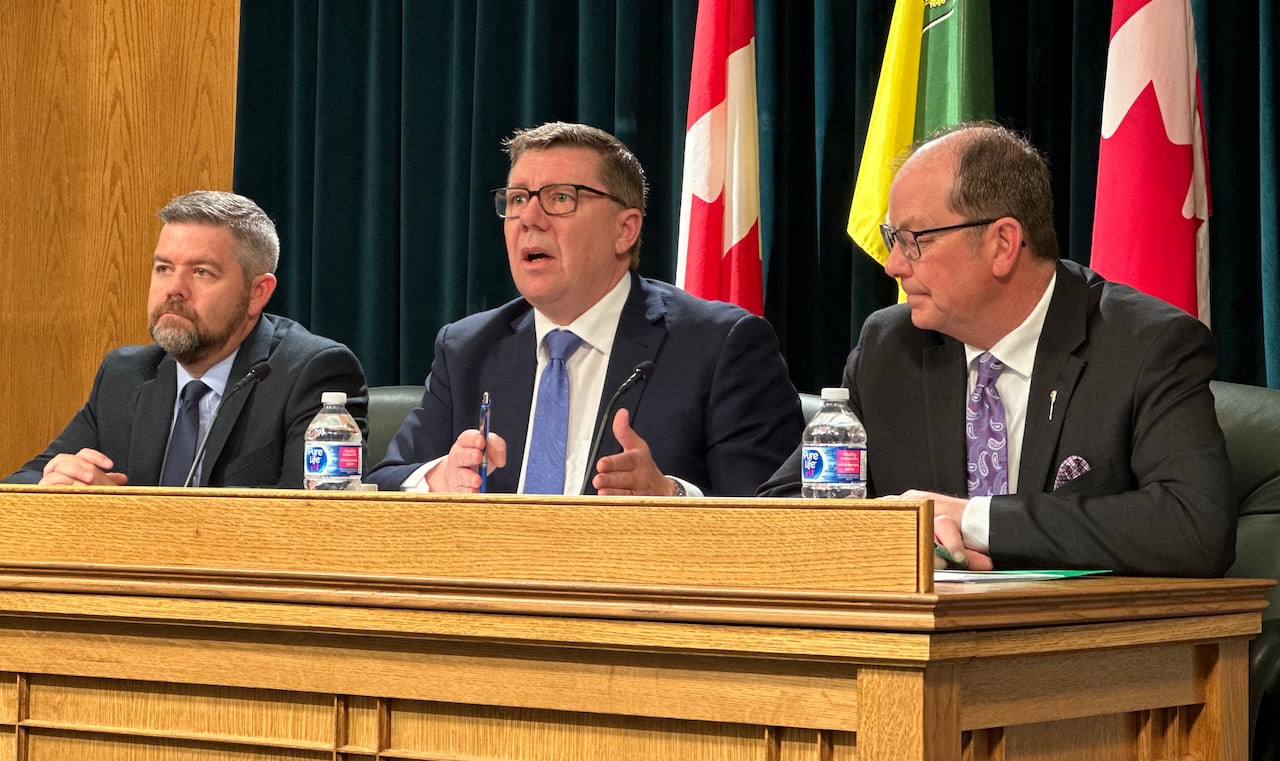 At a March 27, 2025, news conference Premier Scott Moe joined then-Environment Minister Travis Keisig, right, Crown Investments Minister Jeremy Harrison to announce a pause to the province’s industrial carbon tax. (Kirk Fraser/CBC)
The government made good on its commitment.
But according to SaskPower’s application for a four per cent rate increase in 2026 and 2027, removing industrial carbon pricing from residents bills hasn’t actually put an end to the province’s commitments.
“SaskPower has continued to accrue the cost of its obligations under the OBPS,” a section of the application reads.
Brett Dolter, an economist at the University of Regina, said the government’s claim that the province was “carbon tax-free” always lacked credibility.
Dolter said it’s important to have these numbers available to the public.
“Even though we’ve said that as of [April 1, 2025] we don’t have a carbon price in Saskatchewan, we still need to actually collect those payments for industrial pollution,” Dolter said.
WATCH | The government says Sask. is free of the industrial carbon tax. It’s still paying for it:
Sask. government continues to pay despite its claim to be carbon tax-free.
Last year Premier Scott Moe said the province would eliminate the carbon tax rate, but it continues to pay hundreds of millions of dollars to cover its obligations on large emitters.
SaskPower is forecasting its obligations under the OBPS will reach $368 million this coming fiscal year.
The provincial government is expected to give SaskPower $187 million to help cover some of that cost.
An additional $175 million will come from the province through Clean Electricity Transition Grant payments to SaskPower.
Dolter said the industrial carbon price is meant to make polluters pay for the damage their emissions create.
“Right now we have citizens that are subsidizing the polluters. It’s really backwards from the way the policy was designed,” Dolter said.
Aleana Young, the Saskatchewan NDP’s SaskPower critic, criticized the government in an interview on Tuesday.
Young said the province has never been clear on its decisions about the industrial carbon tax.
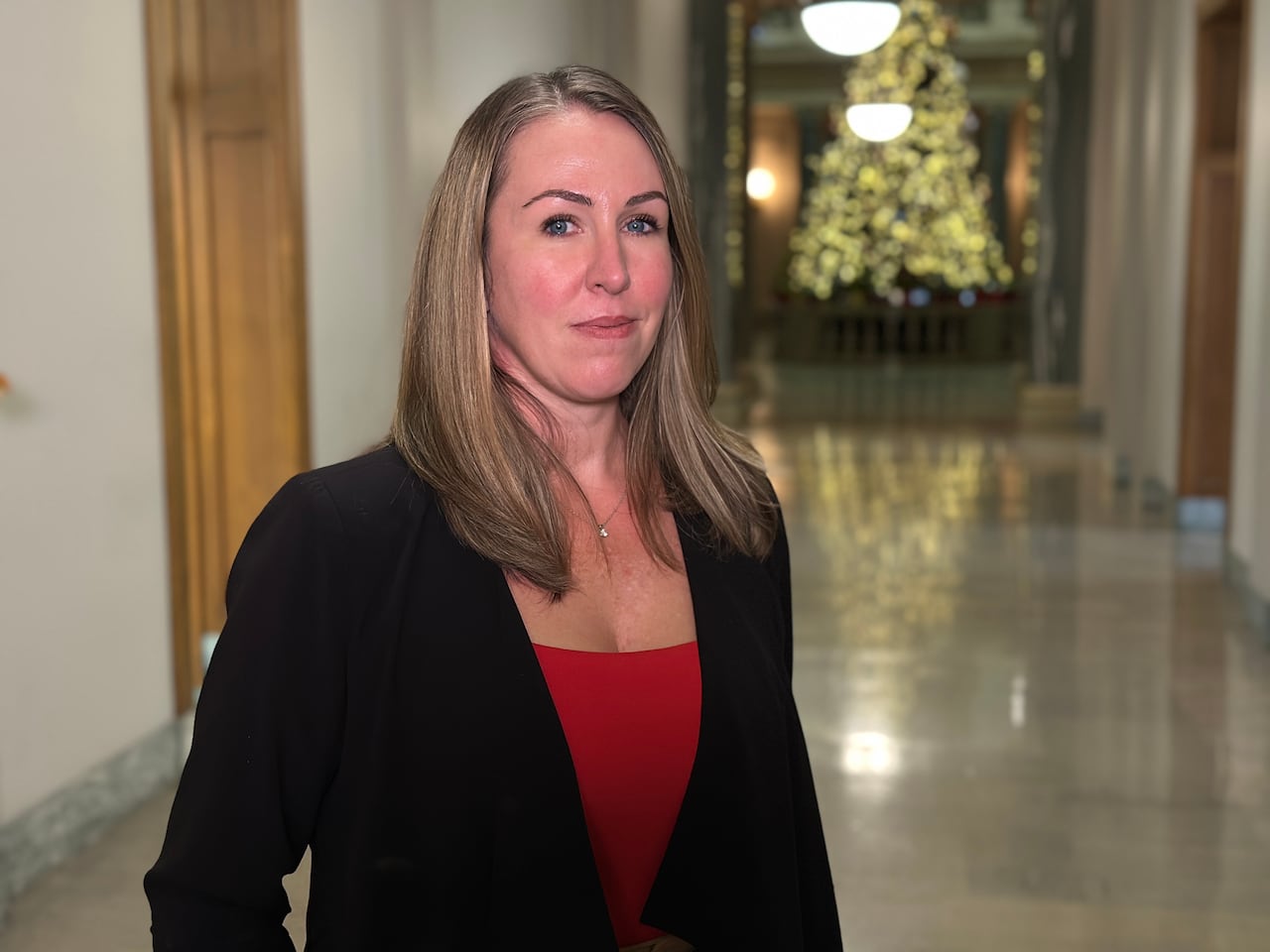 Aleana Young, the Saskatchewan NDP’s SaskPower critic, said the province has never been clear on its decisions about the industrial carbon tax. (Kirk Fraser/CBC)
“Any government worth their salt with a good answer should be able to give it. But what we see from Scott Moe, what we see from Minister [Jeremy] Harrison, what we see from the Sask. Party is a government who lies and lies and lies because there is no good explanation,” Young said.
CBC asked the provincial government to clarify its position on the industrial carbon tax.
In response, the government continued to echo its existing position in a prepared statement.
“By removing the federal carbon tax on SaskPower customer bills, Saskatchewan still remains the only carbon tax-free province in Canada,” the statement said.
Into the future
In its application, SaskPower insists that after the 2025-26 fiscal year the OBPS will no longer apply to the Crown corporation.
As a result, SaskPower does not calculate any further payments under the industrial carbon pricing past the upcoming fiscal year.
The government said that decision was made because it’s negotiating with the federal government on the industrial carbon price.
Dolter said that decision that could be an issue for SaskPower, as it’s not clear the federal government is planning to get rid of industrial carbon pricing.
Dolter pointed to a recent memorandum of understanding between the Government of Alberta and Ottawa, which includes continued use of an industrial pricing system that includes the electricity sector.
If Saskatchewan is hoping for a similar MOU with the federal government, SaskPower should expect to continue paying a carbon price, Dolter said.
“I’d like to see SaskPower doing a better job of the ‘what-if’ scenarios,” he said.
That would include how much money SaskPower is putting toward continuing to operate its coal-fired power plants and how much it is projected to pay for the pollution those facilities produce.