
Unlock the Editor’s Digest for free
Roula Khalaf, Editor of the FT, selects her favourite stories in this weekly newsletter.
BBC executives have warned of mounting problems as the corporation waits for the UK government to allocate money to the World Service with less than three months before the new budget needs to start.
Jonathan Munro, interim chief executive of BBC News, told MPs on the Public Accounts Committee on Thursday that the system of annual funding settlements for the BBC World Service from the Foreign Office was “no way to run a long-term business strategy”.
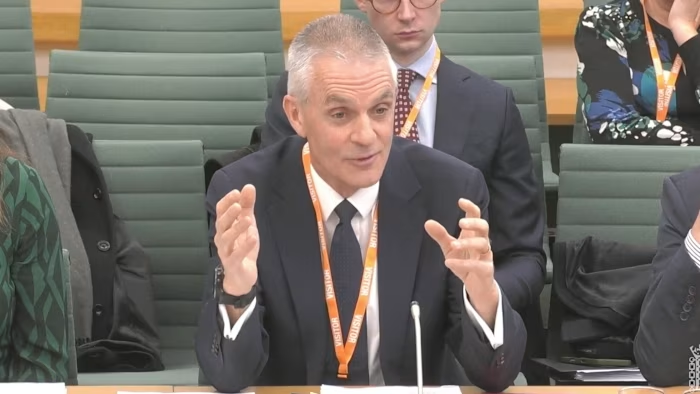
“We don’t even know what our numbers are for April,” said Tim Davie, the outgoing director-general of the BBC, who resigned in November amid a scandal over how a speech by Donald Trump was edited for Panorama.
The US president is suing the broadcaster for up to $10bn over the documentary.
Davie highlighted the issues the delays created in planning and forecasting for a service competing with the rise in Russian and Chinese media propaganda, and dealing with hostile interference.
The majority of the World Service’s funding comes from the BBC licence fee, with the rest coming from the aid budget of the Foreign, Commonwealth and Development Office (FCDO).
BBC executives want annual government funding for the World Service to rise to about £165mn, up from about £137mn, at a time when the government is making cuts to international aid.
“A lot of [any rise] is just simply keeping the show on the road as we sit today with an inflationary environment,” said Davie.
The FCDO said its “track record of staunch support for the BBC World Service was clear” and that “despite a tough fiscal situation, we have continued to back them, providing a large uplift of over £32.6mn this year alone, taking our total funding to £137mn”.
It added that grant-in-aid funding for the next three years would be decided through the FCDO allocations process. “Final overall allocations will be made in good time before the beginning of the 2026/27 financial year,” the Foreign Office said.
Davie went on to say that he would keep the BBC on Elon Musk’s X despite “a lot of pressure” to stop posting on the platform, which has come under criticism, particularly after Musk’s AI chatbot Grok was used to create non-consensual sexualised images of women and girls.
“We need to give quality information on to these social media platforms . . . because otherwise, the Chinese, the Iranians, they’re flooding the zone.”
The FCDO last year asked the BBC to model a World Service budget that would be “flat cash” over the next three years — in effect, a real-term reduction in funding — but some BBC insiders are hopeful that there will be a rise to at least match or slightly exceed inflation.
Longer term, BBC executives have recommended that the government assume almost all of the World Service’s annual budget after 2027, when the corporation’s Royal Charter will be renewed.
Recommended

Davie said the UK “should be spending double the amount it spends on this service”, arguing that it was a “unique and precious UK strategic asset”.
But he added that the BBC could not increase World Service funding from the licence fee, putting the onus of investment in the service on government funding.
“For us to ask for more for the World Service from the licence fee is untenable,” he said.
Davie is expected to stay until at least March to oversee the corporation while its board hunts for a successor.
An interim director-general is likely to take over should the permanent candidate require a lengthy notice period, with insiders suggesting Rhodri Talfan Davies, director of nations of the BBC, is most likely to be asked to step in.
The role, one of the most high-level in UK media, is seen as something of a poisoned chalice given the amount of scrutiny that comes with it.
There is also the BBC’s legal battle with Trump looming, although the corporation is expected to ask the courts to throw out the case, initially on the grounds of jurisdiction, given the programme was not shown in the US.