
A new University of Washington study links license plate lookups through a Washington State Patrol “switchboard” to immigration arrests.
SEATTLE — Luis remembers the morning clearly.
It was just after 6:30 a.m. when his father left their home in Renton and was near The Landing, heading to work. Minutes later, immigration agents surrounded the car.
“He pulls over, rolls the window down, and they put their arms in there, reach out, open the door and take his keys and take him in and put him in one of the SUV vans,” Luis said.
Since that day, he and his sister, Izzy, have kept asking the same question:
How did immigration agents know who their father was, and where he’d be?
“It doesn’t seem like a regular pull over,” Luis said. “Because they did say his name… seems more of a — they were watching routine.”
A new report from the University of Washington Center for Human Rights says it now has the answer.
A new pathway into Washington driver data
The report traces how immigration agents located Nelson Eduardo Picazo Sanchez, and links his case to a broader pattern.
Last July, KING 5 Investigators revealed that the Washington State Department of Licensing (DOL) had been sharing driver information with immigration enforcement, in violation of state law. The Keep Washington Working Act prohibits state agencies from assisting federal immigration enforcement efforts. After public backlash, state leaders said they shut down that access to ICE.
But researchers say federal immigration authorities continued getting Washington driver data through a different channel.
“Personally, I think that’s very disappointing,” said Angelina Godoy, director of the UW Center for Human Rights and primary author of the report. “This isn’t the first time, not the second time, not even the third time that they’ve been caught not doing what they said.”
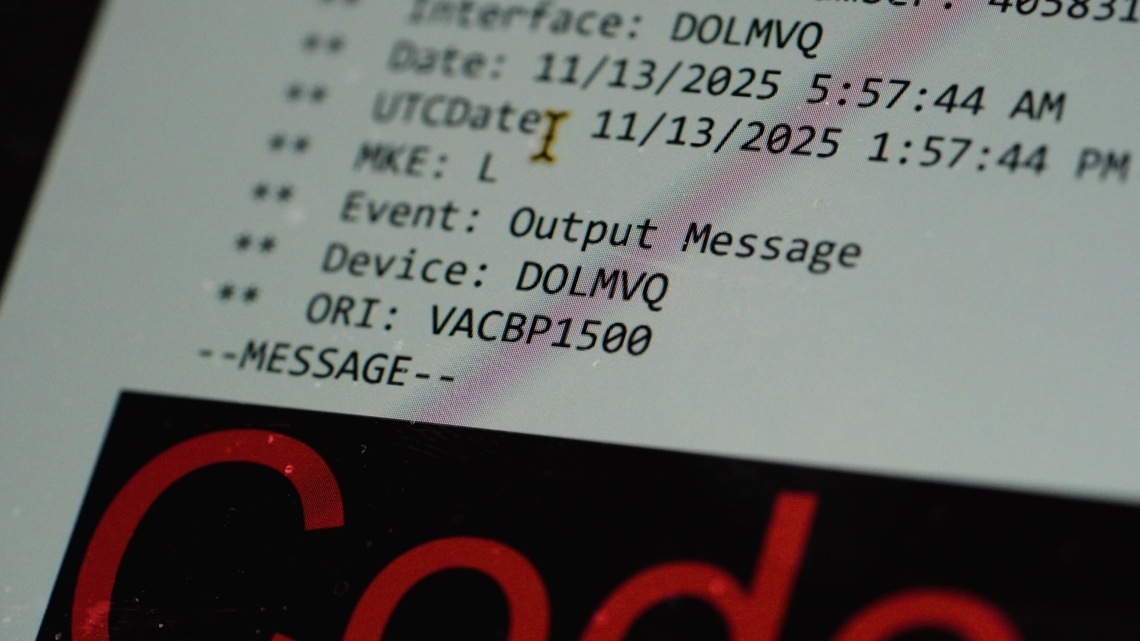
According to the report, agents used a Washington State Patrol system called ACCESS — a messaging “switchboard” that connects to a national law-enforcement network known as Nlets.
Through ACCESS and Nlets, officers can enter a license plate number and receive driver and vehicle information from DOL within seconds.
License plates, profiling concerns, and fast arrests
Godoy said the center reviewed multiple cases where agents appeared to stake out locations, run plates, and then make arrests shortly afterward.
“A significant percentage of the arrests we corroborated happened near places like Home Depot, Lowe’s, or Latino markets,” Godoy said. “It enables racial profiling when you go where you think a certain ethnicity congregates and then run the plates of everyone you see.”
In Sanchez’s case, Godoy said Washington State Patrol records show Customs and Border Protection (CBP) requested information tied to his license plate through ACCESS. DOL then sent back data associated with the vehicle and driver.
Sanchez was arrested on Nov. 4.
UW researchers identified at least seven other cases where immigration arrests happened after agents used ACCESS, sometimes within minutes of the search.
“In many of these cases, they run the name in Nlets or their own databases, see an immigration record and then they pull the person over,” Godoy said.
State law says agencies should not help enforce civil immigration cases
Washington’s Keep Washington Working Act bars state agencies from using their resources to help enforce civil immigration law.
The report argues that, in practice, that’s still happening when immigration agents use ACCESS to obtain driver data tied to Washington residents.
After the report’s draft release, Godoy said her team reached out to the Washington State Patrol. When the state patrol found out the data was getting accessed through their system, they said they cut it off to ICE mid-November.
But experts at the UW say there are ways around that—there’s other federal agencies like border patrol that could still be using this to track people down.
“If they’re working shoulder to shoulder with CBP, and one agency loses access while the one next to them still has it, it doesn’t do anything to stop the operation,” she said.
For one family, the findings feel personal
For Luis and Izzy, the policy debate isn’t abstract.
Their father was simply on his way to work. Somewhere, they believe, someone ran his license plate and agents already knew his name before he rolled down the window.
“It wasn’t me finding that out — it was little me,” Izzy said, fighting back tears as she recalled the day of her father’s arrest. “I’ve always been a daddy’s girl. It felt like me as a little girl, getting my dad ripped away from me.”
DOL and WSP respond
State officials say the University of Washington’s findings leave out key context. In a joint statement issued Wednesday afternoon, the Department of Licensing and Washington State Patrol argued Washington has already taken aggressive steps to block immigration agencies from driver data, and disputed suggestions the state is violating the Keep Washington Working Act. T
hey say ICE’s access was shut off in November and that the systems involved are also used for legitimate criminal investigations.
“Since shutting off ICE access … thousands of attempted queries from ICE have been denied,” the joint statement added in part.
In response to the claims DOL and WSP are violating the Keep Washington Working Act, they denied they were.
“The Keep Washington Working Act does not prohibit information-sharing for criminal law-enforcement purposes,” the statement reads.
As for not shutting off CBP’s access to ACCESS/Nlets, state officials said, “Washington state is taking a close look at all our options to protect our residents. This is an ongoing effort. We are reviewing CBP’s use of Nlets, what actions other states have taken, and are looking at all options to protect Washingtonians while also protecting public safety.”
You can read the full response here.
This is a developing story and will be updated.