
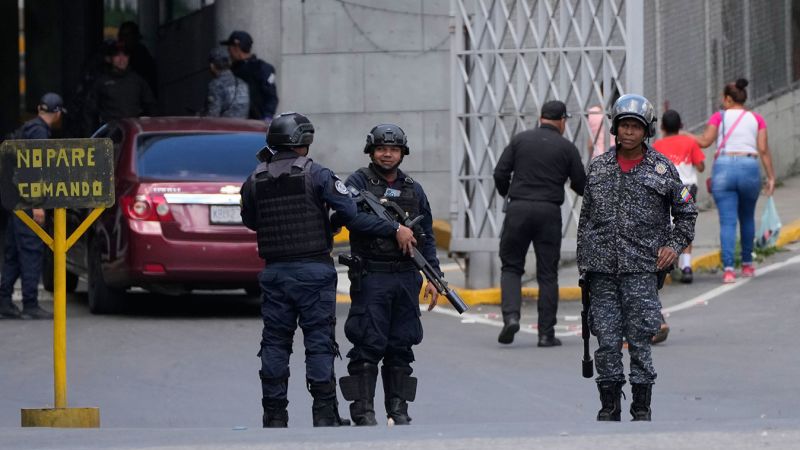
Venezuela said on Thursday it would release “a significant number” of prisoners in a move its government framed as a gesture “to seek peace.”
National Assembly president Jorge Rodríguez said the releases were “taking place immediately” and would include both Venezuelans and foreign nationals, though he did not specify how many or exactly who would be released. The move, he said in a message broadcast on the public television channel TeleSur, was meant to contribute to “national unity.”
It comes just days after the US captured Venezuela’s longtime authoritarian President Nicolás Maduro in a stunning military raid and took him to New York to face drug trafficking charges.
Since the raid, US officials have been working to establish a pliant interim government in Venezuela and have demanded, among other things, that Venezuela release its political prisoners, according to a source familiar with the US administration’s briefing with key lawmakers this week.
Following the announcement by Rodríguez, the Spanish Foreign Ministry confirmed that five Spaniards – one of whom has dual citizenship – had been freed and were flying back to Spain.
“They will soon be home with their loved ones,” Foreign Minister José Manuel Albares said on X. “I have spoken with them to convey my joy at their release.”
“Spain, which maintains fraternal relations with the Venezuelan people, welcomes this decision as a positive step in the new phase that Venezuela is entering,” the ministry said.
Days before the US captured Maduro, a US official told CNN that Venezuelan security forces had detained at least five Americans in recent months. The Trump administration believed the Americans had been detained as leverage, the official said, adding that while their cases varied, some may have been involved in drug smuggling.
It is unclear whether any of the five will be among those released.
In a post on X, Venezuelan activist Alfredo Romero said that his human rights organization, the Penal Forum, would be “verifying each release.”
Romero said in an interview with TVV Network that Venezuelan opposition leader Juan Pablo Guanipa would be among those released.
Guanipa previously served as a member of Venezuela’s National Assembly and is a close ally of opposition leader María Corina Machado.
Guanipa was detained in May 2025. Venezuela’s Interior Minister Diosdado Cabello claimed, without offering evidence, that his arrest was due to an alleged plot against elections scheduled for that month.
The Committee for the Liberation of Political Prisoners in Venezuela (CLIPPVE) demanded “swift action and transparency” in the government’s release of the remaining detainees.
“There continues to be a great lack of transparency and ample discretion in the handling of these releases, increasing the anxiety, anguish, and uncertainty of family members and political prisoners,” CLIPPVE said in a statement.
Both the Venezuelan opposition and foreign governments have long accused Maduro’s government of taking political prisoners, though Caracas has dismissed international reports on arbitrary detentions as “irresponsible, biased” and “interventionist.”
In the aftermath of Venezuela’s disputed 2024 presidential election, which Maduro claimed as a victory despite a chorus of independent observers labeling the vote as undemocratic, more than 2,000 people were arrested in a subsequent crackdown by government forces, according to Amnesty International.
According to the Penal Forum, 863 political prisoners remained in detention as of early January.
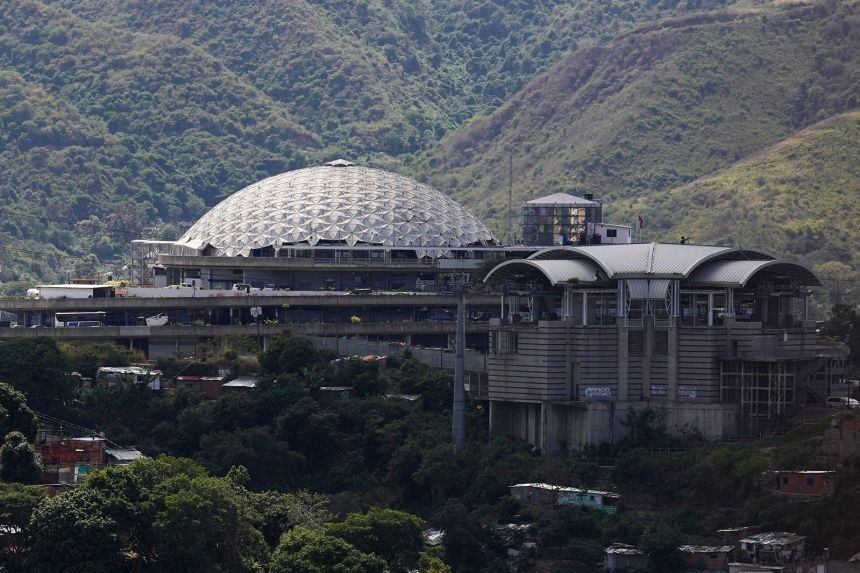
Many of these detainees are held in a detention facility in Caracas known as El Helicoide.
Originally constructed to be a shopping mall, the imposing structure now serves as the headquarters of Venezuela’s intelligence services and a notorious prison.
Venezuela has also faced allegations of mistreating its political prisoners held in El Helicoide and elsewhere.
A 2025 investigation from Human Rights Watch (HRW) found that many political prisoners were held incommunicado for extended periods, denied visits from their families and legal representatives.
HRW Americas director Juanita Goebertus described the treatment of political prisoners as “a chilling testament to the brutality of repression in Venezuela.”
Since Maduro’s ousting, many Venezuelans have voiced fears his successor, acting president Delcy Rodríguez, would continue or even intensify this policy.
On Monday, Venezuelan officials imposed a decree granting broad powers to the presidency and ordering security forces to capture “any person involved in the promotion or support” of the weekend attack by the US.
Political prisoners had their visiting rights suspended and were prevented from communicating with the outside world, according to CLIPPVE.
After the announcement of the planned release, families of some prisoners gathered outside of El Helicoide, anxiously awaiting updates about their loved ones.
Atali Cabrejo came to the facility to see if her son, an opposition party coordinator, would be among those released. She told Reuters that officials had not provided any information.
“What we know is what we have seen in the media,” she said.
CNN’s Alessandra Freitas, Michael Rios, Alayna Treene, Kristen Holmes, and Jennifer Hansler contributed.