
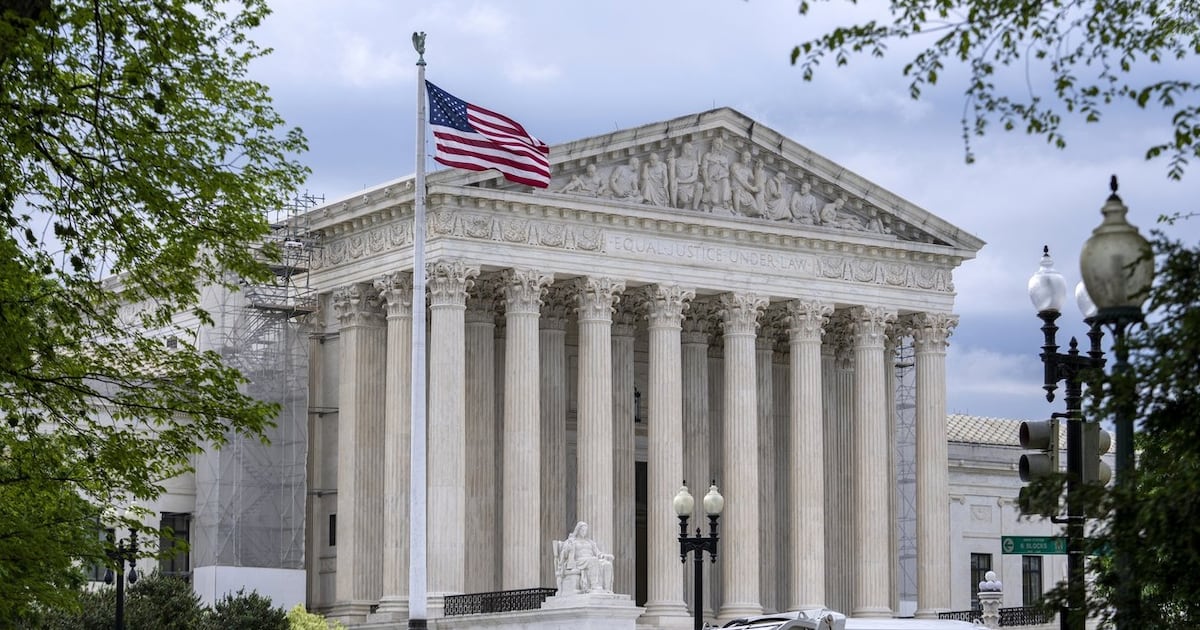
Abigail Bimman reports how Canada could be impacted if the U.S. Supreme Court rules on the legality of U.S. President Donald Trump’s global tariffs on Friday.
Canadian trade experts are anxiously awaiting the U.S. Supreme Court ruling on the legality of U.S. President Donald Trump’s global tariffs, which could come as soon as Friday, saying the decision could trigger an arduous refund process.
“If the Supreme Court strikes it down, it really does send a big message to the U.S. administration and to President Trump, that these tariffs, really were not permissible,” said William Pellerin, an international trade lawyer at McMillan LLP.
“And hopefully, (it) will give the U.S. administration pause on increasing those tariffs or changing those tariffs, as we’ve seen throughout 2025.”
The top court south of the border has scheduled Friday as an opinion day, meaning it will be the first chance for a ruling to be issued in the case, though as is established practice, the Supreme Court has not said what case, or cases, could be ruled on tomorrow.
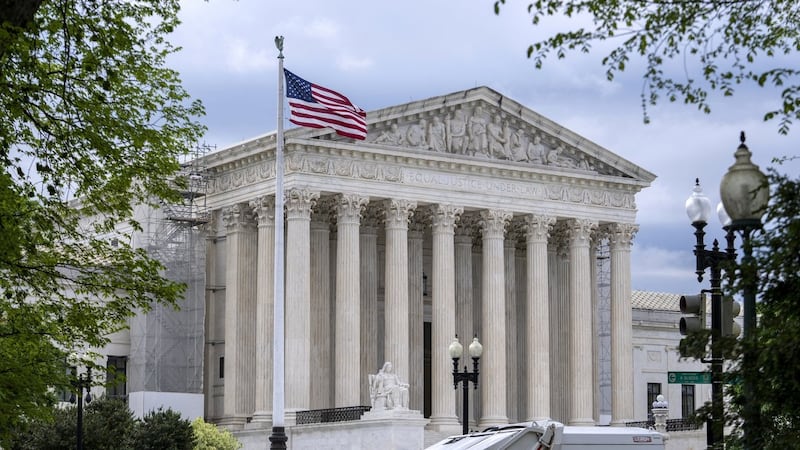 The U.S. Supreme Court The U.S. Supreme Court is seen on Capitol Hill in Washington, April 25, 2024. (AP Photo/J. Scott Applewhite)
The ruling will be on the legality of Trump’s sweeping international imposition of tariffs without congressional approval, levied under the International Emergency Economic Powers Act (IEEPA). Dating back to 1977, the law historically has been used to impose sanctions or freeze the assets of adversaries.
If the court rules against the Trump administration’s use of emergency tariff powers, the duties applied under this law would be lifted.
For Canada, that means the tariffs imposed on this country early in the trade war, which the Trump administration claimed was over the flow of drugs and migrants across the border, would be eliminated.
Though most goods traded between the two countries are compliant with the Canada-United States-Mexico Agreement (CUSMA), so experts say this move would mainly benefit the sectors who aren’t covered under that tariff protection.
“It doesn’t include things like steel and aluminum that are covered under Section 232,” said Randall Bartlett, deputy chief economist with Desjardins. “The impact will be, I think, unambiguously positive for the Canadian economy, but it’s not really clear that it’s going to have any substantive magnitude of an impact.”
Pellerin also cautioned that the U.S. still has “a number of other tools” that remain untested, which Trump could look to to maintain his tariff regime.
“I think we are going to see a continued use of tariffs, and that’s unfortunate,” he said.
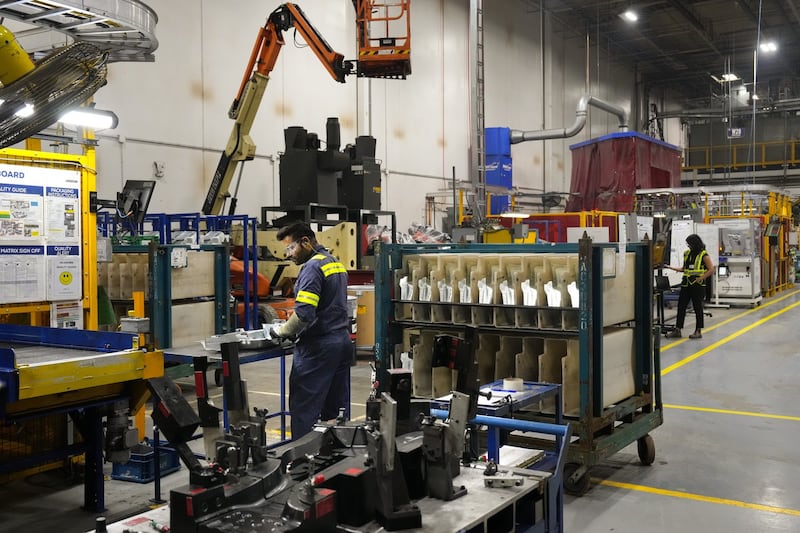 Employees work on the production line at the Martinrea auto parts manufacturing plant in Woodbridge, Ontario on Feb. 3, 2025. The site supplies auto parts to both the Canadian and U.S. auto plants. THE CANADIAN PRESS/Chris Young Employees work on the production line at the Martinrea auto parts manufacturing plant in Woodbridge, Ontario on Feb. 3, 2025. THE CANADIAN PRESS/Chris Young ‘Nightmare’ to recoup tariffs paid
If the Supreme Court strikes down Trump’s IEEPA tariffs, all the experts CTV News spoke with cautioned that it would also mean the start of a potentially challenging fight for the U.S. government to issue what Reuters estimates could potentially be US$150 billion in refunds to countries worldwide.
“It’s going to be an administrative nightmare as well, because you’ll see manufacturers, retailers, and consumers all saying: ‘these were collected illegally, I should see some money back,’” said Adam Taylor of NorthStar Public Affairs.
Though experts said it’s unlikely consumers will ultimately see any costs recouped.
“It’s unlikely to happen to be honest,” Taylor said. “The best-case scenario would be that those who have paid it, the manufacturers, would see some money back. But unfortunately, it’s going to be very difficult.”
Pellerin added that despite some ongoing modernizations to refund request mechanisms south of the border, the U.S. system remains “quite archaic.”
“I think we’re in for a very messy time in terms of what will happen at the border with the tariffs that companies have paid, and whether or not people will be able to get their tariff refunds back,” Pellerin said.
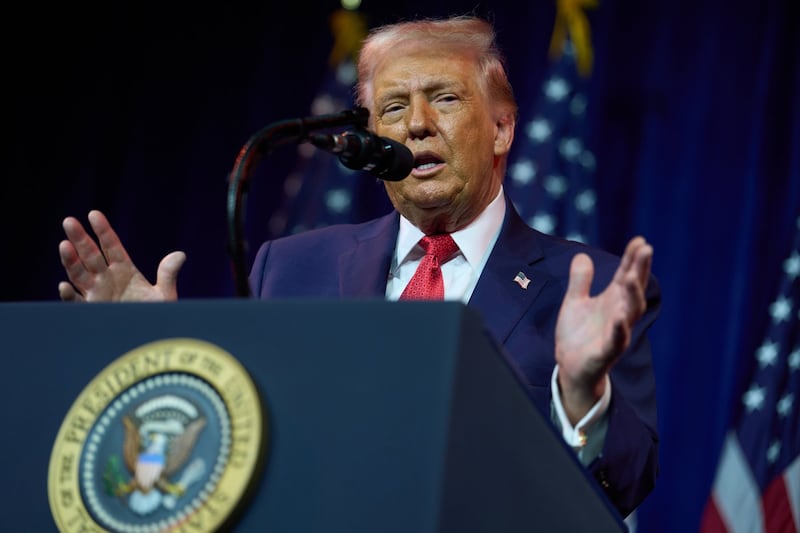 U.S. President Donald Trump speaks to House Republican lawmakers during their annual policy retreat, Tuesday, Jan. 6, 2026, in Washington. (AP Photo/Evan Vucci) U.S. President Donald Trump speaks to House Republican lawmakers during their annual policy retreat, Tuesday, Jan. 6, 2026, in Washington. (AP Photo/Evan Vucci) Trump ‘prays’ court rules in favour
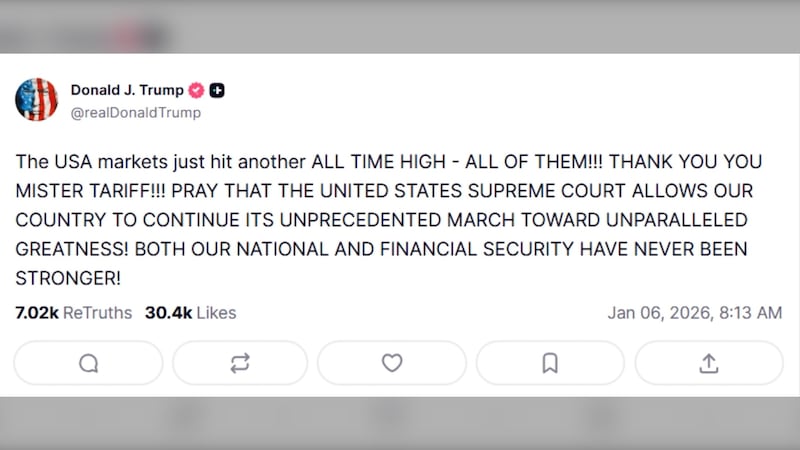
Trump has been keeping a close eye on the top court’s decision, posting on Truth Social on Tuesday: “PRAY THAT THE UNITED STATES SUPREME COURT ALLOWS OUR COUNTRY TO CONTINUE ITS UNPRECEDENTED MARCH TOWARD UNPARALLELED GREATNESS!”
In the post, Trump attributed the American markets hitting an all-time high to tariffs.
 Donald Trump Truth Social
Speculation over how the court may rule comes after justices on both sides of the political spectrum expressed doubt during hearings late last year about whether the president had the authority under the law to levy these tariffs.
If the court rules in Trump’s favour, Taylor said it would “embolden” his administration to use this legal basis to levy more duties.
“If you can use IEEPA to raise tariffs, then you can presumably use IEEPA to impose all sorts of taxes,” he said. “So that’s going to be a very, very groundbreaking development.”
U.S. exports falling: StatCan
Anticipation over the ruling is building, just as Canada’s share of exports to the U.S. fell to its lowest-ever level outside of the COVID-19 pandemic.
According to Statistics Canada, exports to the U.S. dropped 4.1 per cent in October, while exports to non-U.S. nations rose by 15.6 per cent, a record high.
Economists say while this activity was largely concentrated on certain goods, such as gold, this shows how Canadian companies are starting to look beyond their historically largest trading partner, to new markets.
“It’s always too simplistic to look at a single monthly trade stat and try to develop a trend. But obviously, the trend does show that as long as there’s barriers to trade … trade will fall over time,” Taylor said.
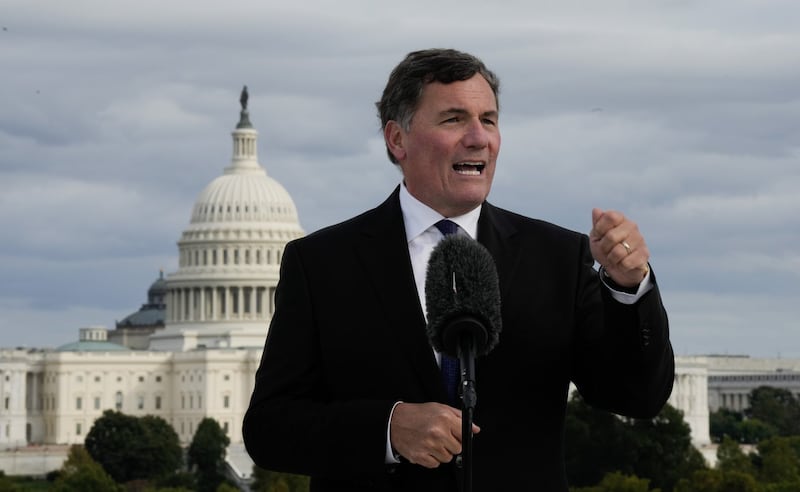 Canada-U.S. Trade Minister Dominic LeBlanc speaks with reporters at the Canadian Embassy in Washington, D.C., on Tuesday, Oct. 7, 2025. THE CANADIAN PRESS/Adrian Wyld Canada-U.S. Trade Minister Dominic LeBlanc speaks with reporters at the Canadian Embassy in Washington, D.C., on Tuesday, Oct. 7, 2025. THE CANADIAN PRESS/Adrian Wyld CUSMA review starting soon
In mid-January, Canada-U.S. Trade Minister Dominic LeBlanc will be in the U.S. Capitol to begin formal discussions with his American counterparts about the review of the trilateral free trade deal between Canada, the U.S., and Mexico.
In a statement sent to CTV News on a not-for-attribution basis, LeBlanc’s office said that with respect to the case before the Supreme Court, Canada will “let the judicial process follow its course.”
The official also said that: “In the meantime, Canada will continue its preparations ahead of the review of the CUSMA, which is scheduled for this year.”
The federal government wouldn’t specifically say whether any Canadian officials plan to be in D.C. for the potential ruling.
Asked whether Mark Wiseman, Canada’s ambassador-designate to the U.S., is already in Washington ahead of talks ramping up in the coming weeks, LeBlanc’s office said Canada’s outgoing ambassador, Kirsten Hillman, and her staff “will continue to monitor developments.”
With files from CTV News’ Abigial Bimman and Reuters