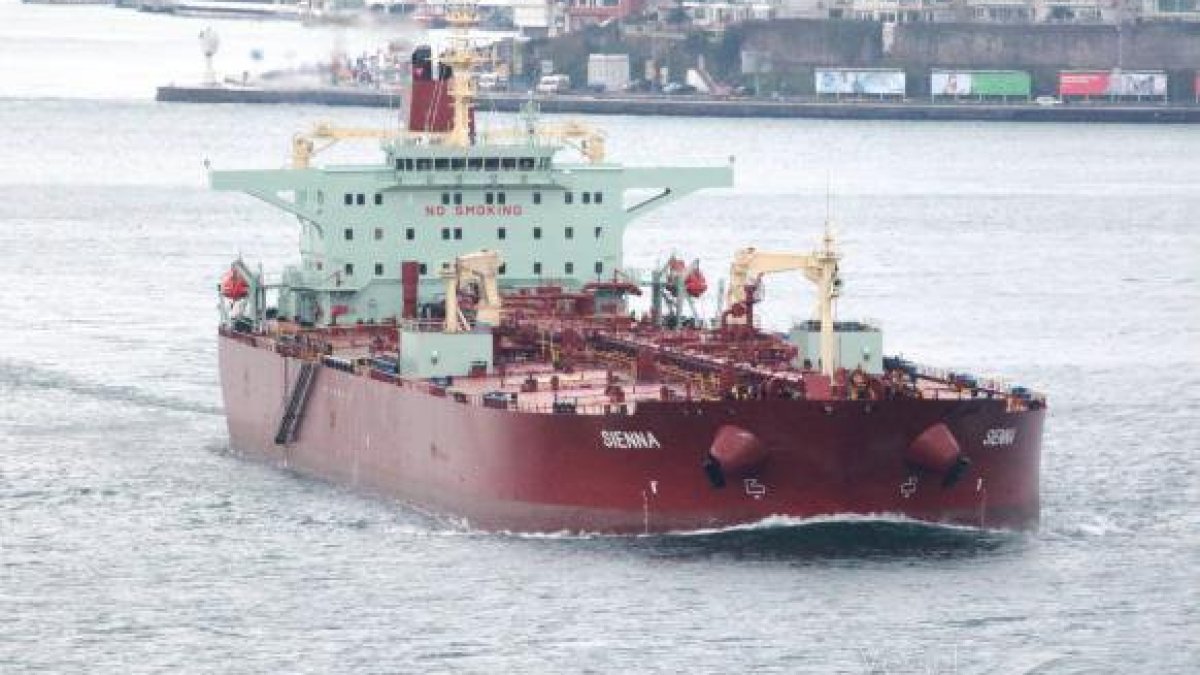
At least two sanctioned vessels are sailing past southern England – among at least 50 of Putin’s suspected shadow fleet around the UK in the past three days
At least two sanctioned Russian ships currently sailing through the English Channel are among at least 50 suspected shadow tankers to have closed in on UK waters in the past three days, The i Paper can reveal.
A day after British forces helped the US seize a runaway Russian tanker, Bella 1, just over 100 miles from UK waters north-west of Scotland, another “zombie” vessel sailed through the Channel under a false name.
It was sanctioned by the US in 2024 while carrying the name Tia. It now uses a fake name – Tavian – to evade detection while carrying oil across the globe, providing a huge income source for Moscow’s war in Ukraine.
It was followed into the Channel on Thursday by the Aria, sailing under the Barbados flag, and sanctioned by the US in January last year. The ship is similarly suspected of enabling illicit Russian oil trades.
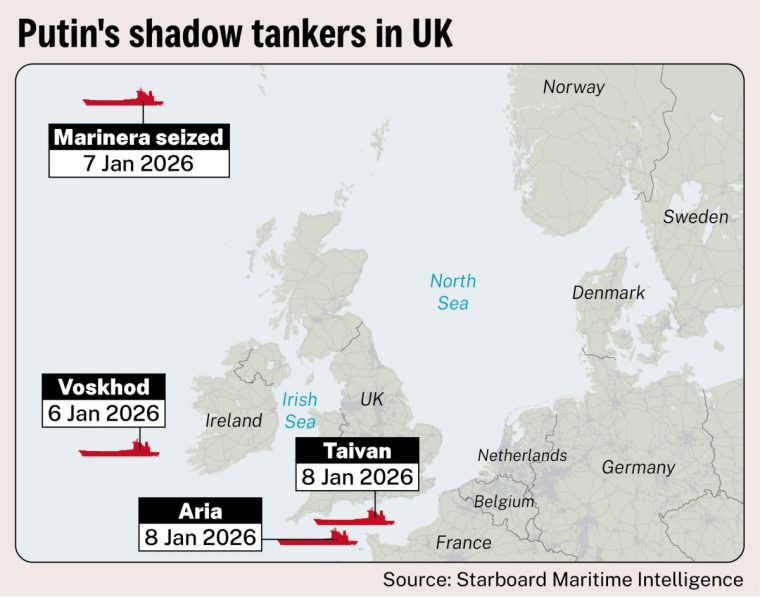
According to open-source tracking data provided by Starboard Maritime Intelligence, the Bella, Tia and Aria are among at least 50 of Vladimir Putin’s suspected “shadow fleet” that have traversed through or near UK waters over the past three days.
The maritime data indicates that many more sanctioned Russian shadow fleet tankers will continue to pass through the English Channel.
It can also be revealed that yet another tanker, the Voskhod – also sanctioned and suspected to be in the shadow fleet – left the UK’s exclusive economic zone (EEZ) – a 200-mile buffer stretching from a country’s shoreline – on Tuesday, a day before the US raid on the Bella 1.
It has sailed past the west coast of Ireland, passed the UK, and is now off the shore of western Spain.
The Voskhod was sanctioned by the UK Foreign Office in October for carrying goods from Russia to “a third country” that could contribute to “threatening the territorial integrity, sovereignty or independence of Ukraine”. Under the terms of the sanctions, access to UK ports is prohibited and it may be subject to a “detention direction, and a port entry direction or a movement direction”.
Mark Douglas, of Starboard Maritime Intelligence, told The i Paper that an increase in sea ice has closed the northern passage along Russia’s Arctic coast, meaning many more vessels are expected to take the route around UK waters.
He added: “The fact that 50 such vessels continue to operate is a concern, not just for the continued flow of oil and other goods to feed Russia’s illegal invasion of Ukraine, but also the risk that these vessels travelling – which are often old and lack proper management and oversight – pose to critical maritime and underwater infrastructure and the environment.”
The British Government signalled it was prepared to seize more of the “shadow fleet” after the successful boarding of Bella 1, which has been renamed the MV Marinera, by US special forces assisted by the RAF and Royal Navy.
The operation was carried out in a stretch of sea between the UK and Iceland after a two week-long cat-and-mouse pursuit across the Atlantic.
British airbases were used as the launchpad for the mission, while RFA Tideforce, a Royal Navy tanker, provided support. The RAF also flew surveillance missions, as first reported by The i Paper.
Following the operation, Defence Secretary John Healey described disrupting the shadow fleet as a “priority for the Government”, adding: “The UK will not stand by as malign activity increases on the high seas. And alongside our allies, we are stepping up our response against shadow vessels – and we will continue do to.”
The list of 50 includes ships that are sailing overtly under the Russian flag as well as those sailing under suspected false flags, masking their identity by claiming to be owned by another state.
Source: Starboard Maritime Intelligence
Under UN law, Britain would be able to board a vessel passing near its waters if it suspected it was sailing under a false flag. The UK would be further emboldened if the ship sailed into its territorial seas – an area of 12 nautical miles from the coast.
But with so many dark-fleet ships using British waters on a daily basis, exactly how the Government plans to tackle the issue remains unclear amid practical and legal limitations.
Shipping laws leave loopholes for malign actors
Putin relies on a vast network of more than 1,400 shadow-fleet vessels to evade sanctions, enable illicit trade deals, and launch hybrid warfare operations in the West.
The United States has blacklisted 744 active tankers, while the UK has blacklisted 549. The overlap between both lists is 235. When adding the EU’s 580 blacklisted tankers to the mix, the overlap across all three authorities is just 195 tankers.
Experts say that in order for officials to halt the vessels, there first needs to be unification of the sanction lists.
Emma Salisbury, a senior fellow at the Foreign Policy Research Institute, said it was “encouraging” to see the recent action from the US and UK, but warned that the rules and laws around commercial shipping are “complicated”, leaving loopholes and “unwatched corners for malign actors to exploit”.
Although they face accusations of engaging in nefarious trades, the legality of trying to seize these ships is still limited under the United Nations Convention on the Law of the Sea (Unclos).
The internationally recognised law states that ships, even if sanctioned, are to be given the right of innocent passage through international waters. However, under the same convention, a ship cannot change its flag mid-voyage – which led to the legal argument for the Marinera to be seized.
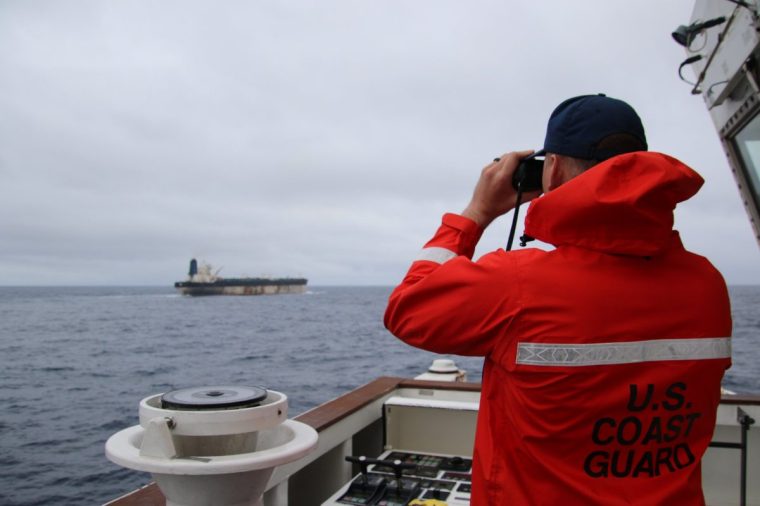 The US Coast Guard observing the Marinera following its seizure (Photo: US_EUCOM/X/PA)
The English Channel, while partly falling within UK territorial waters – an area of sea where Britain would have much more jurisidiction to act – is an internationally recognised passage for shipping. Therefore ships can traverse innocently unless suspected criminality is being conducted.
“The UK and European allies should tighten legislation on such ships passing through their waters, particularly building on existing international law around false-flagging, lack of insurance and seaworthiness, making it easier for suspicious ships to be queried and boarded,” Salisbury said. “Russia will keep using its shadow fleet while it can get away with it, so more enforcement is vital.”
How UK Special Forces would intercept Putin’s tankers – and why they won’t
If UK authorities were able to establish the political will and legal clearance to board a suspected vessel, they would also have to fire up an impressive fleet of Special Forces personnel and equiptment to carry out the operation.
The seizure of the Marinera involved specialised helicopters, gunships and surveillance aircraft, as well as Royal Navy tanker.
A former UK Special Forces officer who carried out vessel boardings, and wished to not be named, said “the reality” was that it would be “inconceivable” for the UK to tackle each Russian shadow fleet tanker they saw.
“The level of planning, it is high risk,” they said. “Its inconceivable that the UK are going to be doing this on a mass scale.”
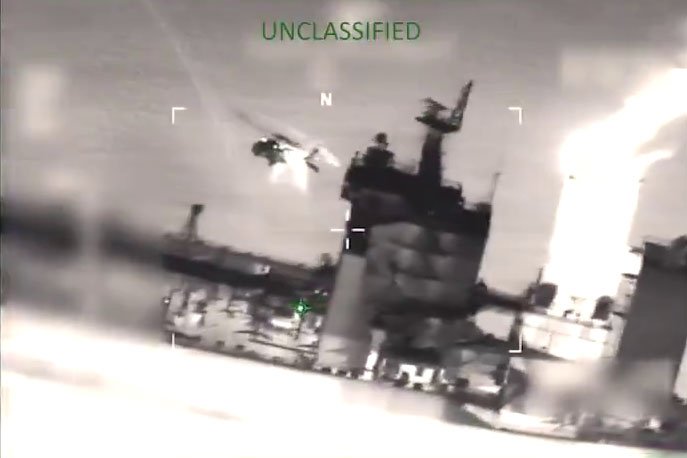 US forces apprehended a second stateless tanker, MT Sophia, in the Caribbean Sea on Wednesday (Photo: Southcom/X)
They added that for each boarding mission the Ministry of Defence would need to deploy a Special Forces squadron skilled in maritime operations, along with at least two surveillance aircraft, a refueling tanker, and specialist helicopters.
“Fundamentally the reality is the UK wouldn’t have the confidence to conduct a seizure independently,” they said.
The Ministry of Defence refused to comment on specific vessels currently operating in the Channel, but reafirmed that “deterring, disrupting and degrading” the Russian shadow fleet is a “priority” for the Government.
In October, UK Defence Secretary John Healey sent a clear message to Putin: “If Nato is threatened, we will act.”
The UK may now be tested on those words.
Your next read