

Listen to this article
Estimated 4 minutes
The audio version of this article is generated by AI-based technology. Mispronunciations can occur. We are working with our partners to continually review and improve the results.
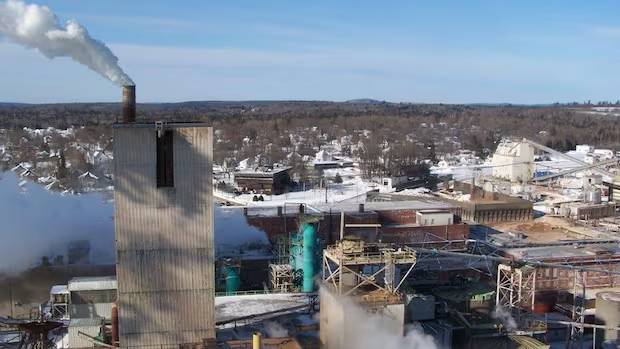
Equipment at Woodland Pulp in Maine roared back to life in mid-December after a 60 day pause in operations, and now one of the state’s largest mills is again accepting wood from New Brunswick producers.
“On Monday, we restarted purchasing fibre for the mill,” company spokesperson Scott Beal said.
“We’re back in the market. We are bringing in some fibre from suppliers in Canada, hardwood and chips.”
The general manager of the Carleton Victoria Forest Products Marketing Board says the news is welcome but not nearly enough to help embattled private woodlot owners in the province.
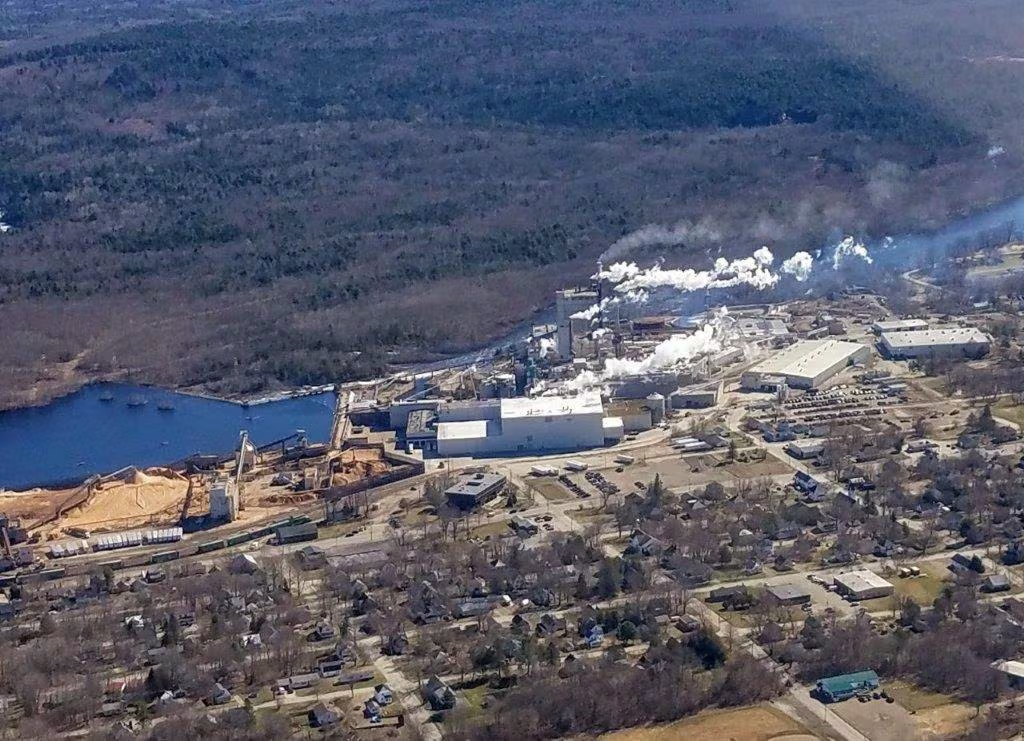 Woodland Pulp, based in Baileyville, Maine, stopped buying Canadian timber in October because of added costs borne out of a 10 per cent tariff U.S. President Donald Trump slapped on timber imports. (Submitted by Scott Beal)
“Everything is good news at this point, but it is not as good as it could be,” Kim Jensen said. “We’re not back where we were.”
With sales down by about two-thirds from last year, Jensen said some woodlot owners are deciding to pack it up, while others struggle on.
WATCH | ‘We’re not back where we were,’ woodlot group says: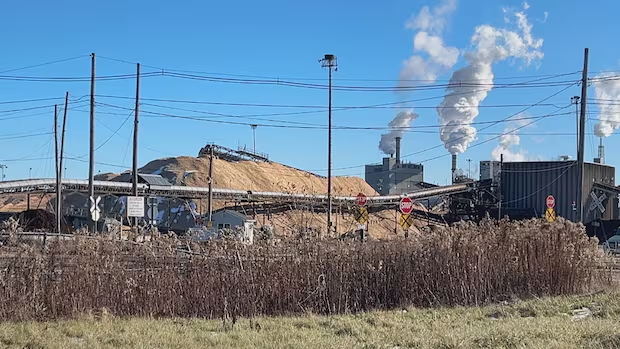
Major Maine mill takes N.B. wood again, but industry remains fragile
Producers are happy to regain the lost market, but say many are still having trouble staying viable.
“We have had some older ones who’ve left, they’ve just, they’ve had enough and they’ve left,” she said.
“The people who have invested in the business, have bought processors and forwarders, they have to stay in business. And if you have $1,000,000 worth of equipment there, your payments are $40,000 to $60,000 a month and you have to work. You can’t just go somewhere else and get a job.”
 Kim Jensen, the general manager of the Carleton Victoria Forest Products Marketing Board, said private woodlot owners have lost about two-thirds of their sales compared with a year ago. (Submitted by Kim Jensen)
Duty rates on New Brunswick wood were set at 35 per cent in September, when U.S. President Donald Trump announced an additional 10 per cent tariff on lumber imports.
The sudden increase was too much for Woodland Pulp to bear. The mill relied on New Brunswick wood for about a third of its supply prior to October.
“It certainly adds cost to the business and, you know, like other wood users, I mean we’re always looking and hoping and trying to source fibre at the least cost,” Beal told CBC News in October.
The Baileyville-based mill has rehired all of the 144 people laid off during its two month shut-down, and Beal said it will likely take some time to ramp up to accept the amount of wood it previously did.
And with the difficult and uncertain tariff environment, Beal said, it’s hard to say how long the mill would be able to continue purchasing Canadian wood.
“It’s a very challenging pulp market,” he said.
“The tariffs remain in place. That hasn’t changed. So it’s not reasonable to think that that won’t be a headwind for the business.”
The federal government did create a $1.25 billion fund to help the industry survive, but Jensen says that hasn’t meant support for individual private woodlot owners.
In October, Jensen told CBC News that sales of timber by the marketing board’s members totalled about $1 million for all of 2024. They have fallen to about $200,000 over the past 12 months.
And the cost of cross-border business has continued to rise.
Before Woodland Pulp stopped taking Canadian timber, the company had a lumberyard in Florenceville ,where producers could drop off wood. Woodland would then take responsibility for shipping it the rest of the way to the mill.
Now it’s up to individual producers to source transportation and to arrange a broker to help meet cross-border requirements. That’s adding between $60 and $100 per load of timber heading to the U.S.
“The markets are tightening up, and the prices are going down, and you can only go down so far before it’s just done,” Jensen said.
“A mill can stop and start up, maybe. But a private guy who loses his equipment, he’s lost everything. He’s not coming back.”