
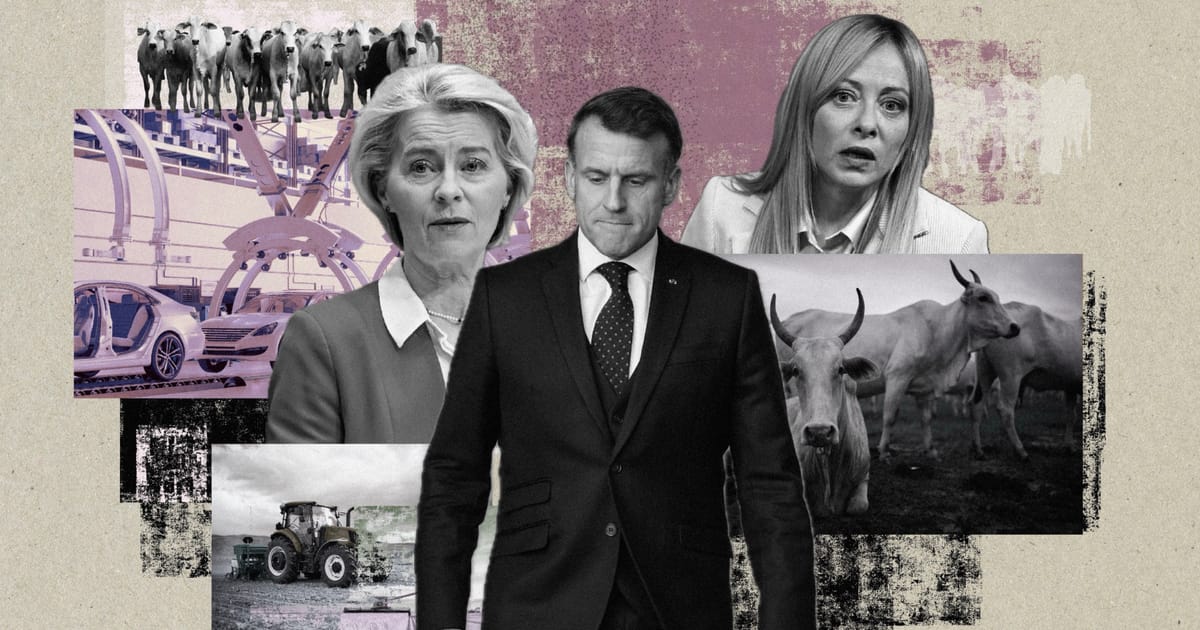
China
China has been expanding exports to Latin America, particularly Brazil, during the decades when the EU was negotiating the Mercosur trade deal. The EU-Mercosur deal is an opportunity for Europe to claw back some market share, especially in competitive sectors like automotive, machines and aviation.
The deal also strengthens the EU’s hand on staying on top when it comes to direct investments, an area where European companies are still outshining their Chinese competitors.
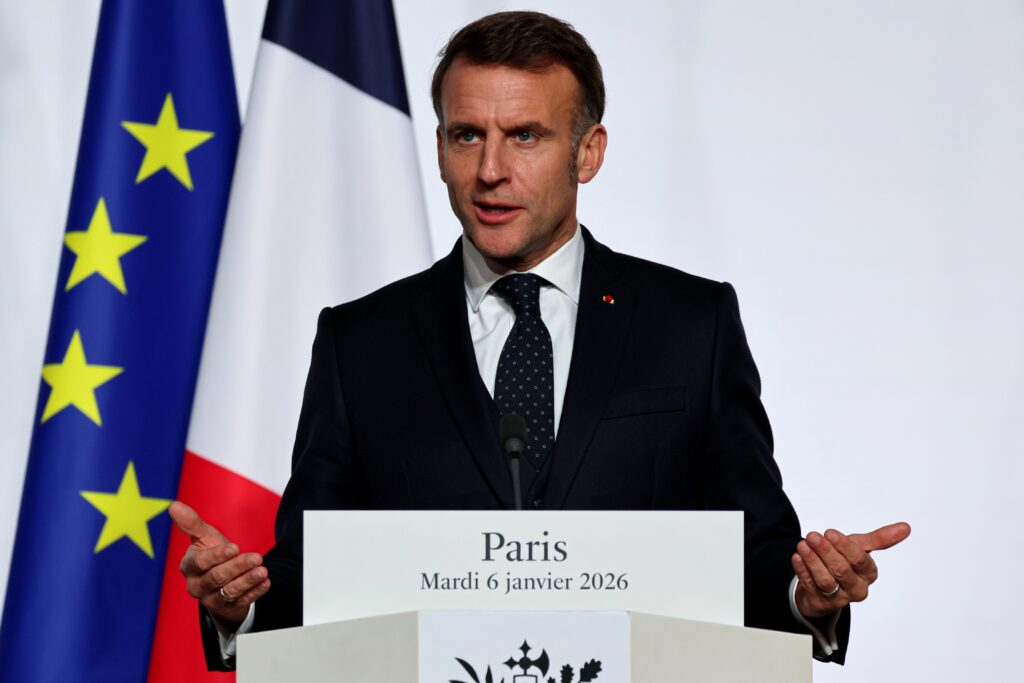 Emmanuel Macron made a valiant attempt to rally the troops for a last-minute counterattack, and at one point it looked like he had a good chance to throw a wrench in the works after wooing Italy’s Meloni. | Pool photo by Ludovic Marin/EPA
More politically, China has somewhat succeeded in drawing countries like Brazil away from Western points of view, for instance via the BRICS grouping, consisting of Brazil, Russia, India, China and South Africa, and other developing economies. Because the deal is not only about trade but also creates deeper political cooperation, Lula and his Mercosur counterparts become more closely linked to Europe.
The Amazon rainforest
Unfortunately, for the world’s ecosystem, Mercosur means one thing: burn, baby, burn.
The pastures that feed Brazil’s herds come at the expense of the nation’s once-sprawling, now-shrinking tropical rainforest. Put simply, more beef for Europe means less trees for the world. It’s not all bad news for the climate. The trade deal does include both mandatory safeguards against illegal deforestation, as well as a commitment to the Paris Climate Agreement for its signatories.