
“So what do they teach you in university?”
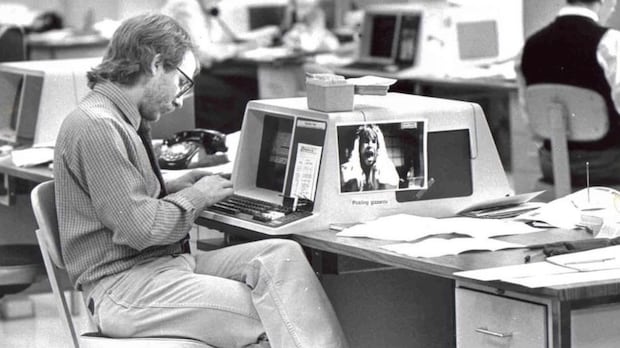
I remember city editor Tom Loran asking that question after slicing and dicing my latest attempt at writing a news story. The printed copy lay face down on Mount Olympus (what rookies called the city desk at the front of the newsroom) and I could see the red slashes bleeding through the paper.
Zeus was not impressed.
I was 22 years old, a student in the first class at the University of Regina’s School of Journalism and Communications. Less than a month into a four-month internship at The Saskatoon StarPhoenix, it was not going well.
“This is sheep shit,” Tom explained. “You do know ‘it’s’ means ‘it is,’ right?”
Pause.
“Right?”
It was shaping up to be a long year.
Tom sighed.
“You’ve got an uncle Julius, he’s in insurance?”
My dad’s first cousin, I clarified. Julius Zakreski. He worked as a broker with The Co-operators in Saskatoon.
“Give him a call, ask him about what’s up with wall calendars. I’m not seeing as many.”
It so happened that the old-style wall calendar was on the way out, a victim of rising paper costs and new advertising methods. Julius put me in touch with a local printing firm, a specialty advertising company and a local trucking firm.
On Jan. 12, 1981 the story appeared in the paper, page 8, above the fold.
“Much-sought wall calendar may have become dated”
By Dan Zakreski of The StarPhoenix. My first byline.
By the Numbers
I’ve now been a daily news reporter in Saskatoon for 45 years. The start of my career is closer to the end of the Second World War than to today’s date.
I tried to figure out how many stories I’ve written over the years and stopped that exercise when the number started creeping toward 10,000.
The math gets funky in a hurry, whether it’s by volume or sheer weirdness. One of my bosses today is a kid I once chaperoned on a Grade 8 school trip at Buena Vista School; he has two kids of his own now.
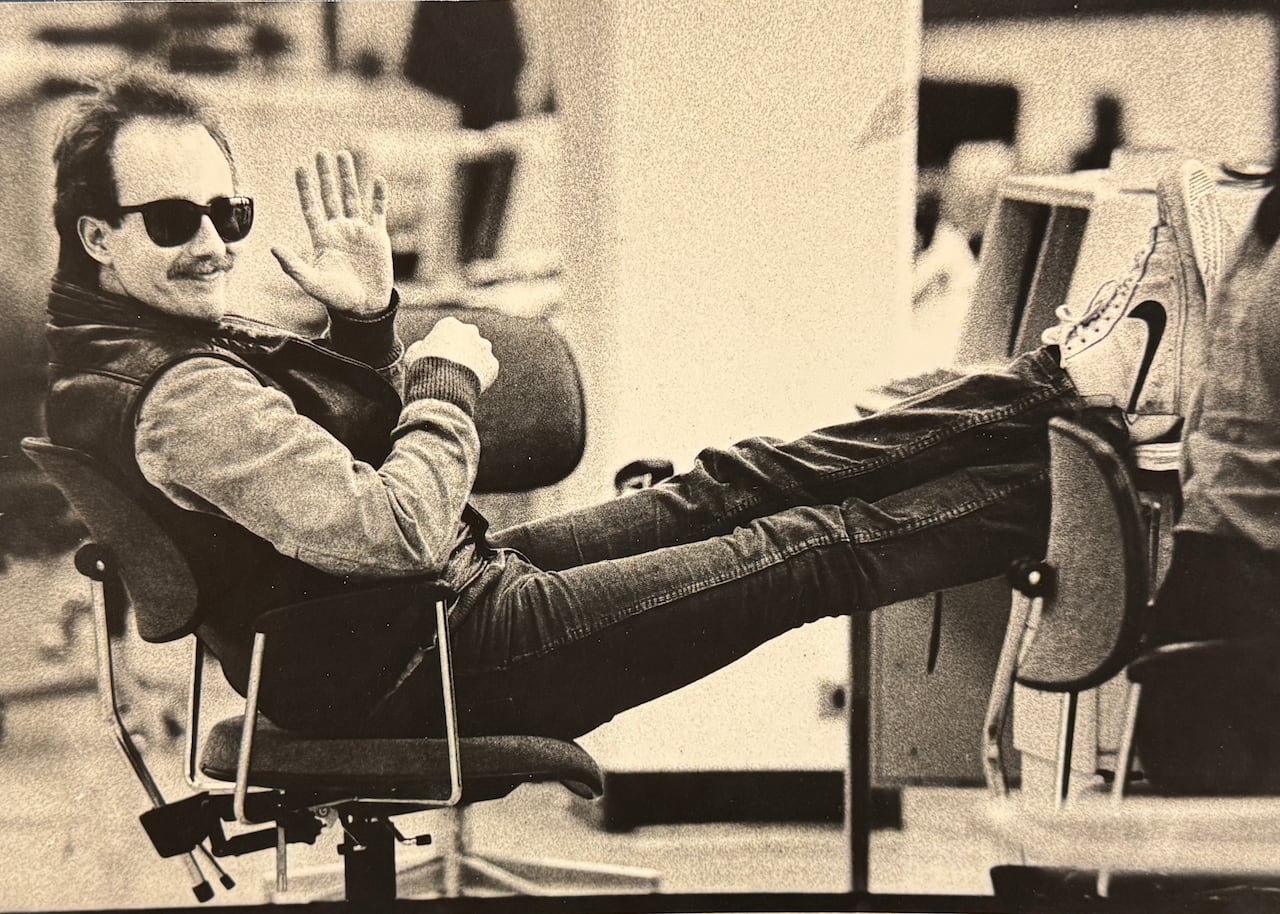 Dan Zakreski in the newsroom of The StarPhoenix in the 1980s. (Submitted by Dan Zakreski)
Colin Thatcher, a Tory cabinet minister in Grant Devine’s 1982 government, shot his wife JoAnn Wilson in Regina two years after I started my internship. Thatcher served 22 years of a first-degree murder sentence before his release in 2006. He’s now been out almost longer than he was behind bars.
Colin’s Dad, Ross Thatcher, was premier of Saskatchewan in the 1960s. Ross Thatcher’s press secretary was Tom Loran, my first StarPhoenix city editor.
“No way Ross’s boy did it,” he’d say.
Sheep shit, indeed.
So yeah, I’ve been around — reporting on farming in the Dirty ’80s, covering two separate Satanic abuse investigations in the ’90s and then the Saskatoon police Starlight Tours scandal of the early 2000s.
I had a MySpace page and used ICQ (one of the original instant messaging platforms.)
In the late 1980s, I wrote a weekly crop report for two years. I’d call farmers across the province, choosing names at random from the small-town white pages and developing themes each week.
Farmers with last names that were liquor: Mescall, Beaujolais, Champagne. Or, body parts: Eyebrow, Knee, Neck.
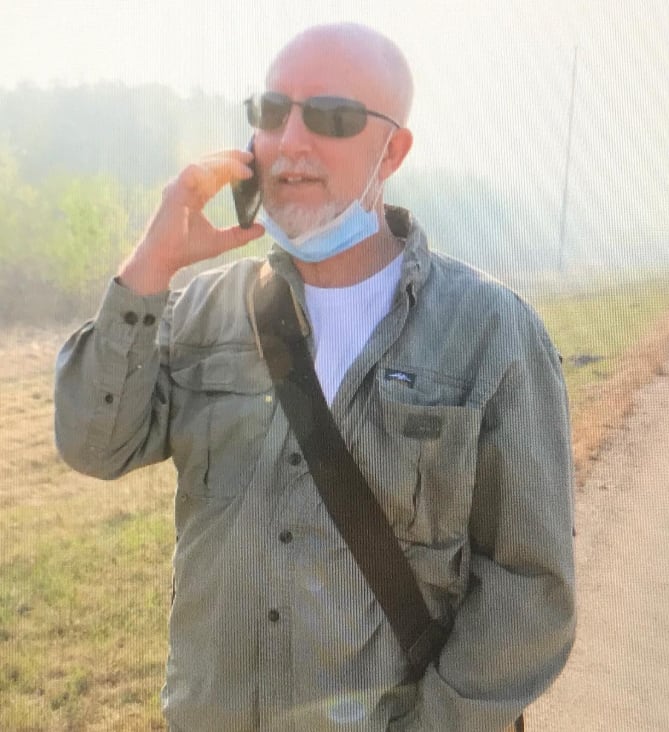 The best stories are in the field. Covering a forest fire near Prince Albert in 2021. (Don Somers/CBC)
I’ve been around long enough to style both a mullet and a very ill-advised perm. To be called D-Rex. Danosauris. Dan of the Dead. Danny Darko.
Long enough to sell my younger colleagues on some outrageous tall tales over the years.
To set the record straight: no, I did not fight in the battle of Khe Sanh in the Vietnam war. The scar on my cheek is from falling out of a tree behind our old house on MacDermid Crescent, not shrapnel from a grenade.
No, I did not play the uncredited banjo on the 1966 song by the Monkees, “You Told Me.” Although I did play rhythm guitar in a rock and roll band called The Pig Boys.
But yes, we did smoke cigarettes and drink whisky at our desks in the newsroom.
Time is not a circle
Technology fundamentally changed journalism over the course of my career. Rotary dial gave way to touch-tone phones, a seemingly small advance until you found yourself chasing to deadline and having your finger slip out of the slot on the last number and having to start the sequence all over again.
Desktop computers became sleeker, faster and smaller, now coming equipped with recording and transcription programs.
Laptop computers meant reporters could file from the field. Cell phones and Wi-Fi meant reporters could connect with the internet and do real-time research.
And yes, the internet is the asteroid that killed everything from social anonymity to newspaper classified ads to wall calendars.
Hey.
Wait a minute.
I went to the mall in early December and there were kiosks jammed full of wall calendars, in all shapes, sizes and subject matter. It appears they did not disappear.
 Wall calendars now come in all shapes, sizes and subject matter. (Dan Zakreski/CBC News)
I decided to call John Edgar, the CEO of Calendar Club of Canada, and get to the bottom of it. Some 45 years later, I had a chance for a mulligan.
“It’s not their functionality that is what’s kept them relevant. I think it’s just the connection to people … they reflect something that they’re passionate about,” he said.
Larger industry trends certainly helped them survive. There are improvements in printing technology. Companies are quick to exploit niche interests from cat yoga and model airplanes to the covered bridges of Vermont.
And Edgar said many people are just tired of looking at computer screens.
“[People still buy] the big calendar that goes on your fridge, where they can mark down when their soccer games are, and the music recital,” he said.
“They serve a purpose.”
And so, looking back on a career that began with a 1981 story on wall calendars, I realize that time is not circular.
Time is flat, with a grid pattern — and, in the case of my career, 16,434 boxes.