
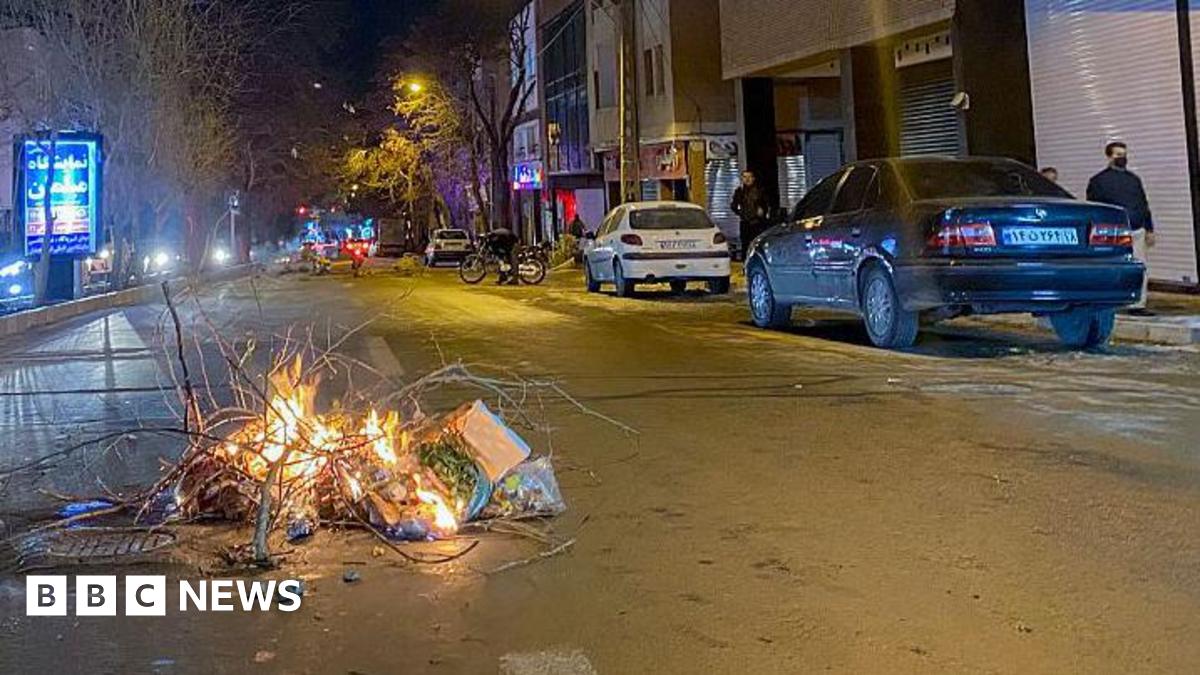
Vast crowds of Iranians have taken to the streets of the capital, Tehran, and several other cities, calling for an end to the Islamic Republic and in many places for the restoration of the monarchy.
Young and old, rich and poor, Iranians across the country and from all walks of life are now demonstrating their fury at the clerical establishment which has ruled them for close to half a century.
One young woman in Tehran told the BBC she was protesting because her dreams had been “stolen” and she wanted the regime to know that “we still have a voice to shout, a fist to punch them in the face”.
Another spoke of the despair and hopelessness that is driving the protests.
“We’re living in limbo,” she said. “I feel like I’m hanging in the air with neither wings to migrate nor hope to pursue my goals here. Life here has become unbearable.”
Day after day, since late December, protests in Iran have been spreading and building momentum, fuelled by deep-seated economic and political frustration.
“People are becoming bolder now,” 29-year old Sina told the BBC on Thursday by text message from the city of Karaj, west of the capital Tehran. “I went to buy some groceries and people were speaking out loud against the regime in the daylight! I was thinking that the protests will stop but it hasn’t lost its momentum.”
It is hard to know the full picture of what is taking place because independent media are not allowed to operate freely in Iran, many people are fearful to speak publicly, and now the internet has been severely restricted. The BBC spoke to people before the near blackout.
But there is no disguising the extent of discontent, and the size of some of the protests filmed and posted on social media.
Iranians have a multitude of grievances against their government – from the absence of political freedoms to corruption and the state of the economy which has resulted in crippling price rises.
The last major protests in Iran were sparked, in 2022, by the death in custody of a young woman, Mahsa Amini, who was accused of not wearing the compulsory hijab properly.
This time it was a strike by shopkeepers at Tehran’s historic grand bazaar on 28 December over the plummeting value of the Iranian currency which lit the match of a new crisis of legitimacy for the Islamic Republic.
Protests at universities followed. The institutions were swiftly ordered shut by the authorities, ostensibly because of cold weather. But by then, the spark had ignited a wider fire in the country, with clashes in many small towns and cities, particularly in the west of Iran.