
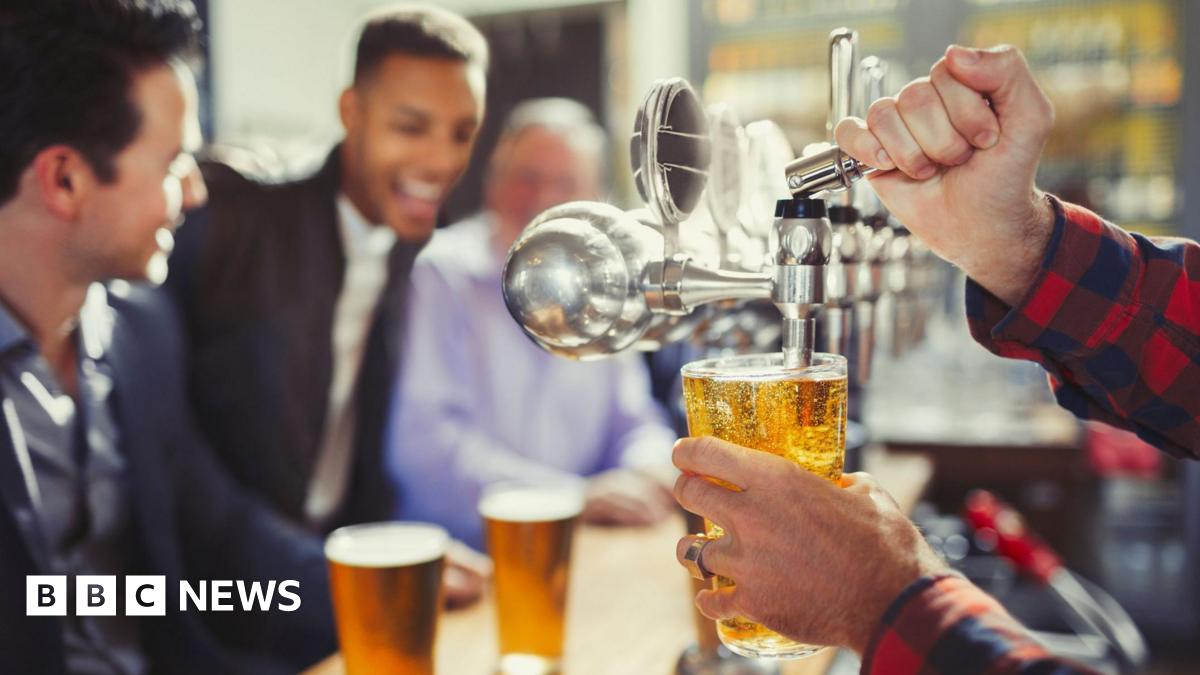
The BBC understands it will apply only to pubs and not the whole hospitality sector.
The Treasury is also thought to be ready to relax licensing rules to allow longer opening and more pavement areas for drinking.
In her November Budget, Chancellor Rachel Reeves scaled back business rate discounts that have been in force since the pandemic from 75% to 40% – and announced that there would be no discount at all from April.
That, combined with big upward adjustments to rateable values of pub premises, left landlords with the prospect of much higher rates bills.
A campaign to dilute the impact of these rises has been gaining traction in recent weeks, with pub owners and industry groups lobbying for more support.
Conversations between the government and the hospitality sector were “ongoing”, DWP minister Dame Diana Johnson said.
Speaking to Radio 4’s PM programme, she said: “We as a government want to make business rates fairer but you’ll also know we’re coming to the end of the transitional relief that was available because of Covid.”
On Wednesday Labour MPs called on the government to rethink its support for the industry.
Conservative leader Kemi Badenoch said: “What has happened is that over Christmas Labour MPs were banned from every single pub they tried to get into… so now they are pushing for a U-turn.”
She said the Conservatives had a “much better plan” which was to “slash business rates for all of the High Street, not just pubs”. She said business rates bills of less than £110,000 would be scrapped completely.
Reform also welcomed the climbdown, saying “pubs have already been lumbered with astronomical energy costs”.
The party’s deputy leader Richard Tice said: “Pubs are the backbone of our communities and a huge part of British heritage. Their closures would be a cultural catastrophe as much as an economic one.”
To calculate a pub’s business rate bill the rateable value of its premises is multiplied by a set figure: “the multiplier”.
The government had already offered some relief by reducing the multiplier for pubs, and may be about to reduce it further.
Alternatively they could boost the £4.3bn “transitional relief” fund brought in to ease the impact of withdrawing support following the pandemic.