
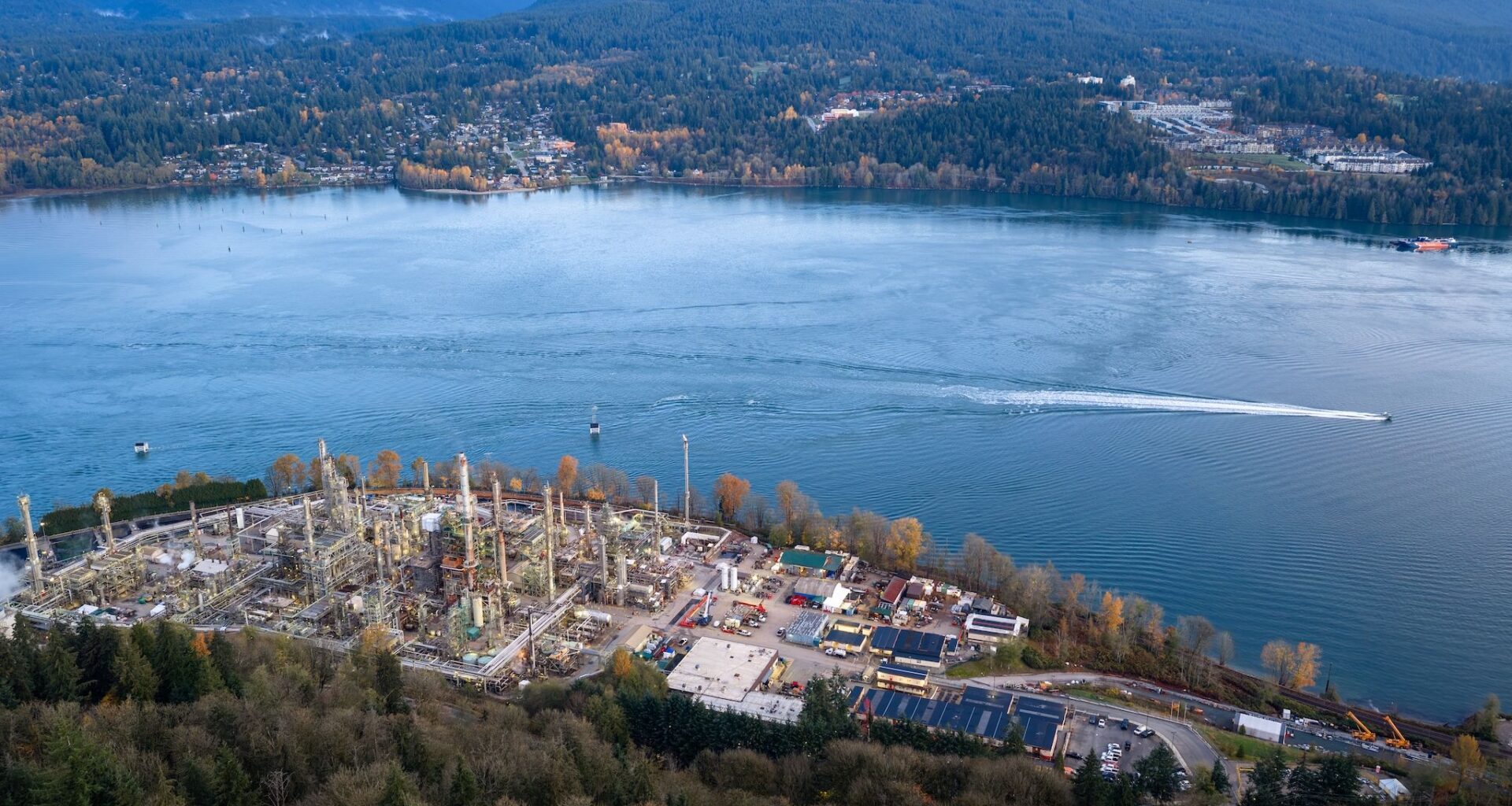
British Columbia Premier David Eby is signalling a potential shift in Canada’s energy conversation, suggesting that if governments are prepared to invest billions in new infrastructure, a new additional domestic oil refinery may make more sense than another publicly-funded pipeline.
During a press conference earlier this week, when asked by media, Eby framed his comments within a broader discussion about global instability and Canada’s economic independence.
He said many Canadians are relieved by the departure of Venezuelan leader Nicolas Maduro, whom he described as a tyrannical ruler who brought poverty and misery to his country. At the same time, Eby said he is unsettled by what he characterized as unilateral foreign policy actions and rhetoric from U.S. President Donald Trump, including comments related to Greenland, Mexico, and Canada.
Eby argued that this uncertainty drives home the need for Canada to deepen its economic independence from the United States. He pointed to next week’s trade mission to India as part of that effort.
Turning to energy infrastructure, the premier noted that B.C. already has a publicly-owned pipeline feeding — the 2024-expanded Trans Mountain pipeline, owned by the federal government through a Crown corporation — into Vancouver harbour, which he said is not operating at full capacity and could potentially be expanded. While Eby said B.C. is willing to work with Alberta and the federal government on access to tidewater, he reiterated his opposition to using taxpayer dollars to build a new pipeline across northern B.C.
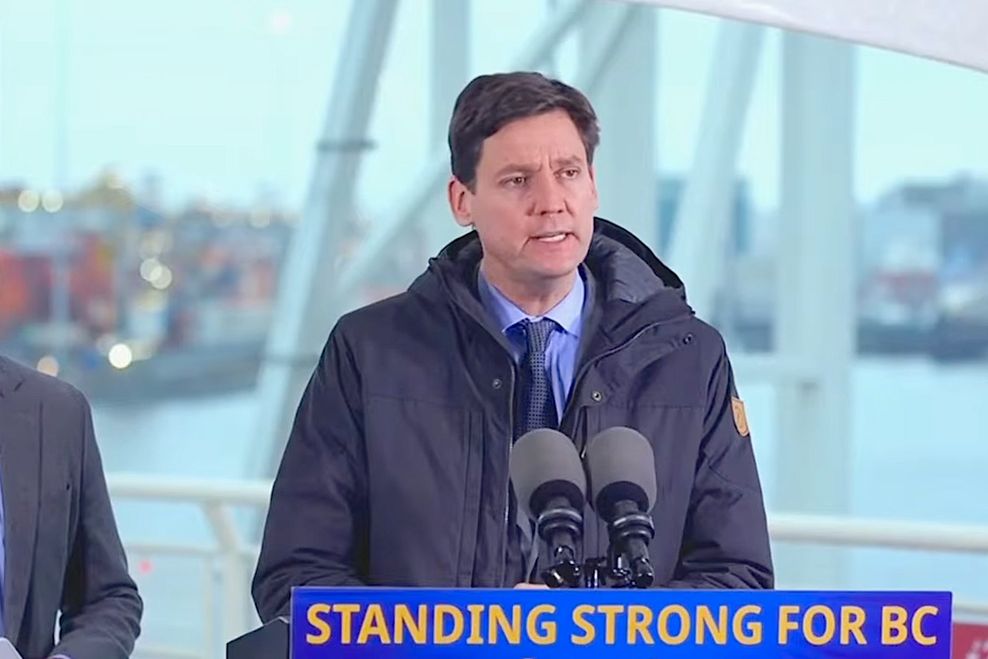
B.C. Premier David Eby during the press conference on Jan. 6, 2025. (CPAC)
“The economics have been very challenging,” said Eby, noting there is still no private-sector proponent willing to build such a pipeline. He also emphasized opposition from Indigenous communities along proposed routes.
“Time to pivot that discussion to a refinery”
Instead, Eby suggested that public investment should be redirected toward refining capacity. Canada, he said, continues to import refined oil products from the United States despite being a major producer of crude.
“If we’re talking about tens of billions of dollars in public investment, I think it’s time to pivot that discussion to a refinery,” said Eby. “We should be developing oil products for Canadians and for export instead of being reliant on American and China refineries.”
Eby framed the idea as a way to support Canadian workers and strengthen domestic supply chains during a period of global volatility, while still acknowledging the country’s longer-term transition away from fossil fuels.
“We’ve got to stand on our own two feet here,” he said. “Building that capacity and jobs in our country is something we should be talking about, as opposed to shipping raw resources out as quickly as possible when we already have infrastructure that could do that right now.”
Currently, there are just two oil refineries in B.C. — Parkland’s 1935-built Burnaby Refinery in Burrard Inlet in North Burnaby, which is fed by the Trans Mountain pipeline, and Tidewater’s substantially smaller 1967-built Prince George Refinery.
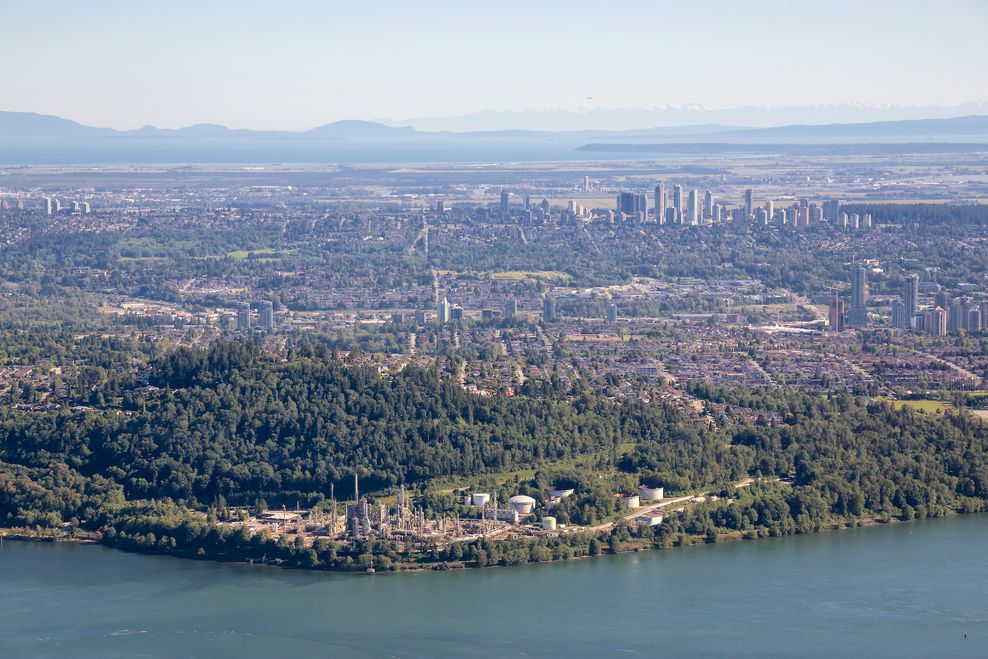
Burnaby Refinery. (EB Adventure Photography/Shutterstock)
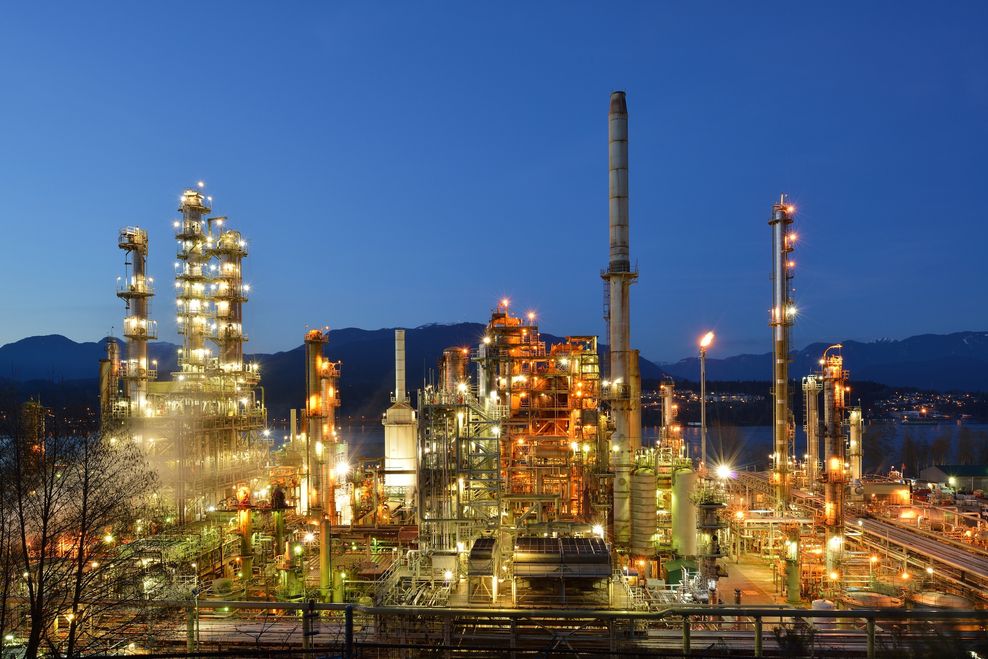
Burnaby Refinery. (Lijuan Guo/Shutterstock)
The Burnaby Refinery produces products for both the local and export market. According to its website, this refinery produces about 25 per cent of Metro Vancouver’s gasoline — including fuel used by TransLink buses and BC Ferries ships — and 30 per cent of Vancouver International Airport’s jet fuel. It is also connected to the nearby Westridge Marine Terminal for exports to international markets.
In October 2025, U.S.-based Sunoco LP acquired Parkland and its assets, including the Burnaby Refinery, for US$9.1 billion, adding to concerns over energy security.
B.C. relies on a mix of its own refineries, Alberta-sourced refined products, and imports — including from Washington state — to meet overall fuel demand.
The nearest oil refinery to B.C. in Washington state is BP’s Cherry Point Refinery, located roughly 10 km south of the Canada-U.S. Blaine-Peace Arch border crossing. Its output capacity is more than four times larger than the Burnaby Refinery, and about 19 times Prince George Refinery. Washington state’s refineries are partly fed by Albertan oil, which then supplies fuel to B.C.
An oil export terminal at Roberts Bank in Delta?
In late November 2025, the Government of Canada and Alberta’s provincial government signed a memorandum of understanding (MOU) that commits both sides to working toward building a new bitumen pipeline to the West Coast to increase access to Asian markets. The agreement includes provisions to potentially adjust the Oil Tanker Moratorium Act — a federal law that bans oil tankers off northern B.C.’s coast — if a new pipeline is approved and qualifies as a project of national interest. Earlier that same month, Premier Eby and First Nations signed the North Coast Protection Declaration, which opposes additional pipelines and tankers.
Alberta plans to act as the proponent of the project, preparing a formal submission to the federal government’s new Major Projects Office by July 1, 2026, seeking designation under national project frameworks that streamline approvals. The agreement calls for private sector financing and construction — no private company has signed on yet, as Eby noted this week.
Last month, Alberta Premier Danielle Smith told local media her government had identified three potential new pipeline routes, each reaching a different B.C. port location. The options include two possible sites in the Prince Rupert area, as well as the possibility of an export terminal at Roberts Bank in Delta, within Metro Vancouver, where a major port facility already exists and large container terminal expansion projects are also planned.
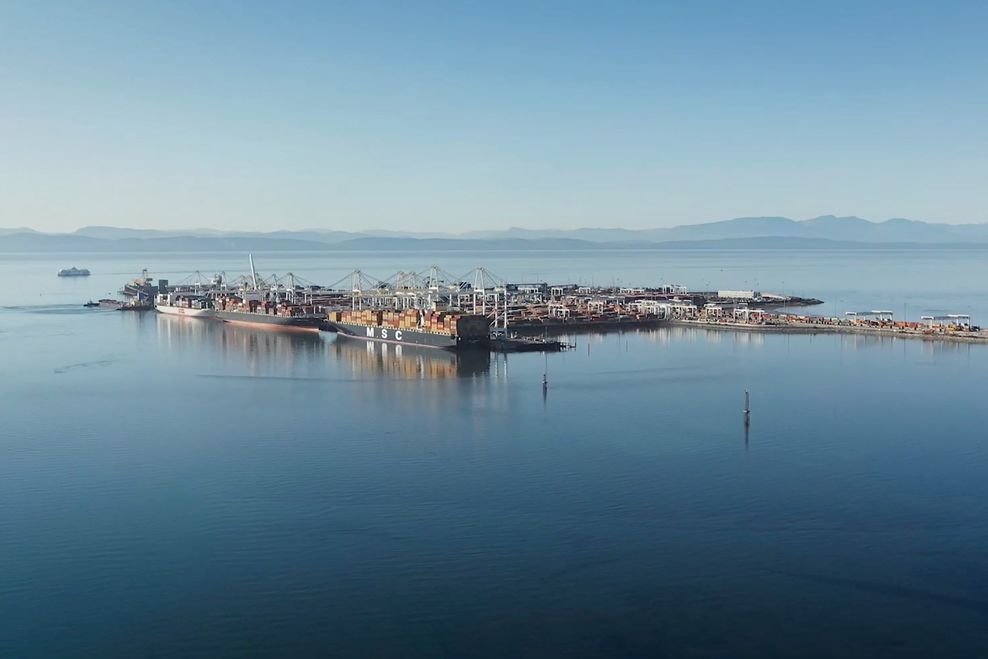
Existing condition of the man-made peninsula home to the GCT Deltaport container terminal and Westshore coal export terminal. (GCT)
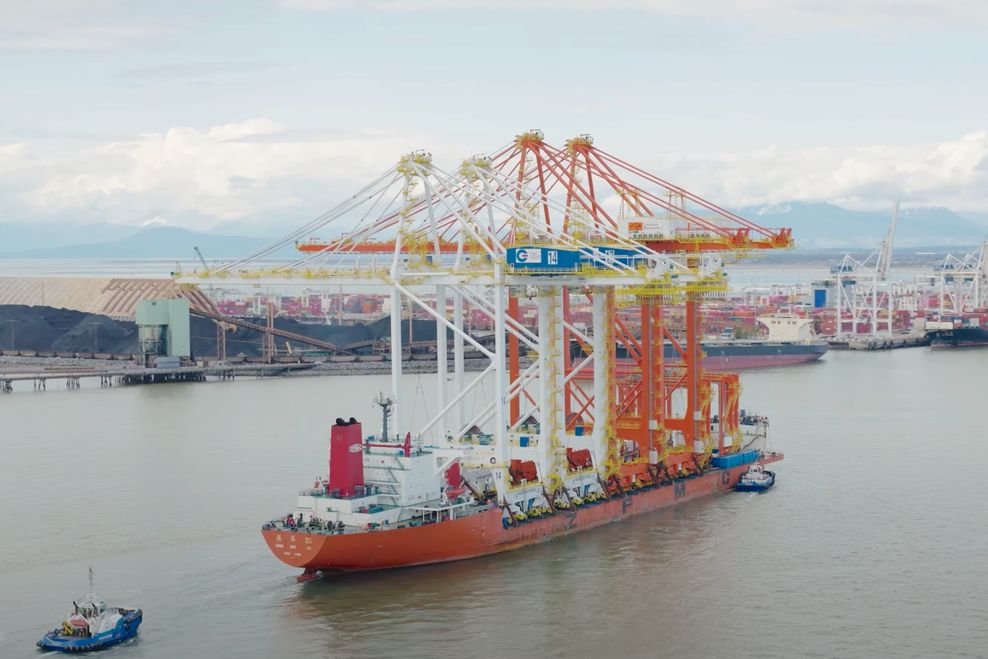
New cranes arrive at GCT Deltaport container terminal on April 20, 2025. (GCT)
“The initial phase of the pipeline project focuses on early dialogue with Indigenous communities, determining the potential route and costs and demonstrating market demand, economic viability and need for a new pipeline. This will lay the groundwork in attracting investment from industry to build the pipeline in partnership with Indigenous communities,” reads a news release issued by Alberta’s provincial government earlier this week.
“If approved, the project will significantly increase access to Asian markets and ensure the province and country are no longer dependent on just one customer to buy their most valuable resource — strengthening national prosperity, reducing dependence on U.S. markets and delivering billions in economic activity across multiple provinces and Indigenous communities.”
Alberta has some refining capacity of its own, but not nearly enough to process all of the oil it extracts. Much of Alberta’s oil is exported to the U.S. as raw crude, where it is refined primarily at major facilities in the U.S. Midwest and the U.S. Gulf Coast.
If Venezuelan oil comes back onto the global market in large volumes, it adds supply that competes directly with Canadian oil, especially in the U.S., which is Canada’s main export customer. When buyers have more choices, they can pay less, which can hurt Canadian producers who depend on selling crude abroad.
Refining more oil in Canada would mean less exposure to those swings. Instead of exporting raw oil and competing head-to-head with other heavy producers, Canada could sell finished fuels and other oil products at home or abroad, keep more value in the country, and be less vulnerable when global supply suddenly increases.