
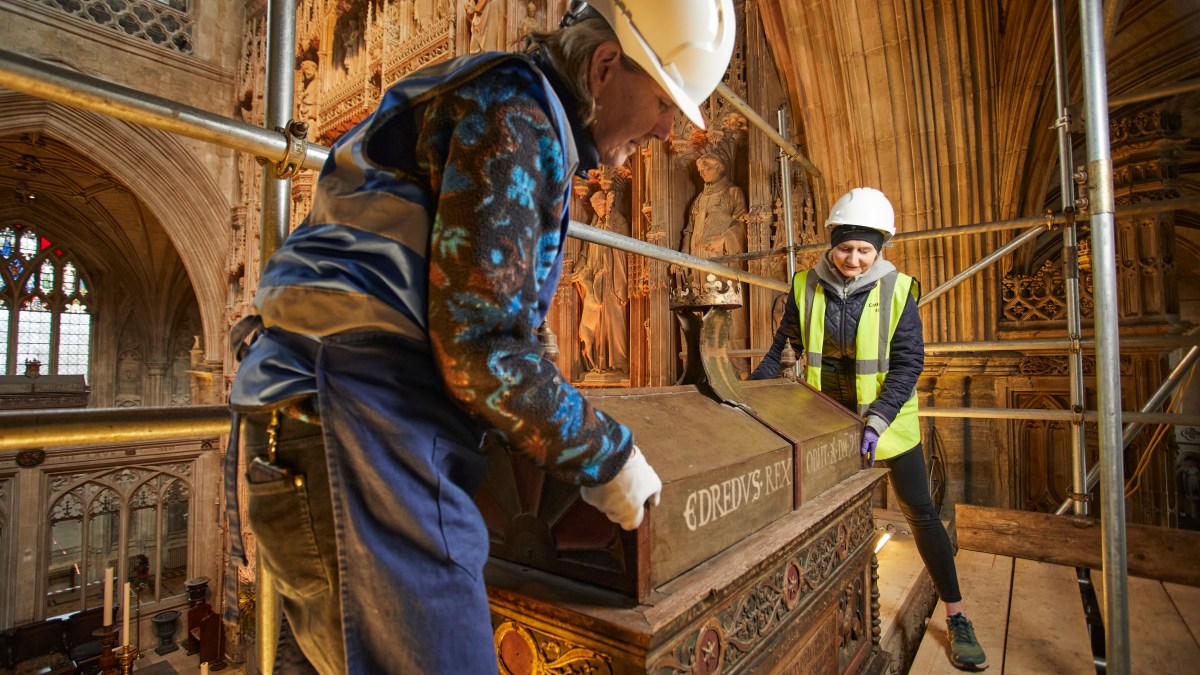
For almost a thousand years the suspected remains of some of the most powerful rulers in English history have been jumbled together in a macabre jigsaw in Winchester Cathedral.
Six mortuary chests held a unique mausoleum of leaders of Anglo-Saxon England, long rumoured to contain the remains of eight kings from before the Norman Conquest, two bishops and a queen — but the 1,300 bones had been mixed up and desecrated over centuries of turbulent history.
Now after 14 years of efforts to piece them back together and unravel their DNA, The Times was given exclusive access as they were reinterred as individuals, recovered from the nation’s earliest beginnings.
Jo Bartholomew, 70, a former curator at the cathedral, said that when the work began in 2012 there was a belief the remains “could be 18th-century bones put in as substitutes”.
She said: “We were a bit worried that we would find some bones from the butcher’s shop.”
A breakthrough was made in 2015 when the radiocarbon accelerator unit at the University of Oxford confirmed the bones were from the late Anglo-Saxon and early Norman periods.
This was consistent with the historical burial records of the kings and bishops named on the chests.
Identification was helped by the fact that high-status people at that time ate large quantities of fish, which contains more older radiocarbon isotopes than land-based food.
There were ten named individuals on the painted oak chests, but through five years of painstaking work reassembling each person’s bones, the research team has discovered they actually contained at least 25, including four juveniles not previously known about.
Some of the bodies only have ten bones present, while one has just a skull remaining, dating from the 8th or 9th century.
The earliest recorded names on the chests, written in Latin, are Cynegils, the first Christian king of Wessex, who died in about 642, and Wini, the first bishop of Winchester who died in about 675.
Others, from the 9th century, include King Egbert and his son Ethelwulf, the father of Alfred the Great, and, from a century later, Stigand, the last Anglo-Saxon archbishop of Canterbury, who appears in the Bayeux Tapestry.

The chests sit atop the presbytery screen, left
JULIAN BENJAMIN FOR THE TIMES
• The best art exhibitions to book for 2026
Also believed to be included are the remains of Emma of Normandy, one of the most powerful queens in English history.
Born in about 985, she was queen consort to two kings of England, Ethelred the Unready and the Danish invader Canute, and the mother of Edward the Confessor and King Harthacanute. She died in 1052, aged about 67.
Emma is the only woman named on the wooden chests, and only one mature female skeleton has been recovered during the project.
Canute and Harthacanute are named on the chests and DNA analysts hoped to find genetic links. The latest names on the chests include William II, also known as William Rufus, who was killed in the New Forest while hunting in 1100.
Ellie Swire, 33, the current cathedral curator, said: “Working with such old bones, it’s kind of like looking through muddy water. There will be individuals we have hunches about and hypotheses which will come out.

The remains of some of the individuals are incomplete
JULIAN BENJAMIN FOR THE TIMES
“I think people will be surprised by what we have been able to uncover, and I hope they will be excited, and maybe a little bit in awe of what has been achieved and the discoveries that have been made.”
Many of the remains are believed to have been originally buried in the Anglo-Saxon Old Minster, which stood on the site adjacent to the present-day cathedral.
After the demolition of the Old Minster in 1093, the bones were put together in painted wooden caskets near the high altar in the new cathedral.
They were further mixed when Roundhead soldiers ransacked the cathedral in 1642, at the start of the English Civil War, and hurled some of the bones through the stained glass windows.
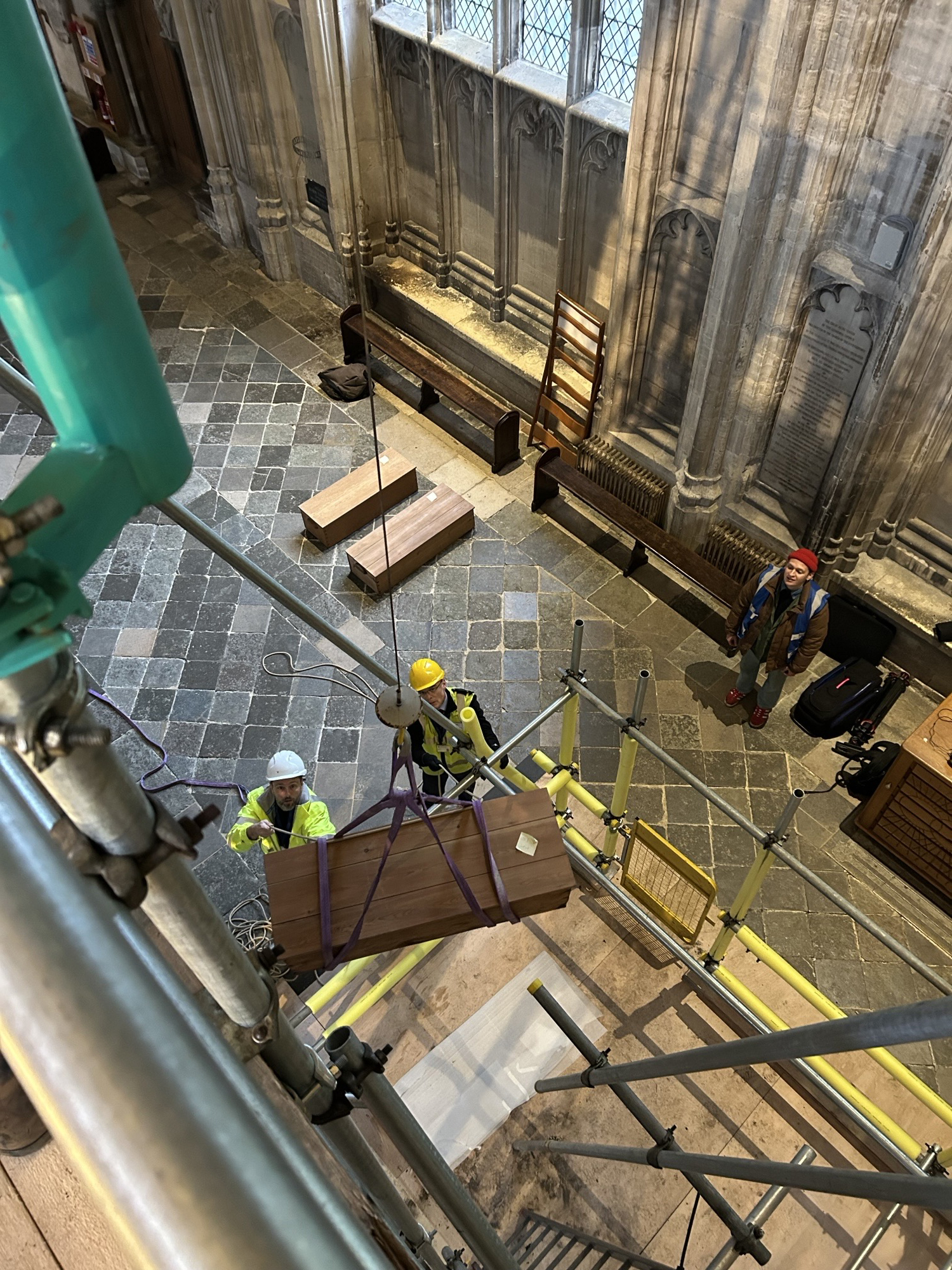
The chests are hoisted up with a winch to the screen wall in Winchester Cathedral
JULIAN BENJAMIN FOR THE TIMES
This week the bones began returning to the existing six mortuary chests, which were made in 1525 and sit 25 feet high on the walls of the central presbytery. Two new chests will be commissioned later this year.
Dr Heidi Dawson-Hobbis, from the University of Winchester, and Professor Kate Robson Brown, from University College Dublin, the lead researchers on the project, have ensured bones from matching time periods are being placed together, with about three individuals in each chest.
DNA that could be Leonardo da Vinci’s found on artwork
“They are being returned back as individuals, which is something special to us,” Swire said. “We have 16 individuals going back into the six existing chests, and nine being held back for further analysis, until the two new chests are created.”
The results of the project will be released in a series of research papers later this year by Winchester Cathedral and the Francis Crick Institute, which has carried out the DNA analysis.
The bones are being placed in a series of card boxes and then a pine inner lining to help preserve them inside the mortuary chests. A photographic archive identifying every bone has also been created.
“There will always be a future research interest in these bones, so we want to preserve them so that in 50 or 100 years time people can go back in and do more research with more advanced scientific methods,” Swire said.
A 25-year embargo has been placed on reopening the chests “to have respect for these being the remains of people and not just objects to be endlessly mucked about with,” Swire said.
The return of the remains to the chests is a significant event for the cathedral.
“The chests are so integral to our history,” Swire said. “They sit right at the centre of the cathedral and they are part of our historical DNA and connect us right back to our Anglo-Saxon past. They have witnessed so much history.
“There is something romantically morbid about them and for the cathedral there will be a satisfaction in knowing the bones are back where they belong.”