
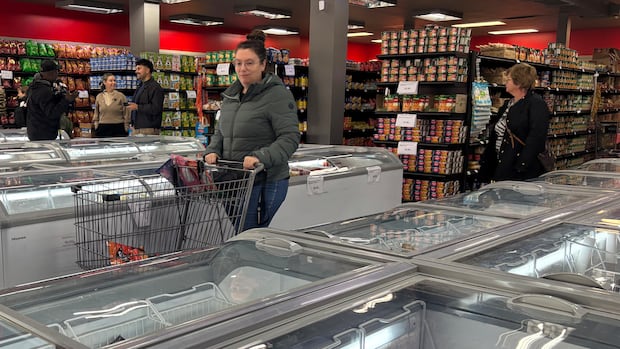
With the cost of living soaring, Ron Robinson is determined to save wherever he can — starting with his grocery bill.
It’s why the Montreal man shops at Liquidation Marie, an ultra discount grocery chain where prices can be as much as 50 per cent less than a regular grocery store.
He recalls purchasing steaks for about six dollars each.
“If you go to a big box store, you’re going to pay maybe $20, $25 for a pack of three,” Robinson told Cost of Living.
He’s not the only one chasing these bargains. Liquidation-style grocery stores are rising in popularity across the country as Canadians grapple with high food costs.
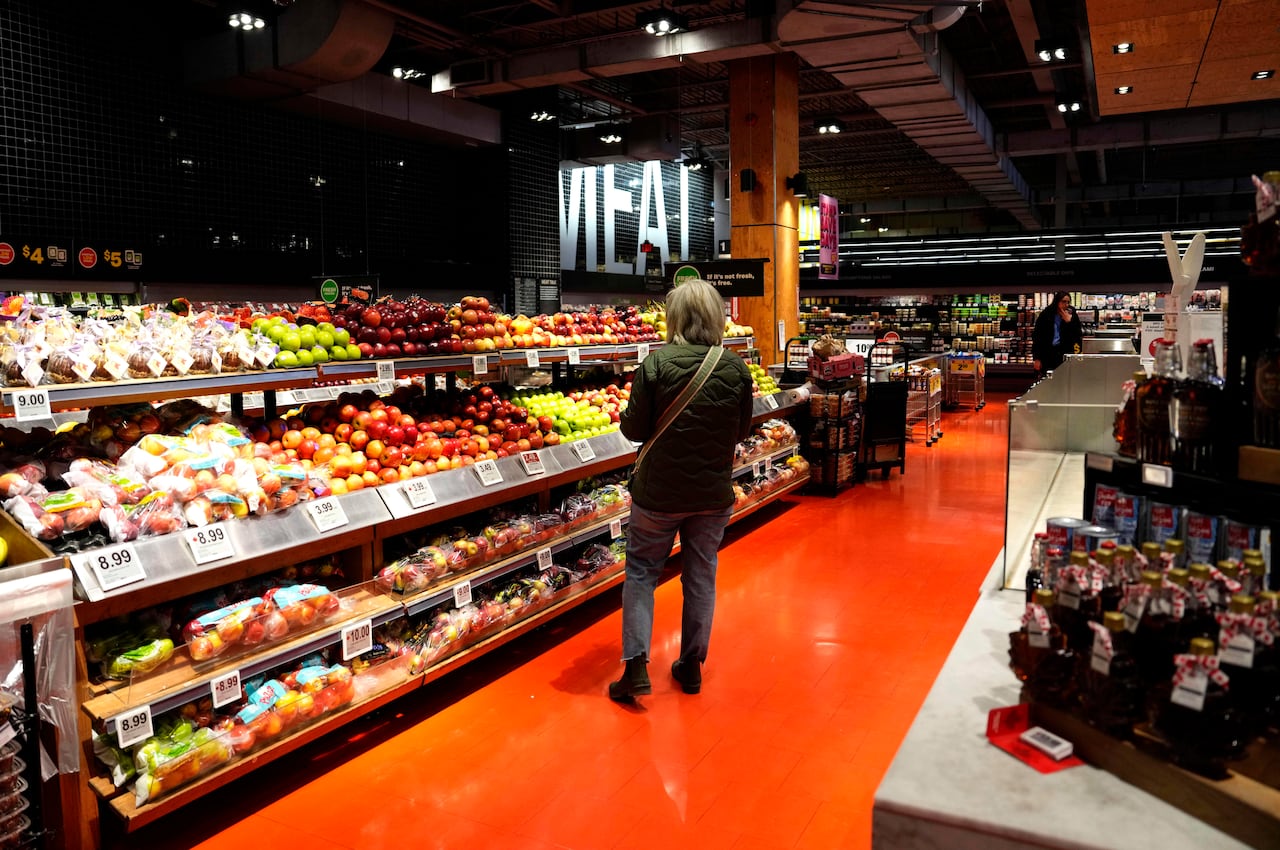 A customer looks for produce at a grocery store in Ottawa, on Wednesday, April 2. Experts say many shoppers are trying to stretch their cash amid rising food prices. (The Canadian Press)
There’s Bianca Amor’s Liquidation Supercentre, for instance, which has grown to 17 locations across Western Canada in 25 years, and in southern Ontario, there’s The Grocery Outlet, which now has more than a dozen locations.
As for Liquidation Marie, founded in 2012, the Quebec grocery chain has more than doubled its locations in the last year alone. Co-owner Marie Eve Breton says she plans to open another 10 in 2026, for a total of 18 across the province.
Breton says the secret to her store’s super low prices isn’t really a secret at all. Like any other liquidator, she says they buy unwanted food products from major retailers at steep discounts and resell them to consumers at rock-bottom prices.
A liquidator may have a contract with Walmart, for example, says Breton. “They remove the product on the shelf. It’s not because it’s no good, but they have to get rid of the stuff.”
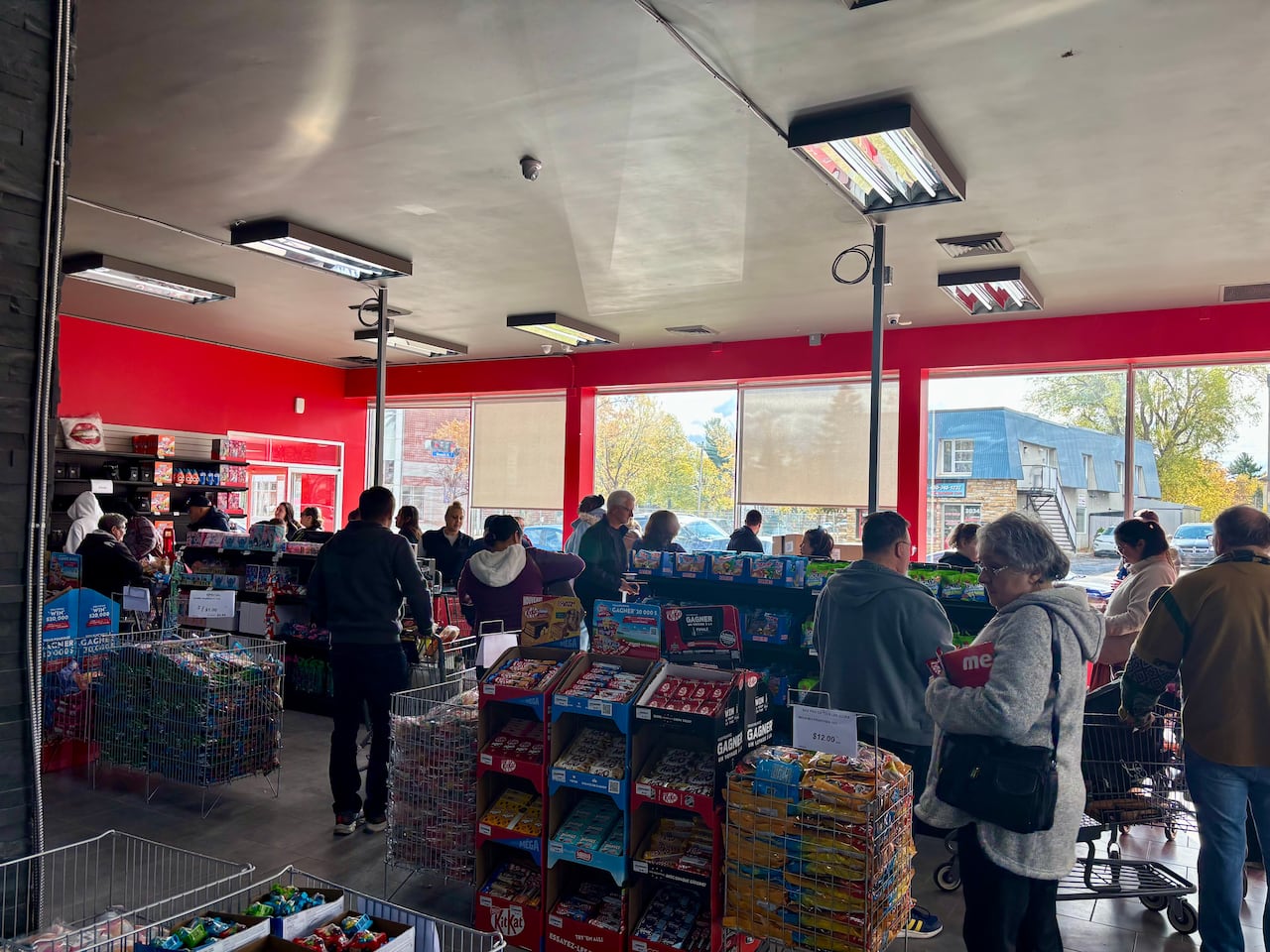 Shoppers wait in line inside Liquidation Marie grocery store in Longueuil, Que. (Leah Hendry/CBC)
That “stuff” could be surplus or mislabeled items, she says, such as a bottle of ketchup missing a barcode or a box of discontinued chicken patties. Every day the stock looks different and so do the shelves.
“I compare with Winners because sometimes people come, they see something and if they come an hour after — no more,” said Breton.
The unpredictability has hardly deterred consumers. Breton says her stores welcome an average of 30,000 customers each week, and the Facebook group where she posts bargains has grown to more than 139,000 members.
‘You cannot cut rent’
As for what’s driving the appetite for these stores, Dr. Yu Ma, a marketing professor at McGill University, cites the current economic climate.
In the last five years, grocery prices have shot up by more than 27 per cent, according to Statistics Canada.
And with inflation squeezing household finances these last few years, Ma says many families are living paycheque to paycheque and searching for ways to make their money go further.
“You cannot cut power, you cannot cut rent or mortgage payments,” said Ma.
“I think the easiest thing to cut is grocery spending, and food is becoming so expensive nowadays. It’s not surprising to me that people are looking at alternative shopping outlets to find something more affordable.”
WATCH | Why discount grocery stores are taking off in Quebec:
Why discounted grocery stores are taking off in Quebec
As grocery prices rise, one chain selling food past or close to its best-before date is expanding around the Montreal area.
Jordan LeBel, a professor at Concordia University’s John Molson School of Business who specializes in food marketing, says there’s another factor that has likely contributed to Liquidation Marie’s success.
“The company has zeroed in on locations where rent is perhaps a little bit cheaper for them to operate in,” LeBel told Cost of Living. “And they’re in neighbourhoods where the socioeconomic dynamic may favour this kind of concept.”
Sylvain Charlebois, who runs the Agri-food Analytics lab at Dalhousie University, says major retailers are benefiting from the liquidation stores, too.
If a can is damaged or a box opened, “they know that Liquidation Marie or another company is able to actually take it at a discount,” he said. “And it ’s better to actually sell it off at a loss than just to waste it away.”
Best before, not bad after
According to the Canadian Food Inspection Agency, best-before dates indicate optimal food quality and freshness — not whether a food is safe to eat.
Charlebois says dried goods like cereal and pasta can last well past their best-before date, as long they are unopened and stored properly. Some canned goods, he says, can last for years on the shelf. He says more consumers know this now, and with food inflation running hot, they are getting over the stigma of buying food that is past its prime.
“I think that people are moving beyond that, allowing themselves to recognize that there are ways to save more money,” said Charlebois.
He adds that more people buying products from liquidation grocery stores means less food waste and less pressure on food systems to increase prices for everyone.
Ma also notes the rise of liquidation grocery stores also highlights a rejection of the systemic waste and inefficiency in Canada’s food supply chain.
“In the food supply chain, we used to want to have the best of the best,” said Ma. “We actually waste billions of dollars of food every year because [of] overstocking, because [of] cosmetic imperfections, but those are absolutely fine for consumption.”
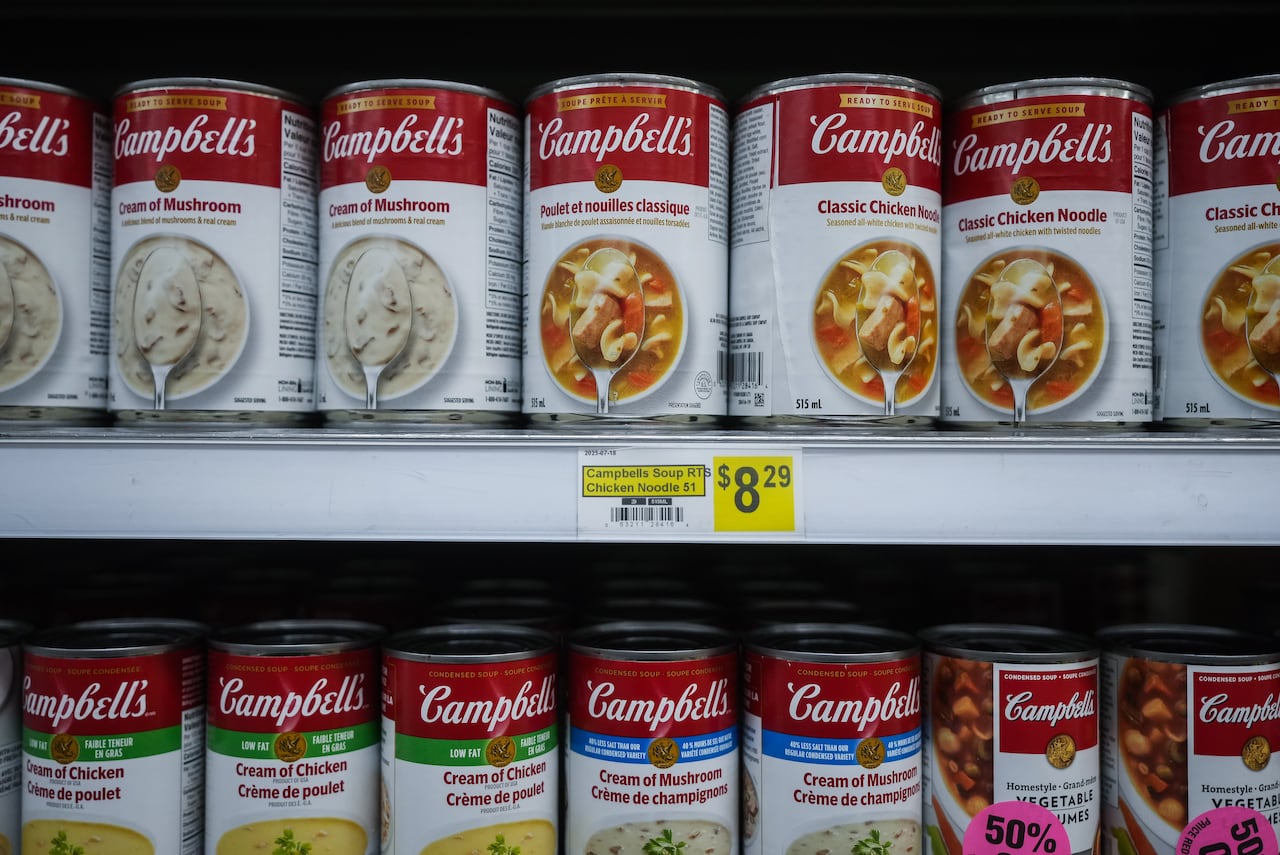 Cans of Campbell’s soup are displayed for sale at NorthMart, in Inuvik, N.W.T., on July 24. Canned goods are among the food products experts say are fine to consume after their best-before dates. (The Canadian Press/Darryl Dyck)
While the impact of a liquidation grocery stores in reducing food waste may be modest, says LeBel, the value lies in the potential ripple effect that could help curb waste more broadly.
“The real impact is teaching consumers that it is possible to buy fruit, to buy food products that are near the expiry date but are still good,” said LeBel.
Shifting attitudes
Discount food shopping is catching on at almost every socioeconomic level, says Ma, given that food insecurity and high food prices now affect more people .
“So as the audience becomes larger…for this type of store, I feel like it’s going to become even more popular over time.”
Charlebois says he agrees, adding that he expects to see more people bragging about the deals they’ve scored at some of these centers.
Breton, too, says she’s noticed a shift in the way people are thinking about food products’ best- before dates, and her grocery chain has capitalized upon this. Much of what Liquidation Marie sells is either close to or even past its best-before date — food products that would’ve otherwise been thrown away.
“Just five years ago, people were looking, ‘mmmm, no, I’m not touching that box because it’s expired,’” said Breton. “Now, because of the economy, people are like ‘oh, it’s 88 cents, I’m going to try it.’”