

Listen to this article
Estimated 3 minutes
The audio version of this article is generated by AI-based technology. Mispronunciations can occur. We are working with our partners to continually review and improve the results.
Just days into the new year, Jignesh Thaker is faced with preparing to close his restaurant in Bedford, N.S.
Thaker and his business partner have been trying since last spring to sell Peppercorns Eatery but there’s been no interest. If they can’t find a purchaser soon, he says they can’t afford to pay $2,000 to $5,000 a month out of their own pockets to keep the doors open.
“We did not make a single dollar in the past eight to nine months,” Thaker said.
He’s not alone. CBC News talked to six restaurants in the Halifax area and all said they’ve been struggling to turn a profit, which aligns with a countrywide trend.
About 41 per cent of restaurants across Canada are either operating at a loss or just breaking even, according to a Restaurants Canada report from July.
Natasha Chestnut, executive director of the Restaurant Association of Nova Scotia, said inflation, rising costs and labour shortages are among the factors that have contributed to the financial pressures for restaurants.
Another report said 75 per cent of Canadians are dining out less than they were prior to the COVID-19 pandemic in an effort to save money. That number increases to 81 per cent for those aged 18 to 34.
Chestnut said her association has been trying to help members cope through various efforts, including negotiating alcohol licence discounts from the government and studying incentives for sourcing local food products.
“They have to run things pretty tight.”
Survival mode
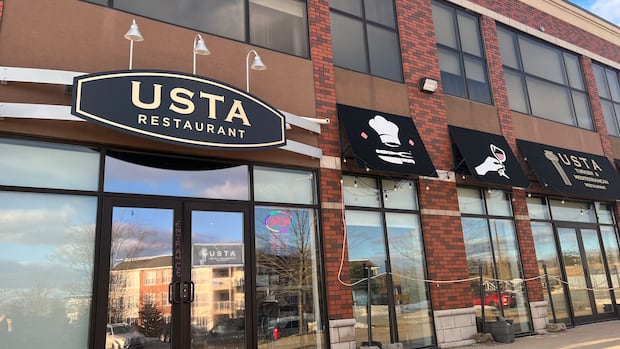
Sherif Turk of USTA Turkish & Mediterranean Restaurant in Dartmouth is working 60 to 65 hours a week at his business to cut down on operating costs.
He said it has been very difficult to find reliable staff and the cost of ingredients keeps going up.
“I try to buy most of my things from local, especially meats, but the meat course is three to four times more expensive than it used to be,” said Turk, whose restaurant is going into its 10th year in business.
“I’m increasing my hours so then I can actually make the cost a little bit lower.”
 Sherif Turk said some customers he used to regularly see twice a month are now coming to his restaurant only once a month. (Submitted by Sherif Turk)
He said he can’t mark up prices on his menu each time costs rise, fearing it could drive away more customers.
Other restaurants told CBC they have chosen to reduce portion sizes and adjust ingredient proportions in a bid to avoid raising prices too often.
Chestnut said the pressures restaurant operators are facing are expected to continue in 2026, and she’s not surprised some restaurants are considering closure.
For those trying to weather the storm, there are more cost challenges on the horizon.
According to a forecast by researchers at Dalhousie University, food prices in Canada could increase by four to six per cent in 2026, largely driven by pricier meat products.
Meanwhile, Nova Scotia is going to raise the minimum wage of $16.50 per hour twice this year, to $16.75 an hour on April 1 and $17 an hour on Oct. 1.
“I just hope that we at least continue the same as 2025,” said Turk. “I hope the business doesn’t slow down more.”
MORE TOP STORIES