

Listen to this article
Estimated 4 minutes
The audio version of this article is generated by AI-based technology. Mispronunciations can occur. We are working with our partners to continually review and improve the results.
Inside a warehouse on the edge of London, Ont., wheels of cheese sit aging on metal racks.
Stainless steel tanks hum nearby. Workers move between stations, filling moulds and sealing packages.
At first glance, the factory resembles a traditional dairy operation. It isn’t.
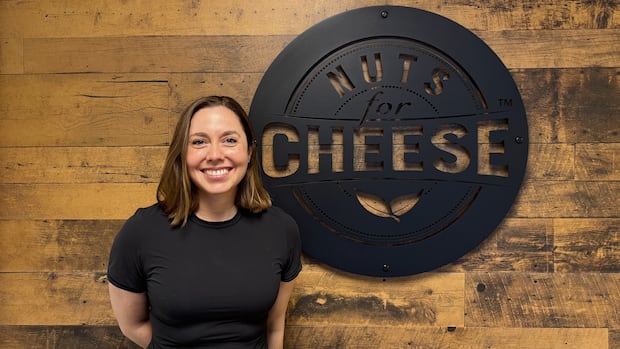
What started as Margaret Coons’s project to make vegan cheese she couldn’t find anywhere else has grown from a farmers’ market stall into Nuts For Cheese. The brand is now sold in major grocery stores across North America, including Costo and Metro.
Coons recently earned the company a Manufacturer Award from the London Chamber of Commerce.
“It’s pretty surreal,” she said of the popularity of the dairy-free products that have names like Un-Brie-Lievable and Super Blue. “It’s really, really cool to see what we’ve built together.”
That recognition reflects years of gradual growth — a process rooted in how Coons first began working with food.
The ingredients that came together
Coons’s interest started early, when became vegetarian at age 12 and later a vegan around 19.
“I did not grow up in a vegetarian household, and so I started cooking at a pretty young age,” she says.
As she learned to cook for herself, she became more aware of what was missing in grocery stores, particularly when it came to vegan and dairy-free options.
“There weren’t a ton of great options available in supermarkets,” Coons said. “When I was first starting out, there was very little available in terms of high-quality, organic, fermented, dairy-free products.”
Rather than wait for better options to appear, Coons began trying to make her own, picking up ideas and techniques while working in a vegan restaurant in London. She experimented outside restaurant hours, renting kitchen space and producing small batches.
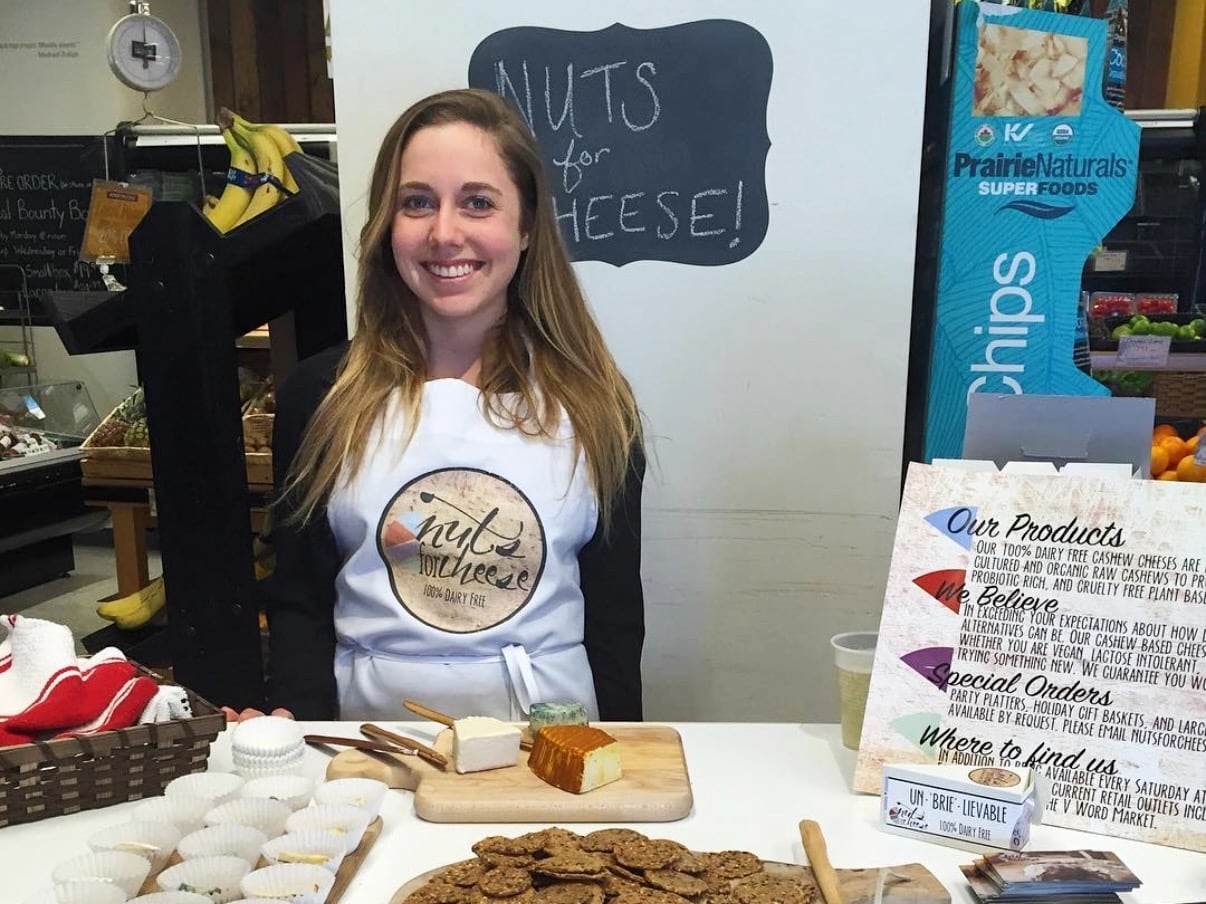 Margaret Coons samples Nuts For Cheese products at a grocery store in Hamilton in 2016, as she travelled to stores and markets to introduce customers to the brand during its early days. (Submitted by Margaret Coons)
“I made the product, I packaged the product, I drove it around to all the retailers,” she said. “I did everything.”
She began selling the cheese at a local farmers’ market, handling production, packaging and delivery herself as interest slowly increased.
Adjusting the measurements
Over time, production moved out of rented kitchen space and into a facility, allowing the business to operate on a larger scale under the name Nuts For Cheese.
What was once a one-person operation now involves a team of 40 people.
“My favourite thing is the people that I work with,” Nuts for Cheese team lead Alanmah Minarsky said. “Everybody’s always working together and collaborating.”
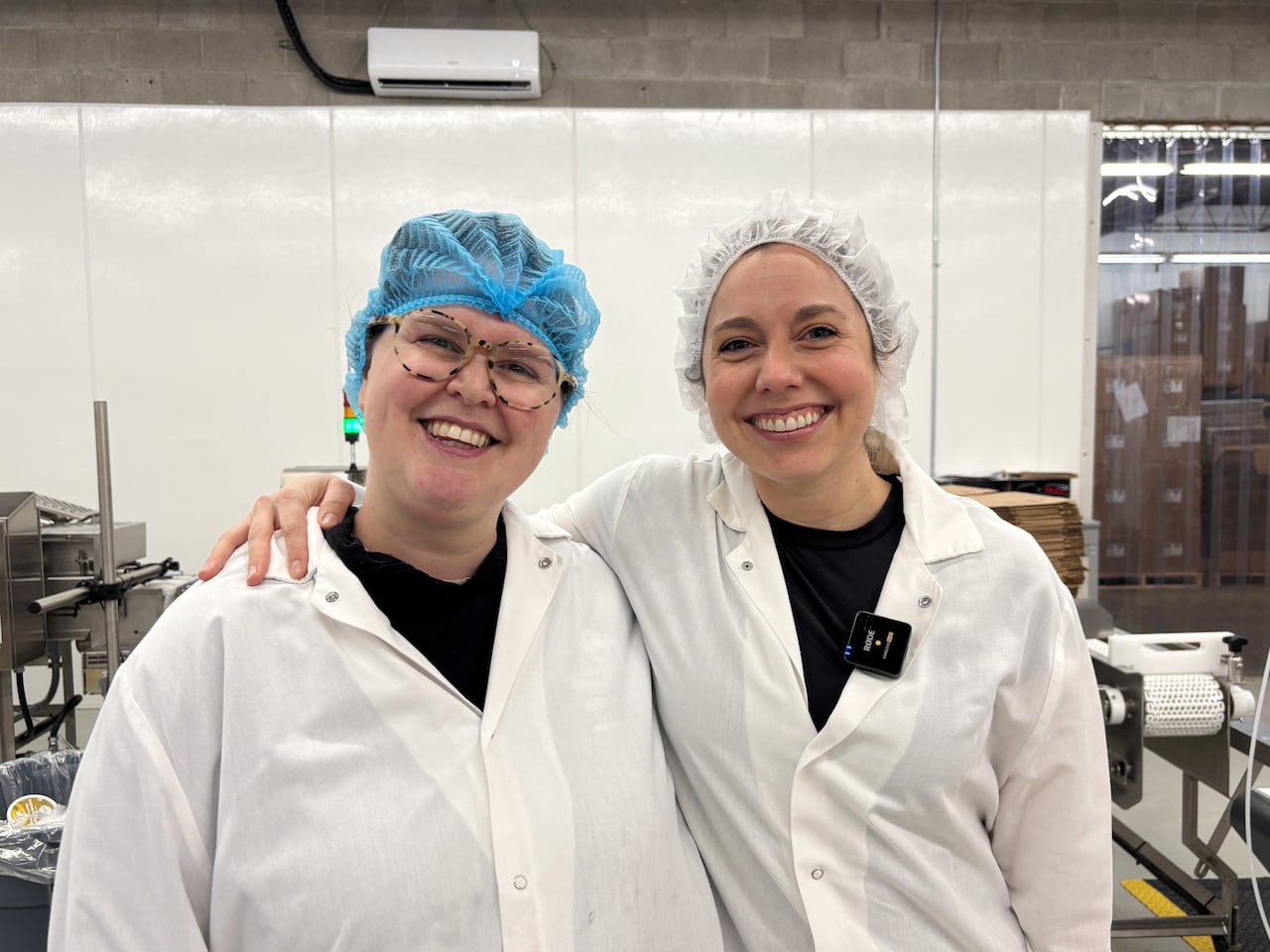 Alanmah Minarsky, left, stands with Coons, right, inside the Nuts For Cheese facility in London, where production has expanded from a one-person operation to a 40-person team. (Josiane N’tchoreret-Mbiamany/CBC)
Minarsky has been with the company for more than two years and said the work itself continues to change, with new systems and processes being developed along the way.
“There’s a lot of new processes that are always happening,” she said. “It’s really nice to get your hands in on starting new processes and sharing ideas together.”
Growth in U.S business
Shipping products to the United States has brought added complexity, particularly when it comes to sending orders across the border.
“We send samples and direct-to-consumer small shipments across the border all the time,” she said. “That’s been particularly challenging for us.”
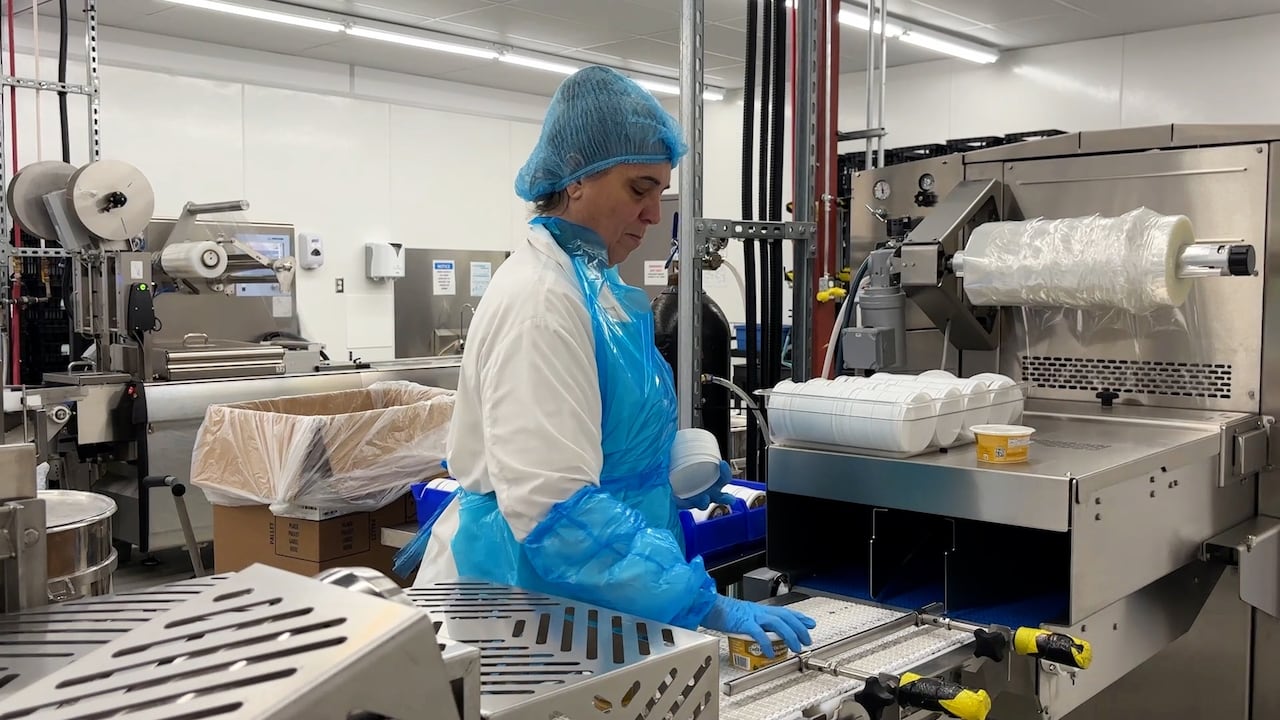 Packaging work continues as the company has adjusted processes in response to shifting shipping requirements and supply-chain challenges. (Josiane N’tchoreret-Mbiamany/CBC)
Coons said the end of duty-free shipping that came into effect in August happened at the same time the company’s U.S. business was growing.
The Trump administration ended the nearly century-old de minimis exemption that allowed goods under $800 US to enter the states without extra fees.
“It really felt like it could be the end of a lot of businesses like mine,” she said. “That was one of the scariest moments of having the business. It was really about being prepared.”
That included managing expenses closely and reworking parts of the supply chain.
“We’ve been able to move the majority of our supply chain to Canadian suppliers,” she said. “That was a really significant challenge.”
Despite the challenges, Coons said their goal remains the same — making food the way she set out to from the beginning.