

Listen to this article
Estimated 3 minutes
The audio version of this article is generated by AI-based technology. Mispronunciations can occur. We are working with our partners to continually review and improve the results.
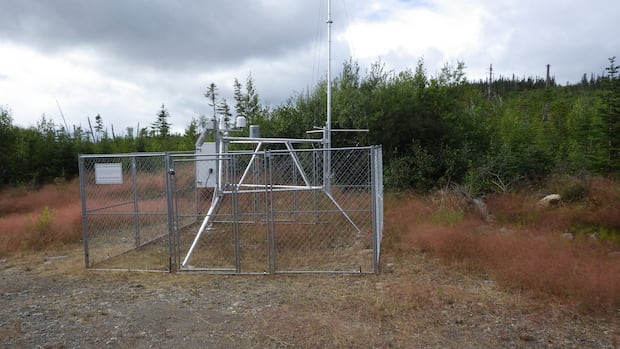
The Newfoundland and Labrador government is expanding its ability to assess forest conditions with the purchase of 13 new weather stations.
According to a list of recently released procurement contracts, in December the Department of Forestry, Agriculture and Lands awarded a contract for 13 new weather stations from British Columbia-based FTS Forest Technology Systems Ltd. for $466,927.42, exclusive of HST.
CBC News asked for an interview with Forestry Minister Pleaman Forsey but spokesperson Linda Skinner sent an emailed statement on his behalf.
The statement said the Canadian Forest Fire Danger Rating System, which is a national system used for rating forest fire risks, uses scientific models to appraise forest conditions, determine fire risk as well as possible fire behaviour.
On a daily basis, the statement said the province’s network of existing weather stations collects data on forest conditions, including temperature, relative humidity, wind, rain and moisture levels.
“This information indicates how easily forest vegetation (dry grass, dead leaves, tree needles, brush or trees) could ignite, how fast a potential fire may spread, and how difficult a potential fire would be to control,” the statement reads.
It added the data helps decide what kind of wildfire firefighting resources might be needed and their allocation.
“Thirteen new weather stations will be integrated into our current provincial network to bolster our ability to assess forest conditions and wildfire risk.”
In a follow-up email, Skinner said these new weather stations are needed because wildfire analysts and managers use weather data to anticipate how fire will behave and how it could spread.
“Integrating additional weather stations into the current network on the landscape will provide us with more refined and representative weather data for local areas and increase the quality of the data we use to share daily forest fire hazard ratings with the public,” she wrote.
She expects the weather stations will be delivered before the end of March and where they will be located will be determined based on Environment Canada Weather forecasting zones as well as where they will be able to most optimally collect data.
CBC News asked who started the procurement process — the Liberals or the newly elected PCs —which Skinner did not answer, writing, “Purchasing 13 new stations is part of a multi-year plan to improve and upgrade our overall capacity to manage wildfire.”
The province currently has 27 permanent remote weather stations as well as four portable “quick deploy” stations that can be placed near large wildland fires to “collect site-specific weather data.”
During the recent provincial election, the Progressive Conservative Party campaigned in part on the importance of emergency preparedness on the heels of a historic and devastating wildfire season and extreme drought conditions in some places across the province.
Download our free CBC News app to sign up for push alerts for CBC Newfoundland and Labrador. Sign up for our daily headlines newsletter here. Click here to visit our landing page.