
By Dominic Waghorn, internal affairs editor
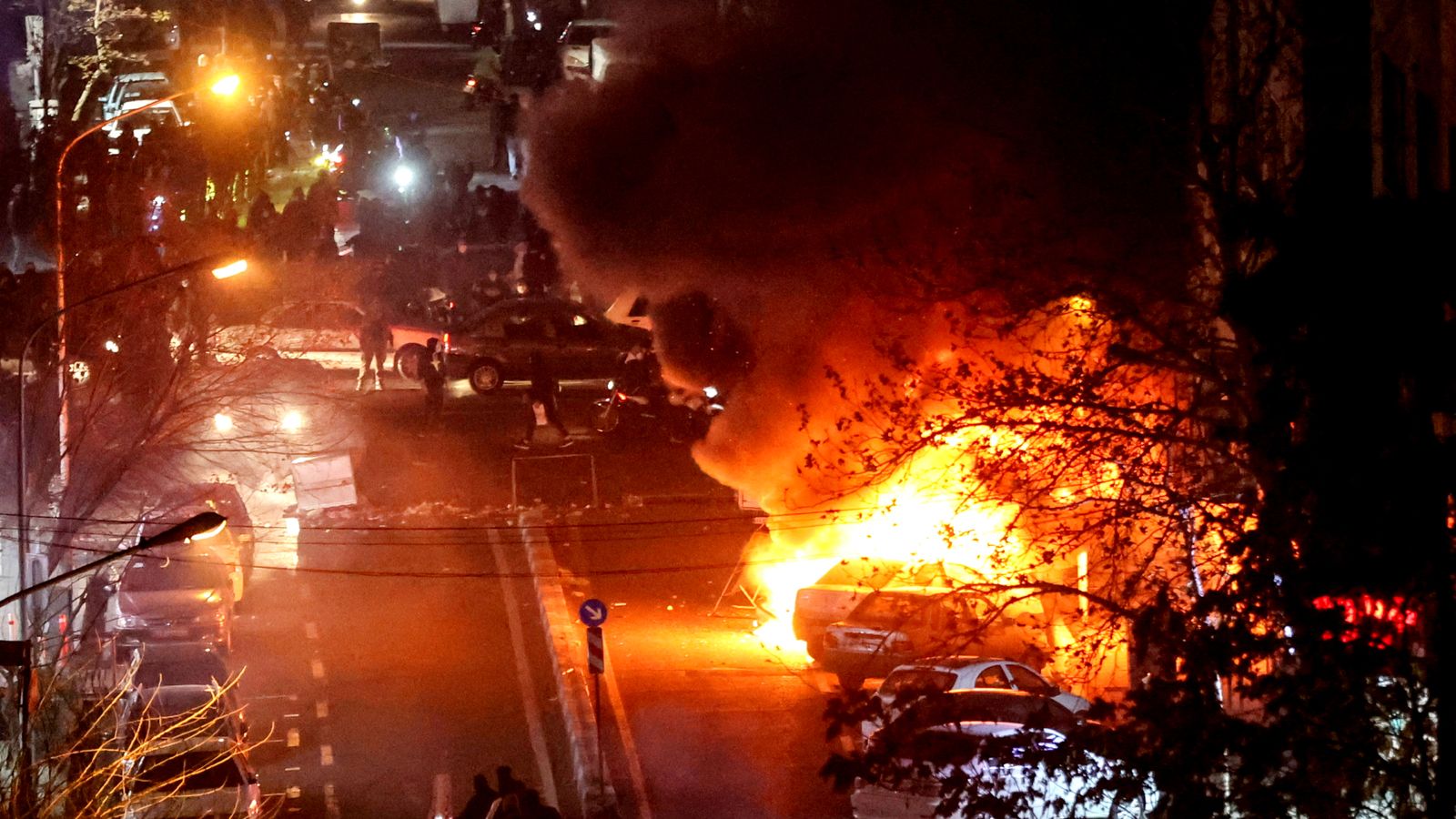
The big question as we watch the unrest continue in Iran: Will it be enough to bring down the government?
We have seen protests before. They are eventually crushed. On the surface, this uprising looks similar to the “women, life, freedom” unrest of three years ago, which authorities used ruthless violence to snuff out.
But there are some big differences.
Most of all, the economy. The plunging Iranian currency is causing the country a world of pain.
The protests began in the market areas of the capital Tehran last month after the Iranian rial fell to a record low, pushing up the prices of food and other basics.
Iran’s important merchant class is turning against the government, posing a new threat to the foundations of its power.
Increasingly desperate, the poor are joining in too, adding to what is becoming a perfect storm of grievances against the leadership.
Most worryingly for the government, there are no signs these economic challenges will ease and little in the way of relief it can offer for them.
But it’s the timing of this unrest that makes it different too – coming after the biggest and most humiliating attack on Iran in its revolutionary history.
An attack that shattered the contract between Iran’s government and its people.
The 12-day war with Israel saw the Iranian leadership fail in one of its most sacred duties, protecting the people.
The ayatollahs have always promised to defend Iranians against the Great Satan America and the Little Satan Israel.
They’ve sent billions abroad to proxies to form an outer ring of defence. But Israel has demolished much of it and was able to send its warplanes to fly at will in the skies over Iran, before the US joined in too.
Scores of Iranian commanders were killed, and the US destroyed its nuclear programme.
Iranians ask where all that money to Hezbollah, Hamas, and Houthis went and why.
When you visit Iran, there’s a sense that its revolution has had its day, its rulers have lost their legitimacy. Young people tell you they want the old men of that revolution out of their lives.
Conventional wisdom had it that Iran’s government was more likely to change and reform within itself than be overthrown, evolution more than revolution.
But there is no sign of that happening. The supreme leader, Ayatollah Ali Khamenei, is well aware that reform has accelerated the fall of other regimes, not saved them.
The unravelling of the Soviet Empire after Gorbachev’s reforms is a case in point.
But he has offered no other solution instead, and his government is now more exposed than ever before.
Iranians are risking their lives and liberty, taking to the streets in their hundreds of thousands, demanding change.
If enough do so for long enough, they may eventually get their way.