
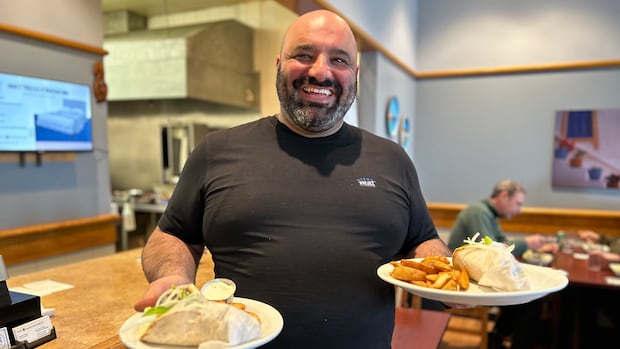
On a cold January morning, the owners of Yassou Souvlaki & Donair in Fredericton are busy heating up the kitchen, slicing vegetables and donair meat to prepare for their lunch-hour crowd.
Charbel Gerges and Elias Youssef are grateful for this loyal customer base as they head into the winter slump, when consumers typically tighten their belts, and poor weather keeps many at home.
“We have customers that come here at least once a week,” Gerges said. “Some customers come here every day.”
But even with that local support, Gerges knows January through March can be a tough time at the family-owned restaurant, especially with soaring food prices that climbed another 4.7 per cent year over year in November, the highest rate in nearly two years, according to Statistics Canada.
WATCH | Restaurant owners ‘being squeezed in every way possible,’ expert says: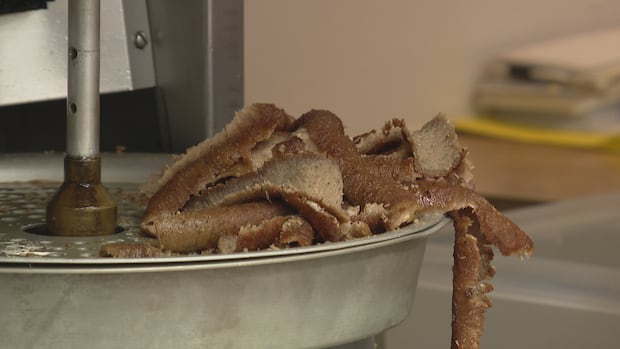
Thousands of restaurants to close in 2026
With rising food prices, labour shortages and changing consumer habits, the restaurant industry is in for a tough winter, without the help of last year’s GST/HST holiday on restaurant meals.
The biggest hikes include fresh or frozen beef, up nearly 18 per cent over last year, and coffee, up almost 28 per cent. They’re staple products for the Greek restaurant, Gerges said, along with produce, a cost that bounces up and down like the price of gold.
“Three or four months ago we were paying $30 to $40 for a case of lettuce,” he said. “And then it went up to $130 and then dropped back to $60 to $70.” The fluctations make it difficult to plan around, he said, although he can always count on beef, lamb and poultry prices to simply increase.
Escalating food prices aren’t the only headache for restaurants heading into the first quarter of 2026.
Many are still paying back debts accrued during the pandemic. Others are navigating a labour shortage after cuts to immigration numbers last year through the Atlantic Immigration and Provincial Nominee programs.
And the restaurants are doing this without the help of the federal two-month sales tax holiday that was implemented last winter, a temporary reprieve giving Canadians a break on more than a dozen qualifying items, including restaurant meals, catering, and food delivery.
Janick Cormier, vice-president of Atlantic at Restaurants Canada, said all of this has restaurant owners “being squeezed in every way possible.”
 Restaurants Canada’s Janick Cormier would like the federal tax break extended to help restaurants ride out the economic turmoil facing the industry. (Submitted by Janick Cormier)
Cormier said 41 per cent of restaurants in Canada are operating at a loss or barely breaking even. It’s an improvement over last year, when 53 per cent of restaurants were in that situation, but still more than three times pre-pandemic levels.
“So profit margins are slim to none,” she said. “If you don’t have profits, the owners aren’t getting paid. And so it becomes a labour of love. But maybe that labour of love becomes too much to bear and you need to make hard decisions.”
Independents are most vulnerable
Sylvain Charlebois, director of the Agrifood Analytics Lab at Dalhousie University, believes many are having those tough conversations right now, and predicts thousands of Canadian restaurateurs will be forced to close down this year.
“We’re expecting the number of restaurants to decrease by about five to seven per cent across the country,” he said. The net decline would be about 4,000 establishments.
“And most of them will be independently operated just because they often don’t have the support that chains would receive when it comes to logistics, procurement and things like that.”
 Sylvain Charlebois, director of the Agrifood Analytics Lab at Dalhousie University, is projecting Canada will lose 4,000 restaurants in 2026. (Zoom)
Charlebois said retail margins are incredibly slim, and with rising food costs and changing consumer spending habits, the industry is in for a tough year.
“People are spooked by food prices,” he said. “So when they see that, they say, ‘Well, I can’t go to a restaurant, it’s going to be worse.’”
Charlebois said it’s come to a point where there is no more room to increase menu prices without pushing people away.
It’s creating a bit of a perfect storm- Janick Cormier, Vice-president Atlantic at Restaurants Canada
Meanwhile, Cormier believes, those who continue to dine out will be watching what they spend.
“When they do go out, they’ll look for the cheapest option on the menu,” she said.
“They’ll look for deals, and they won’t be splurging on that glass of wine or that dessert like they would have in better economic times. And so it’s creating a bit of a perfect storm.”
Cormier said some restaurants have been shaving operating expenses by closing on slower days of the week, or shortening the workday to save money. She predicts more of that in the year to come.
Mike Babineau, the president and CEO of Bella Hospitality Group, has been in the industry for 30 years and has managed to weather the storm.
His company has about 200 employees with nine different establishments in New Brunswick and Nova Scotia, which allows him to buy in bulk and spread the pain during the slower periods.
“We’re able to share staff, and we’re able to share some resources and share some of our products and recipes,” he said. “That was the business model that we built, and that seems to be successful so far.”
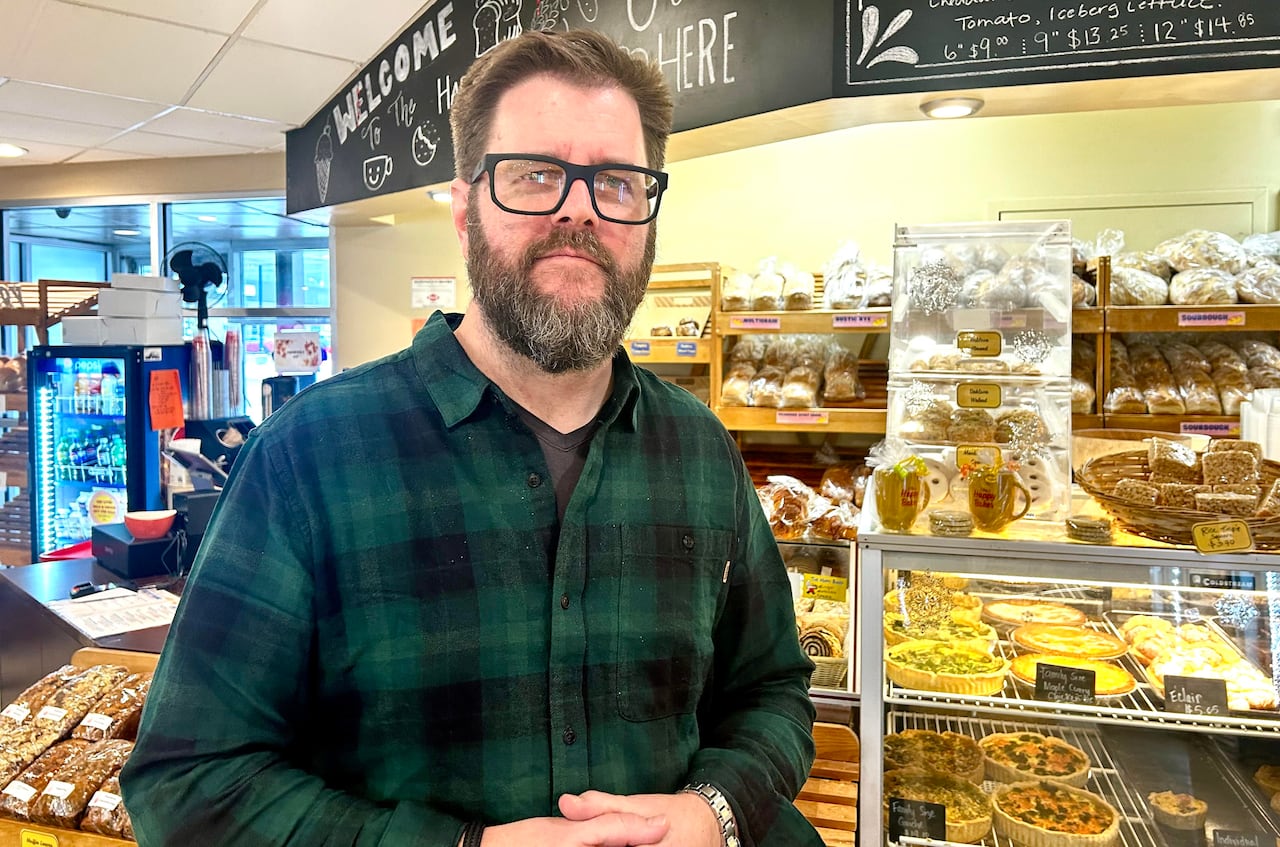 Mike Babineau owns several restaurants and bakeries which allows him to buy in bulk and share resources between them. (Allyson McCormack/CBC)
Babineau’s model includes three people on staff who focus solely on purchasing, to find the best quality products at the best price.
“You’re spending dollars to save pennies,” he said. “Sometimes that’s what it feels like.” But Babineau knows how important those jobs will be again this year.
“From all accounts, our food costs are going to continue to rise,” he said. “So if we see another five per cent or six per cent rise in our food costs, we’re definitely going to see another regression to growth.”
Babineau said operating costs have gone up too, including property taxes, labour, heating and power. And he knows patrons are feeling that pain as well.
“Customers are telling us that it’s hard for them to come out more often. Instead of going out two or three times a month, they’re going out once a month, sometimes once every other month.”
“So I think restaurateurs have to do a really good job at providing that value and customer service that the customer wants because they’re not coming out as often as they used to.”
Back at Yassou Souvlaki & Donair, the lunch rush is on the way. Gerges is hoping healthy appetites will outlast the economic heartburn.