
From rising inflation to threats of US intervention – how we got herepublished at 10:03 GMT
10:03 GMT
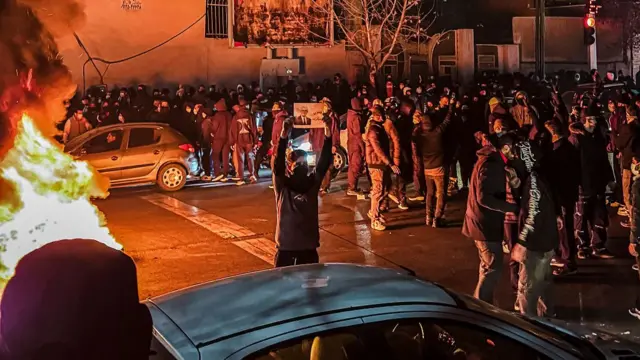 Image source, AFP via Getty ImagesImage caption,
One of the largest nationwide anti-government protests took place on Thursday, the twelfth night of demonstrations
Protests in Iran began over two weeks ago, on 28 December, when shopkeepers took to the streets of the capital Tehran over another sharp fall in the value of the Iranian currency, the rial, against the US dollar on the open market.
The rial has sunk to a record low over the past year and inflation has soared – meaning every day items like cooking oil and meat have risen to crippling highs.
The economy has been weakened by government mismanagement and corruption, as well as sanctions over Iran’s nuclear programme.
Protests spread to other cities alongside wider calls for political change. According to US-based Iranian Human Rights Activists News Agency, demonstrations have taken place in at least 186 cities and towns across all of Iran’s provinces.
Since then, hundreds of protesters have been killed and thousands injured, according to human rights groups. But a digital blackout has stopped most Iranians from contacting the outside world, with millions cut off from internet access – making it difficult to verify information.
In recent days, US President Donald Trump has threatened intervention action.
On Monday, he warned that the US is considering “very strong options” to intervene – and overnight, he announced a 25% tariff on goods from countries with commercial ties to Iran.
His national security team is expected to meet later to discuss intervention options, and Trump has already been briefed on a range of military and covert tools his country could use, officials tell the BBC’s US partner CBS.