
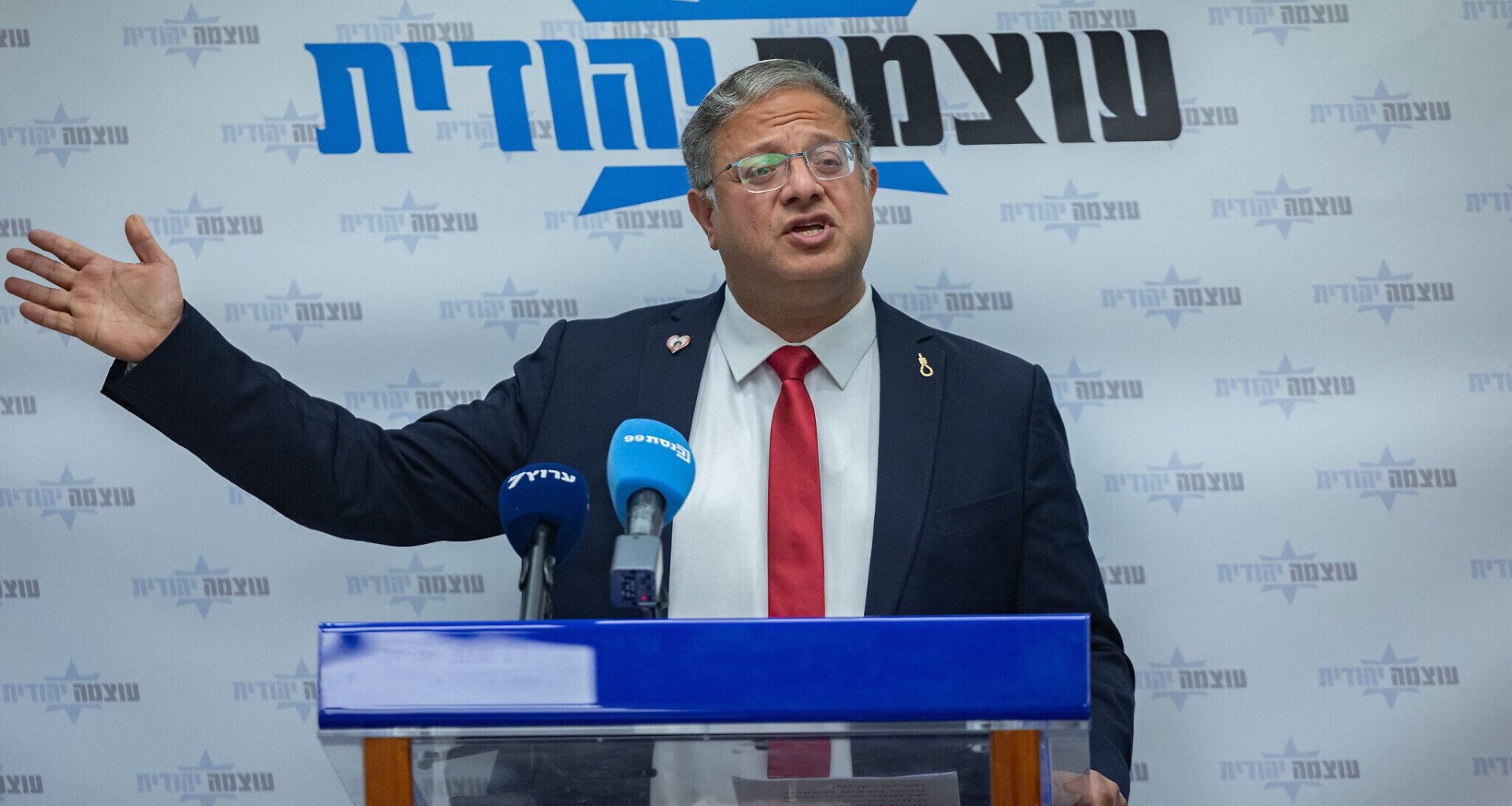
Coalition leaders on Tuesday called on Prime Minister Benjamin Netanyahu not to comply with a potential High Court of Justice ruling to fire National Security Minister Itamar Ben Gvir, ahead of a hearing on Thursday on the petitions seeking his dismissal.
In a letter addressed to Netanyahu, Finance Minister Bezalel Smotrich, Foreign Minister Gideon Sa’ar, coalition whip MK Ofir Katz, and Ben Gvir himself urged the premier to “strongly reject” the legal efforts to have him removed from office, which they called “an attempted coup against democracy.”
“No legal authority, including the High Court of Justice, has the power to force the dismissal of a government minister, especially when no indictment has even been filed against him,” they wrote.
“We will stand as a bulwark against the baseless dismissal of a government minister,” they added, arguing that “only the people elect the government, and only the people will decide at the ballot box who their representatives are.”
The letter came hours after Ben Gvir himself asked the High Court to reject the petitions seeking his ouster, two weeks after the attorney general demanded the government justify not having fired him.
Get The Times of Israel’s Daily Edition
by email and never miss our top stories
By signing up, you agree to the terms
In a 55-page response filed to the court, Ben Gvir denied that he is improperly intervening in police business, and asserted that the court has no standing to weigh in on his appointment.

National Security Minister Itamar Ben Gvir (right) and police chief Danny Levy attend a ceremony at the Israel Police headquarters in Jerusalem, November 30, 2025. (Chaim Goldberg/Flash90)
“We cannot accept a situation in which the tenure of ministers becomes a ‘legal question’ simply due to the dissatisfaction of petitioners, or of the attorney general, with their actions,” Ben Gvir’s attorney wrote in the court filing.
He went on to slam Attorney General Gali Baharav-Miara, who has expressed support for his dismissal, writing that she “does not have a single example of any actual interference by the minister in investigations, of corruption of the appointments process, of issuing operational directives to the police, or of issuing unlawful instructions in the area of demonstrations.”
In her own filing to the court at the beginning of the month, Baharav-Miara detailed a list of allegations against Ben Gvir and his behavior toward the police force.
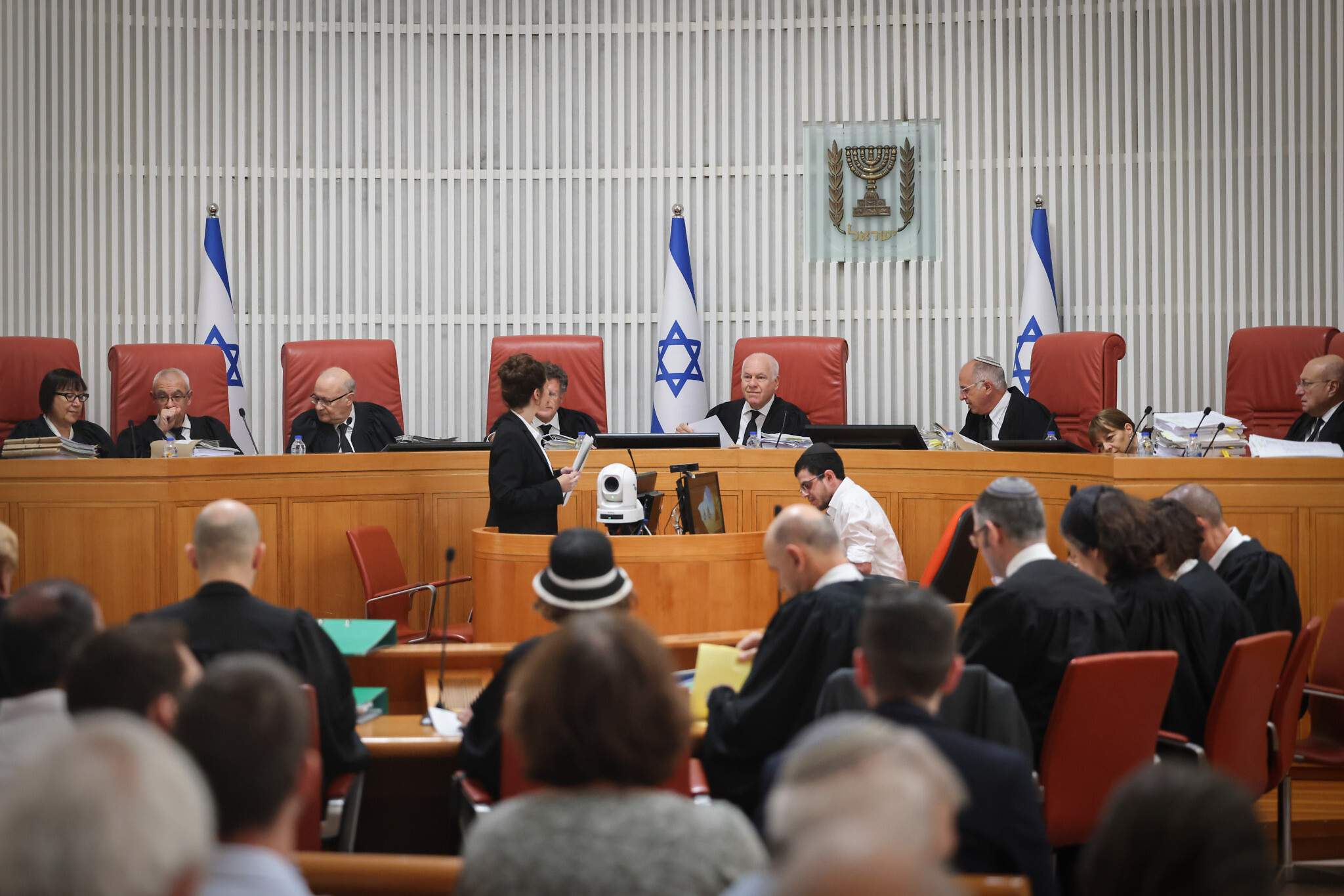
Justices hold a High Court hearing on petitions against a police regulations bill pushed for by National Security Minister Itamar Ben Gvir, on June 18, 2024. (Yonatan Sindel/Flash90)
The minister further attacked Baharav-Miara’s own standing and alleged she had a conflict of interest, writing that “we can’t accept a scenario in which a potential criminal suspect will submit a legal opinion to the court on the role of the minister responsible for the Israel Police… which is meant to investigate her.”
Ben Gvir appeared to be referring to allegations made by a number of far-right lawmakers that Baharav-Miara played a role in covering up the leak of an abuse video from the Sde Teiman detention facility last year. Police are wrapping up their investigation of the incident and have not named the attorney general as a suspect.
The minister also asserted that the court must respect the democratic process by which he was elected to the Knesset and appointed to his position in the government.
“The citizens, who hold political rights, are the ones who chose who represents them,” he wrote in the filing. “The democratic culture requires every citizen and authority — including the court — to accept an outcome that is not to their liking, out of respect for the political rights of others.”
Ben Gvir wrote that if any of his actions as minister “had justified a criminal investigation, it can be presumed that the attorney general would have opened one immediately.” No such case has been opened, he wrote, “because there is nothing to investigate.”
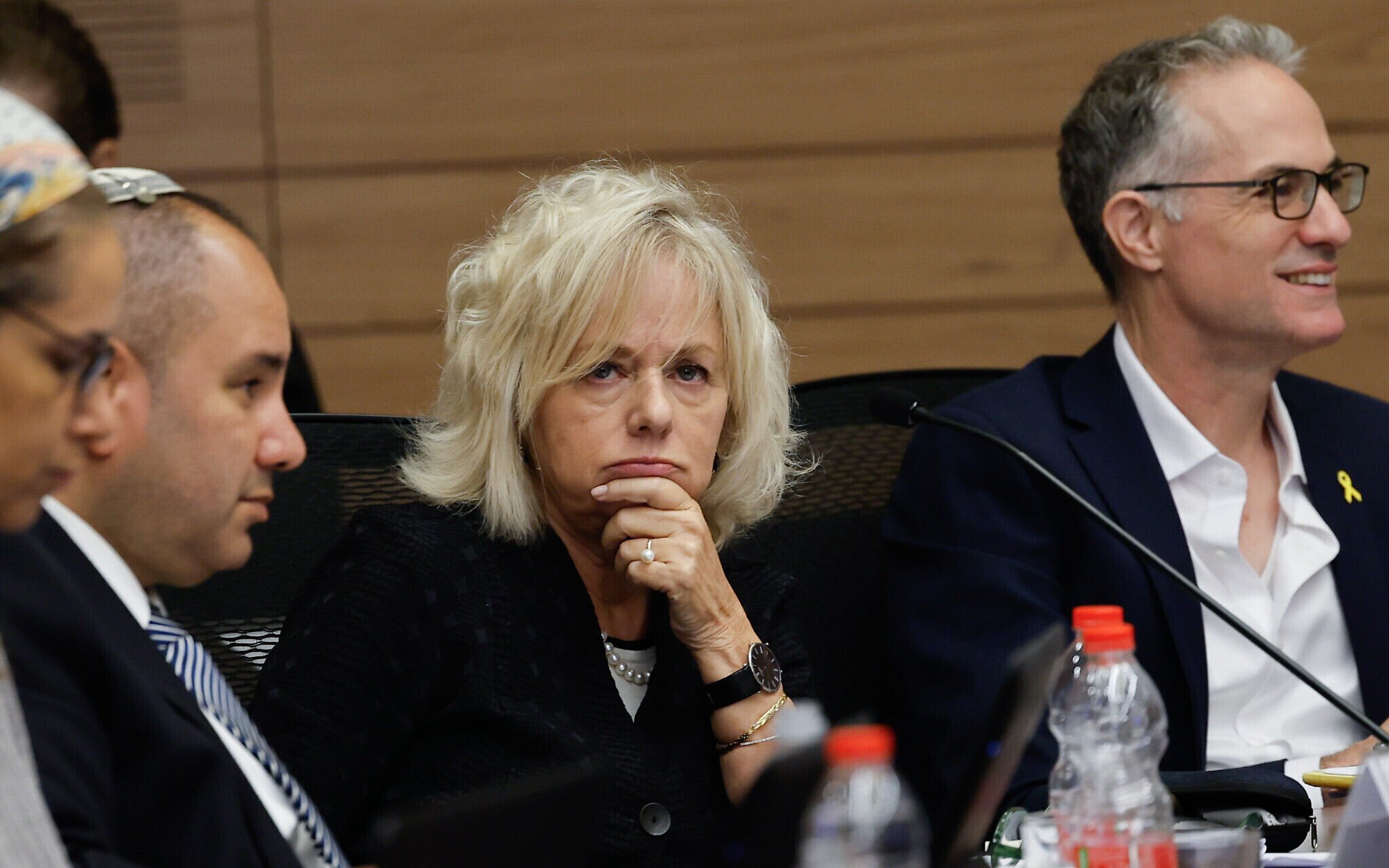
Attorney General Gali Baharav-Miara attends a hearing of the Knesset Constitution, Law and Justice Committee in Jerusalem, September 30, 2025. (Oren Ben Hakoon/ Flash90)
In her filing to the High Court this month, Baharav-Miara called on the justices to compel Netanyahu “to explain why he is not removing National Security Minister Itamar Ben Gvir from his position.”
Through a “continuous (sometimes sophisticated) system of pressure” on police officers, Ben Gvir has inappropriately intervened in the force’s operations concerning anti-government protesters, the status quo on the Temple Mount and protection for Gaza-bound aid trucks,” the attorney general wrote in her 68-page opinion on the petitions.
“At this time, there is no alternative but to conclude that the public cannot be protected from the systematic actions meant to harm the independence of the police,” wrote Baharav-Miara.
The two officials have long been at odds, but a detente appeared possible last April when Ben Gvir agreed to a compromise limiting his powers over police investigations and promotions, and his dealings with anti-government protests. The compromise was reached as a precondition set by Baharav-Miara before she would agree to defend him in court against the petitions demanding his dismissal.
But since then, the attorney general and national security minister have fought over all of those matters. Baharav-Miara has slammed Ben Gvir for blocking the promotion of an officer, pushing for a crackdown on protests, and interfering in investigations.
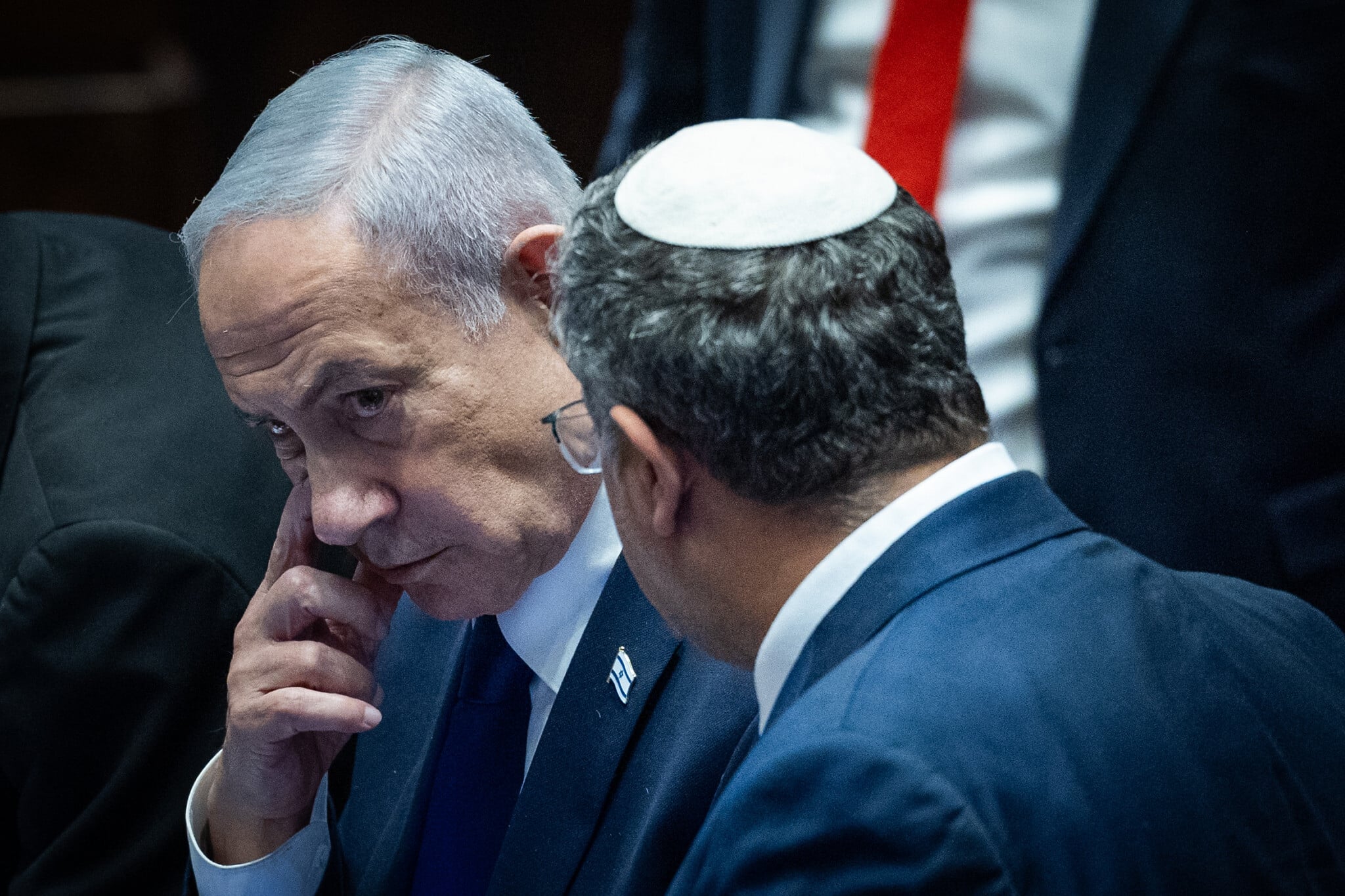
Prime Minister Benjamin Netanyahu speaks with National Security Minister Itamar Ben Gvir during a ’40-signature’ debate at the Knesset in Jerusalem, on November 10, 2025. (Yonatan Sindel/Flash90)
In December, Baharav-Miara wrote to Netanyahu that the petitions against Ben Gvir have earned a “factual and legal foundation” due to the minister’s actions.
She noted that the court had okayed Ben Gvir’s appointment in December 2022, upon the formation of the government, despite petitions that argued he was ineligible to oversee police, given his history of racist statements and criminal record, including a conviction for supporting a Jewish terror group.
At the time, the court took into account Ben Gvir’s statements that he had changed, and judges also assumed “the professional independence of the police would be maintained and the minister wouldn’t serve as an ‘uber-commissioner’” of police, Baharav-Miara noted.
But that assumption no longer held, wrote the attorney general, accusing Ben Gvir of illegally overstepping the bounds of his position and interfering in internal police matters on a regular basis.
At a cabinet meeting at the beginning of this month, Netanyahu reportedly proclaimed that he would not fire Ben Gvir, and his cabinet secretary said that do so would mark “the end of democracy.”
In comments on Monday at a faction meeting of his Otzma Yehudit party, Ben Gvir said the efforts to remove him from office were part of an illegal “coup” and were a threat to “the foundational principle of democracy.”
“A group of bureaucrats is trying to strip the Knesset, the government, and the ministers of their authority,” he said. “This is simply a coup against democracy being carried out in complete violation of the law.”
Jeremy Sharon and Sam Sokol contributed to this report.
You appreciate our journalism

You clearly find our careful reporting valuable, in a time when facts are often distorted and news coverage often lacks context.
Your support is essential to continue our work. We want to continue delivering the professional journalism you value, even as the demands on our newsroom have grown dramatically since October 7.
So today, please consider joining our reader support group, The Times of Israel Community. For as little as $6 a month you’ll become our partners while enjoying The Times of Israel AD-FREE, as well as accessing exclusive content available only to Times of Israel Community members.
Thank you,
David Horovitz, Founding Editor of The Times of Israel