
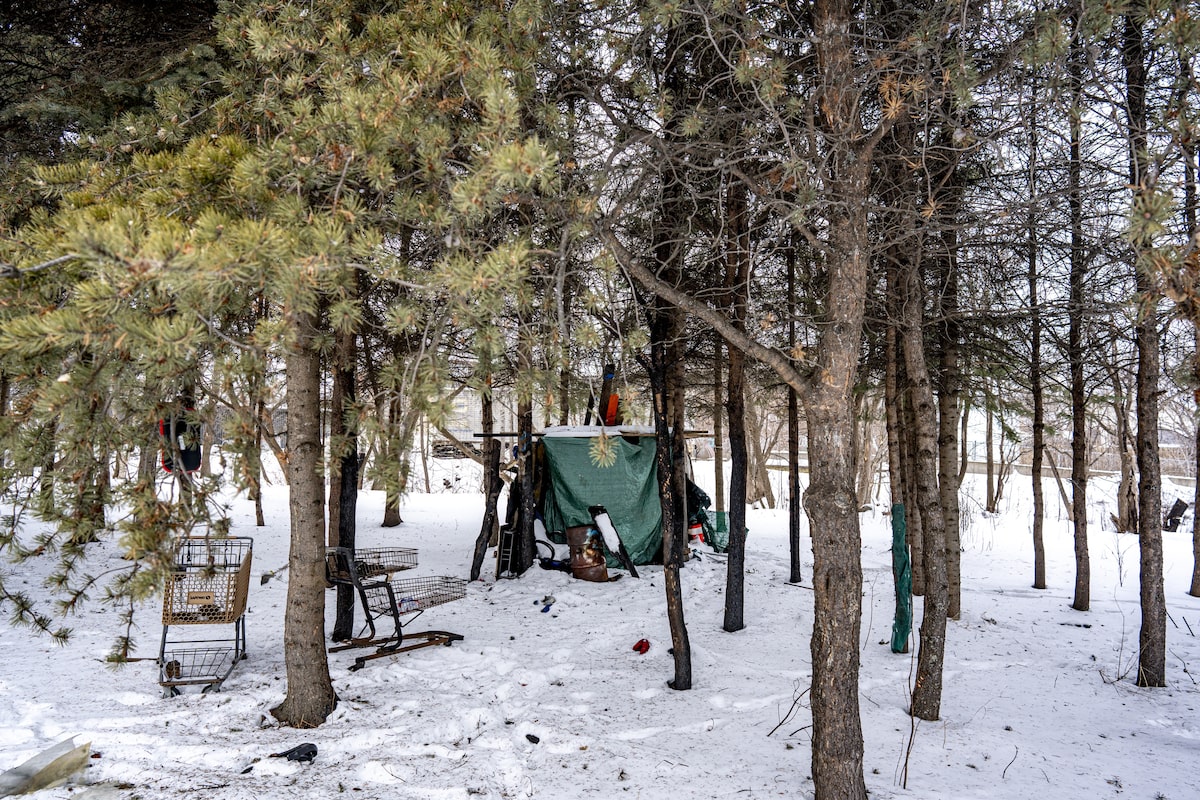
An encampment in Freedom Park in Thunder Bay, Ont., on Feb. 18.David Jackson/The Globe and Mail
Homelessness in rural and northern parts of Ontario is surging and growing faster than any other part of the province, with fewer resources to address the crisis, according to a new report.
The report released Tuesday by the Association of Municipalities of Ontario, which represents 444 communities, found that homelessness continues to increase across the province but is particularly acute in northern and rural regions and among Indigenous people.
According to the report, homelessness in rural communities grew by more than 30 per cent in 2025, and in Northern Ontario, homelessness increased by more than 37 per cent compared with the previous year.
After taking drastic steps on opioids, an Ontario city struggles to find its footing
Since 2021, homelessness in the north has increased by approximately 117.5 per cent, the report said.
Homelessness in the north now accounts for 10 per cent of the total number in the province, despite representing only 5 per cent of the population, the report found.
In total, nearly 85,000 people in Ontario were known to be homeless last year, an increase of almost 8 per cent from 2024 and nearly 50 per cent since 2021, which coincides with the early years of the COVID-19 pandemic.
The report also said people are remaining homeless for longer periods of time, with more than half “chronically homeless,” meaning they have been without a home for at least six months or have cycled in and out of homelessness repeatedly.
Encampments, such as tents cropping up in public parks, have also continued to grow. There were nearly 2,000 across the province last year, compared with about 1,400 in 2023. Most encampments are small, typically involving fewer than 10 people per site, the report said.
Caught in Ottawa’s drug crisis, a homeless woman searches for a new life
Opinion: What do encampments offer that shelters don’t? A chance to build community
Lindsay Jones, AMO’s executive director, said in an interview that homelessness has shifted from an issue that was once believed to affect only larger urban settings.
“It really is, I think, an indictment of failing social systems, particularly in the north. Incomes are just not growing at the same level as expenses, and the level of investment in social supports is not keeping pace with that gap,” she said.
“You also see in the north in particular challenges related to Indigenous homelessness.”
The report said at least 13 per cent of homeless Ontarians are Indigenous, despite accounting for only about 3 per of the province’s population.
Ms. Jones added that the toxic drug crisis is also contributing to the problem. She said smaller communities are not able to keep pace with what is required to address homelessness and called on the province to increase funding for social housing and other services.
In Dufferin Grove, a big tent of compassion for homeless encampments begins to fray
She said municipalities in Ontario are on the hook for the largest share of housing and homelessness funding, and that isn’t the case in other areas of the country.
According to the report, public housing and homelessness funding totalled $4-billion last year, but it also said municipalities are increasingly absorbing the cost of managing higher and more persistent levels of homelessness through local service delivery.
Ms. Jones said recent federal initiatives such as Build Canada Homes, which is meant to quickly build affording housing at scale, are welcome, but there needs to be sustained capital investment to meet demand.
AMO reiterated their previous call for an immediate injection of $2-billion over three years to increase social services and supportive housing, as well as $11-billion over 10 years to create affordable housing units.
The report said even under a steady economic scenario, homelessness in Ontario would double over the next 10 years and could grow to almost 300,000 people in an economic downturn.