
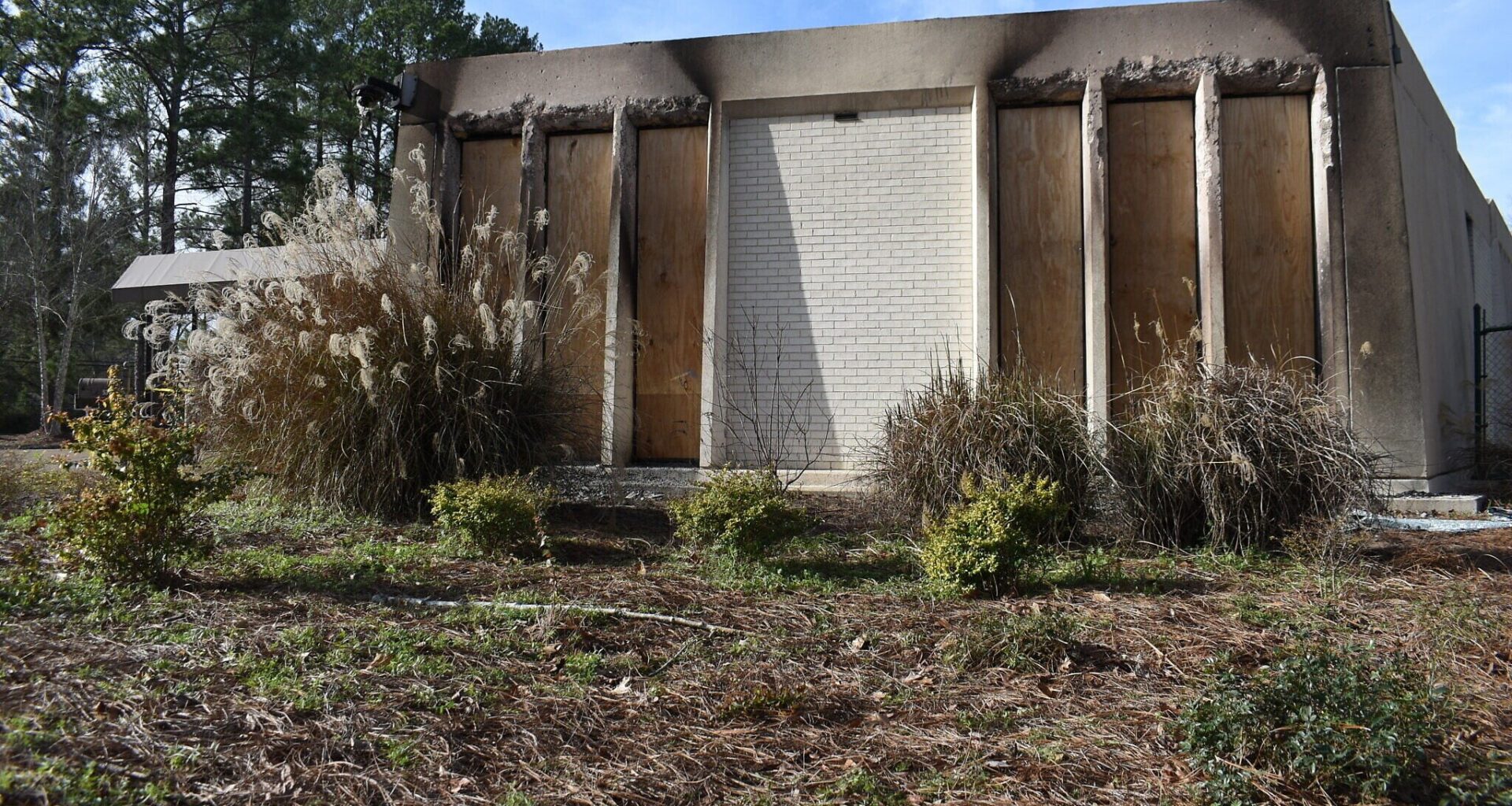
The FBI said on Monday that the suspect in an apparent US arson attack against a Mississippi synagogue confessed and admitted to antisemitic animus.
Stephen Spencer Pittman, 19, “confessed to lighting a fire inside the building due to the building’s Jewish ties,” an FBI investigator wrote in a criminal complaint filed in the federal Southern District court of Mississippi.
The complaint said that a review of security footage showed the perpetrator lit the fire inside the synagogue in the early morning hours on Saturday.
The hooded arsonist was seen in the footage pouring liquid in the building from what appeared to be a gas canister, the complaint said.
Pittman’s father contacted the FBI to say his son had confessed to the fire. The confession was corroborated by data from a Life360 tracking app on Pittman’s phone, Pittman’s text messages to his father, and burns on Pittman’s ankles, hands, and face.
Get The Times of Israel’s Daily Edition
by email and never miss our top stories
By signing up, you agree to the terms
The tracking app showed that Pittman traveled from his home in Madison County, Mississippi, stopped at a gas station, then went to the synagogue, the complaint said.
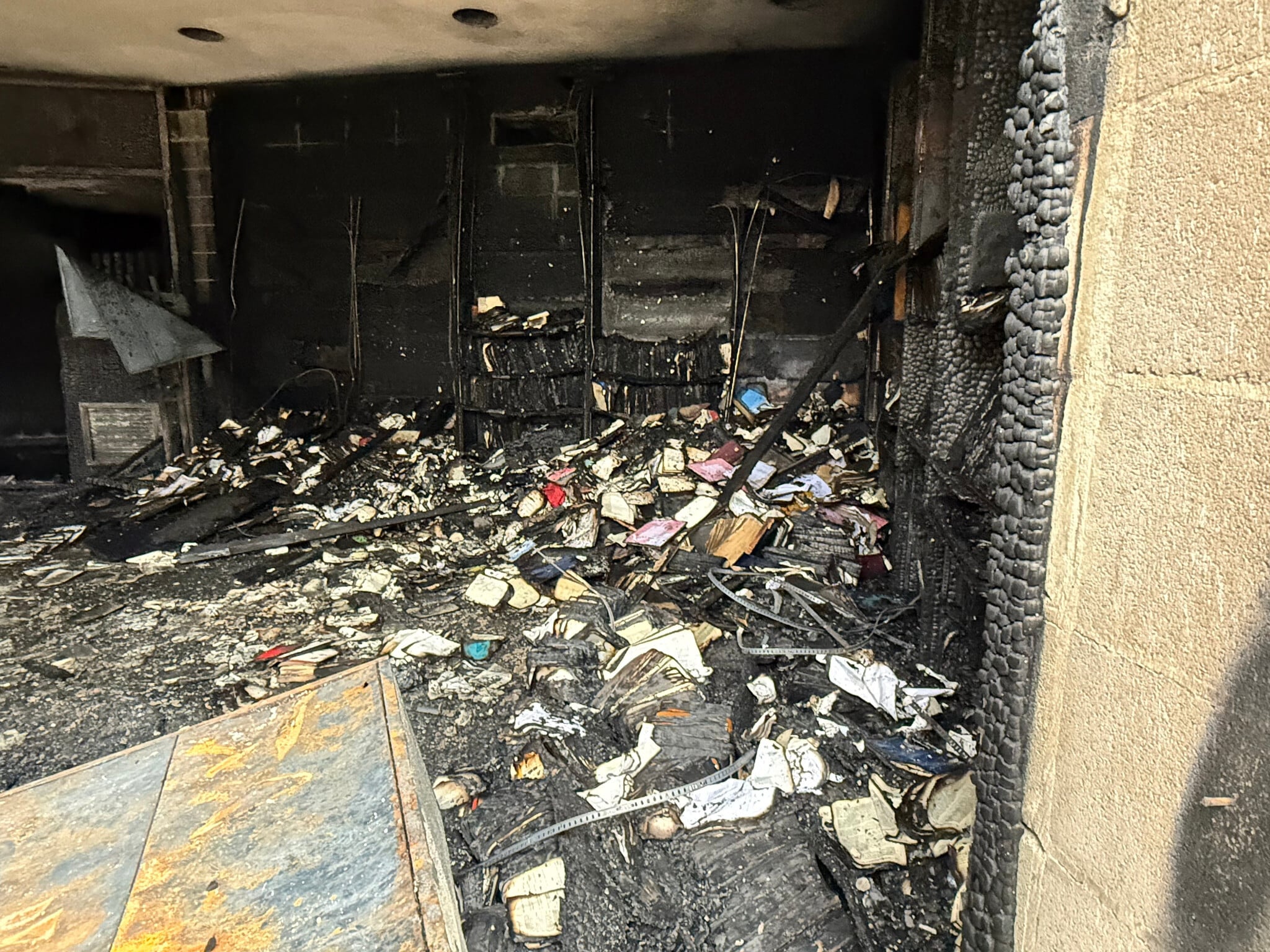
This photo provided by Beth Israel Congregation shows damage sustained during a fire, January 10, 2026, at Beth Israel Congregation, in Jackson, Mississippi. (Beth Israel Congregation via AP)
From the scene of the fire, Pittman texted his father photos, saying, “My plate is off,” apparently referring to his license plate, and “Hoodie is on.”
Pittman’s father pleaded with him to come home, then confronted him in the morning. Pittman told his father that he broke a window at the synagogue, went inside, and lit the fire.
“Pittman laughed as he told his father what he did and said he finally got them,” the complaint said.
During an interrogation, Pittman referred to the building as the “synagogue of Satan.”
Pittman was charged with a federal law criminalizing the use of fire to maliciously damage or destroy property and faces five to 20 years in prison.
The fire ripped through the Beth Israel Congregation shortly after 3 a.m. on Saturday, authorities said. No congregants or firefighters were injured in the blaze. Firefighters arrived to find flames billowing out of windows and all doors to the synagogue locked, the chief of investigations for the Jackson Fire Department, Charles D. Felton Jr., said in a statement.
The fire destroyed portions of the building, including two Torah scrolls, and rendered the synagogue unusable for the foreseeable future.
The synagogue’s library and administrative offices were destroyed in the fire, as were two Torah scrolls stored in the library. The main sanctuary was not damaged, and the Torahs there were later removed for safekeeping. A Torah rescued from the Holocaust and stored in a glass case was not damaged.
The synagogue’s president, Zach Shemper, said in a statement that he hoped services would continue uninterrupted in a new location.
“We are still assessing the damage to the building but will be continuing our worship services and other programs – locations to be determined,” he wrote. “Several churches have extended kind offers for Beth Israel congregants to use their buildings as a worship space as we rebuild.”
“We are a resilient people,” he added.
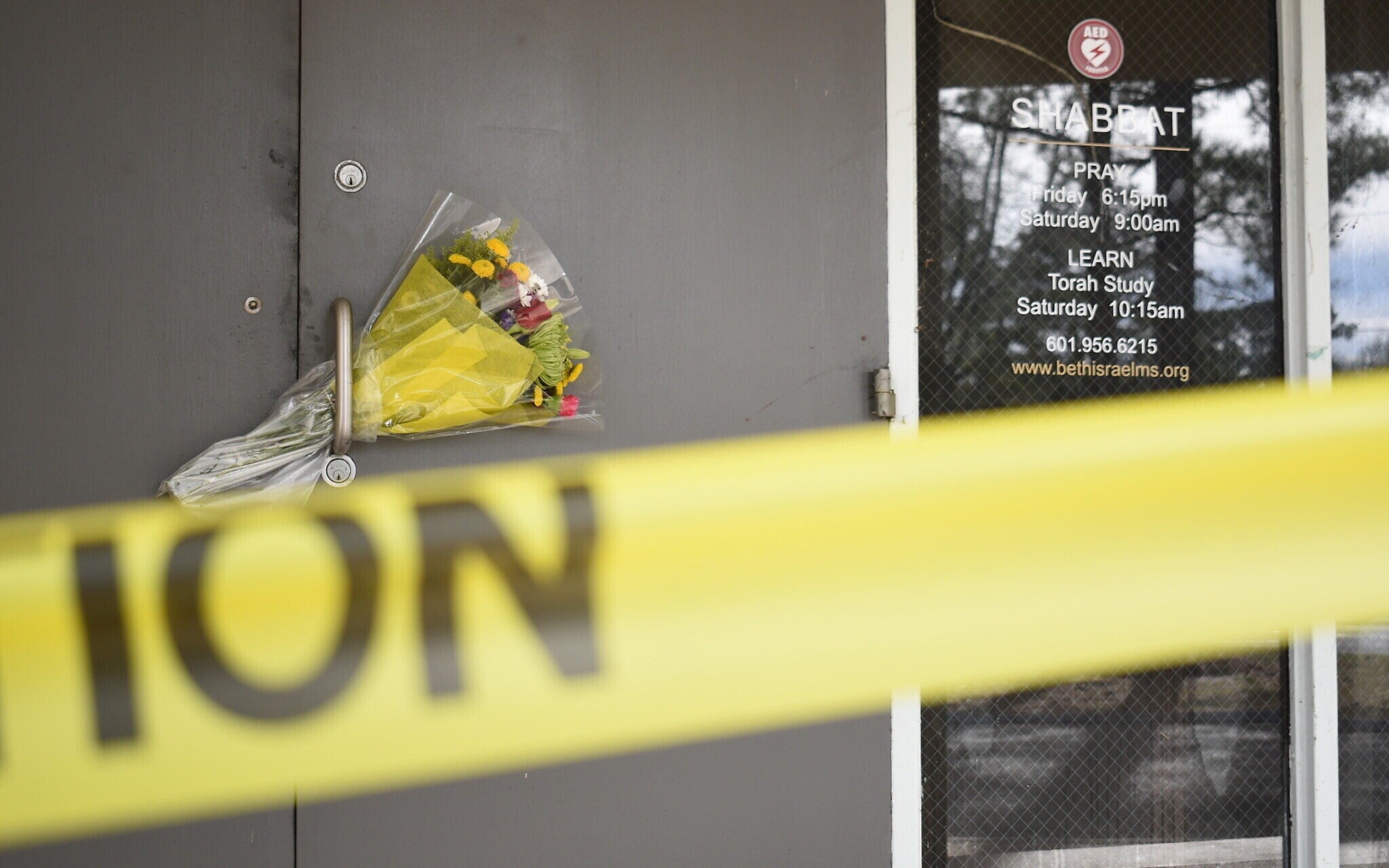
Caution tape and flowers cover the entrance to the Beth Israel Congregation, a synagogue that was set on fire, January 12, 2026, in Jackson, Mississippi. (AP Photo/Sophie Bates)
Beth Israel Congregation is the only synagogue in the city of Jackson, and is believed to be the largest of the 14 or so synagogues in Mississippi. The Reform temple was established in 1860, the first one built in the southern US state that today is home to about 3,000 Jews.
The synagogue has previously faced other fires, as well as bomb threats, Shemper noted.
The synagogue was attacked in 1967 by members of the white supremacist Ku Klux Klan hate group who targeted its rabbi, Perry Nussbaum, for his work supporting civil rights.
As antisemitism has risen across the world since the Hamas massacre of October 7, 2023, in Israel, synagogues across the United States have increasingly faced bomb threats, vandalism, and other attacks. Recent years have seen several hate attacks on US synagogues, including the 2018 terror attack on the Tree of Life Synagogue in Pittsburgh, in which a gunman killed 11 people and wounded six others during Shabbat services.
Members of the Goldring/Woldenberg Institute of Southern Jewish Life, an organization serving Jewish communities in 13 southern states that had its base in Beth Israel’s building, thanked members of the community, including local Christian and interfaith groups, for reaching out with support.
The synagogue has put out a call for donations on its website, saying it has already received tremendous support from the community.
Is accurate Israel coverage important to you?
If so, we have a request.
Every day during the past two years of war and rising global anti-Zionism and antisemitism, our journalists kept you abreast of the most important developments that merit your attention. Millions of people rely on ToI for fact-based coverage of Israel and the Jewish world.
We care about Israel – and we know you do too. So we have an ask for this new year of 2026: express your values by joining The Times of Israel Community, an exclusive group for readers like you who appreciate and financially support our work.
Already a member? Sign in to stop seeing this
You appreciate our journalism

You clearly find our careful reporting valuable, in a time when facts are often distorted and news coverage often lacks context.
Your support is essential to continue our work. We want to continue delivering the professional journalism you value, even as the demands on our newsroom have grown dramatically since October 7.
So today, please consider joining our reader support group, The Times of Israel Community. For as little as $6 a month you’ll become our partners while enjoying The Times of Israel AD-FREE, as well as accessing exclusive content available only to Times of Israel Community members.
Thank you,
David Horovitz, Founding Editor of The Times of Israel