
Sign up for the Slatest to get the most insightful analysis, criticism, and advice out there, delivered to your inbox daily.
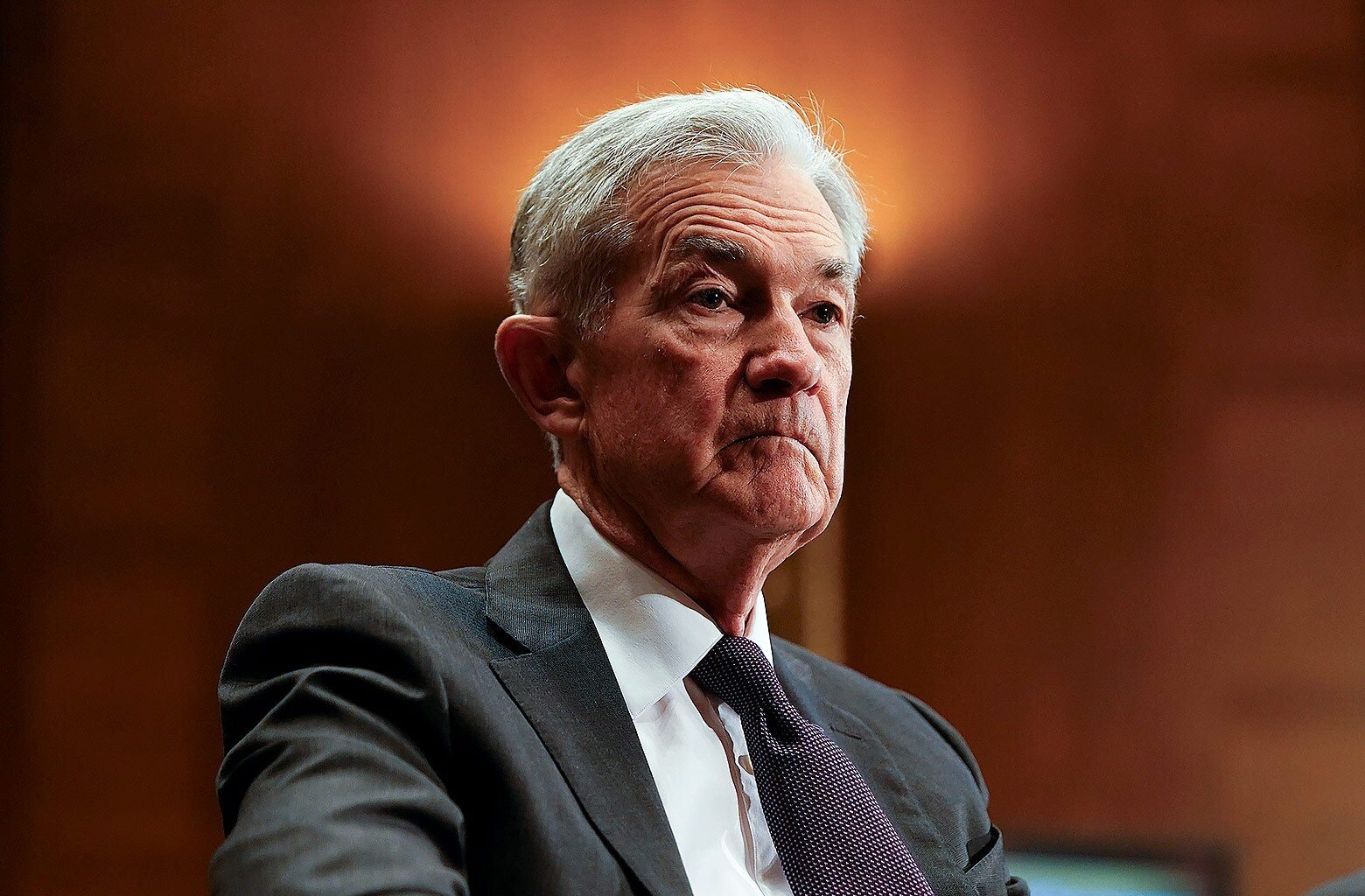
Donald Trump’s Justice Department is exploring a prosecution of Federal Reserve Chair Jerome Powell. The nominal reason is Powell’s oversight of an excessively expensive construction project on a new Fed building in Washington. That’s not the real reason, though.
Is America about to join the proud ranks of countries whose leaders meddle in central-bank decisionmaking and bring about economic ruin? Are Trump’s henchmen just having some authoritarian fun at Powell’s expense? And is Trump inflicting a grave injury upon himself? Let’s discuss.
Why is Donald Trump obsessed with Jerome Powell?
During COVID-19, the economy was bad. To make the economy less bad, the Federal Reserve slashed the federal funds rate to just north of zero. The economy got less bad after that, but a good economy’s cousin, inflation, showed up at the party. So the Fed fulfilled the other part of its duty as seesaw master of the economy and raised interest rates, seeking to curb inflation.
Trump, for political purposes, would like to have a hotter economy. In service of that goal, he wants interest rates to go back down low, low, low. But inflation remains stubborn, even though the government shutdown made it appear artificially low the previous time the federal government put out a big report on it. The Fed, charged with supporting price stability and maximum employment, did cut rates last year. But it did so very slowly and has not yet reduced them to anywhere near COVID levels.
Trump, of course, is pissed. Since the first few weeks of his second administration, the president has pushed the Fed—led by Powell—to lower interest rates. At first, Trump was vaguely friendly about it, posting things like “Lets Rock and Roll, America!!!” By the spring, he was calling Powell a “major loser” and a “fool” who “doesn’t have a clue” about monetary policy. That is all well and good, but Trump can’t really do anything about it, because the Fed is (or, well, is supposed to be) insulated from political pressure.
What’s the big deal about the building renovations?
So the president can’t fire Powell just because he hates the way he approaches cutting or raising interest rates. However, Trump can fire the Fed chair for cause (legitimate reasons, like misconduct). That’s why the White House has been murmuring about investigating Powell for fraud connected to alleged overspending on the Fed headquarters renovations. These murmurs culminated on Friday in the DOJ’s serving grand-jury subpoenas to the Fed as part of a criminal investigation into those claims.
Then, on Sunday evening, the Federal Reserve posted a video of Powell speaking about the criminal investigation. “The threat of criminal charges is a consequence of the Federal Reserve setting interest rates based on our best assessment of what will serve the public, rather than following the preferences of the president,” Powell said.
The video was astonishing. It is virtually unprecedented for a sitting Fed chair to call out the sitting administration so directly—and also to claim that it’s threatening criminal charges to muscle its way to a preferred monetary policy. Powell makes it clear that this has nothing to do with fraud and everything to do with political pressure.
Didn’t Trump himself nominate Powell for Fed chair once upon a time?
Yeah, in 2017. Sounds like someone played himself!
Is the president’s theory of interest rates even correct?
Trump is not what you would call a “details guy.” His understanding of interest rates is that “rate cut = roaring economy.” People who study monetary policy for a living—which is to say, not Trump—would tell you it’s not that black and white. Aggressively cutting interest rates while inflation continues to run roughshod over the economy may well not result in what the president wants. We played out this scenario in the Richard Nixon era, and it did not go well for the typical American consumer or job seeker.
Obviously, whether or not Trump is right won’t alter his behavior. But why would he send his enforcers after Powell now, of all times?
Powell’s statement suggests he thinks that the president is angling for “intimidation.” Some third-party market analysts have suggested the same. Then again, it’s also possible that Trump just has no self-control.
If we grant the premise that Trump is bullshitting when he says he “doesn’t know anything” about the investigation into Powell, we still have to wonder why he’d bother. Powell’s term as Fed chair runs only until May. If Powell has already put up with nearly a year of Trump’s excoriating him in public and trying to whip his supporters into a frenzy about him, yet he still hasn’t pushed for lower rates, what does the president think will change in the next three-ish months?
How concerned should we, the normal, non–Wall Street people of the U.S., be about this?
In the short term, not that concerned.
How about long term?
Extremely concerned.
Why?
An independent Federal Reserve has been crucial to the dual American traditions of people having jobs and the stock market going up. Not that this does you any good if you’re currently unemployed or underemployed, but very rarely are even 1 in 10 Americans looking for work and unable to find it. The line graph of U.S. stock-market performance resembles a mountain that would be hard to hike up.
If the Fed has to make decisions based on what the president wants, these things could become endangered. Countries with politicized central banks sure do have a lot of big problems with hyperinflation and economic downturn. Take, for example, Turkey, which saw five central bank governors fired or replaced between 2019 and 2024 by President Recep Tayyip Erdoğan for refusing to cut interest rates. Since then, the country’s currency has collapsed, and the inflation rate spiked from about 20 percent in 2021 to more than 85 percent in 2025.
You mentioned stocks. Would a nonindependent central bank mess with my retirement?
It’s hard to say for certain, but I would rather not find out, personally. The great genius of the American stock market is that over a long enough time horizon, it has only gone up. You do not really have to know anything about the stock market, apart from that key fact, to reliably make money on it. Part of the reason straightforward index-fund investing has been such a wealth generator for average joes like us is that the United States has been a stable place for companies to do business since the dawn of modern capitalism. It’s hard to imagine anything more important to that air of stability than the independent Fed, which guarantees that certain economic conditions won’t change just because the wrong madman wins an election.
The stock market went up on Monday, though. What gives?
It didn’t just go up. It notched a record finish, because markets have a sense of humor. We could read Monday’s market returns in two ways: One, gravity just doesn’t apply to the American stock market anymore. (This would be a fair read.) Two, the market doesn’t think Trump will succeed in ousting Powell and believes that the Fed will assert itself over the long haul. It’s hard to paint with a broad brush, though. Gold investors are spooked by Trump’s threats, although if you had a dollar for every time gold investors doubted the sanctity of the modern financial system, you’d have thousands of dollars.
What are Trump’s chances of success, then?
This Content is Available for Slate Plus members only
You’ve Heard About Who ICE Is Recruiting. The Truth Is Far Worse. I’m the Proof.
This Content is Available for Slate Plus members only
Trump’s Transparent Persecution of Jerome Powell Is About to Backfire Badly
This Awards Season Officially Has Its Villain
The Golden Globes Had No Idea How to Handle TV’s Hottest New Show
That’s the several-trillion-dollar question, isn’t it? We still have no idea if Trump will go through with attempting to fire Powell. If he did, the word attempt would be load-bearing. Powell has made it abundantly clear that he will not go quietly into the night. Whether via a firing attempt or an escalation of the DOJ probe that Powell tried to stop, the matter would likely fall to the Supreme Court, where the outcome would be anyone’s guess.
But the Supreme Court pretty much just lets the president do whatever he wants, right? Isn’t that what he’s banking on—the unconditional support of Republican politicians serving on the court?
A fair instinct. But a majority of the court seems to think that Trump’s imperial powers cover all areas of global life except his right to mess with the rest of the country’s money. Trump could lose a big tariffs case as soon as this week. And last April, when he tried to fire Lisa Cook, a member of the Fed’s board of governors, the court got in his way, at least for the time being. As Slate senior writer Mark Joseph Stern says: “Jerome Powell has one of the very few jobs that this Supreme Court wants to protect from Trump’s interference (for reasons that have nothing to do with law).”
Jim Newell
How One Republican Senator Is Stymieing Trump’s Attack on the Fed
Read More
Is there a chance this really backfires, then?
It sure could. For one thing, Powell may now be emboldened to hang around the Fed as a non-chair governor for much longer than planned. Trump has also pissed off two of the less malleable Republican senators, Lisa Murkowski and Thom Tillis. They’re at least acting as if they’re going to halt Trump’s other Fed nominees until this situation resolves to their liking. It would be a weird own goal on the president’s part, making it harder for himself to install a pliant sycophant in the chair’s job just a few months from now.
The Fed issue aside, isn’t this just Trump continuing his recent tradition of using the Justice Department to go after his enemies?
Yeah.
Shouldn’t that be a bigger part of reporting this story?
Either thing would be a presidency-altering scandal in any other administration in history. In this one, it’s another day of the week ending in the letter y.

Sign up for Slate’s evening newsletter.