
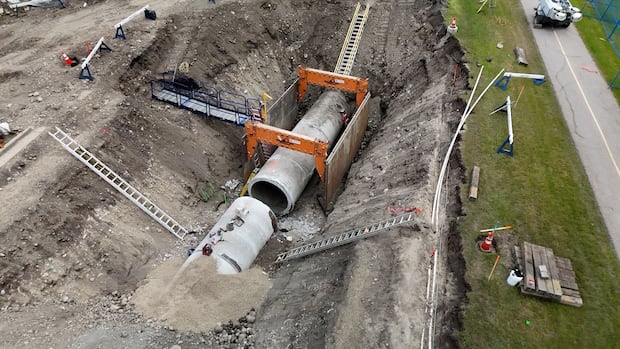
Days after Calgary’s mayor urged sparing no expense to build a replacement water main due to a pair of catastrophic breaks in 18 months, one city councillor is advising caution.
An independent panel report was released last Wednesday. Council peppered the panel with questions late into the night in a marathon session before voting unanimously to begin work on the recommendations.
City administration will now report back to council early next month on how to implement the report’s suggestions. The panel recommended an accelerated timeline to build a replacement pipe as well as a dedicated water utility department to better manage the system.
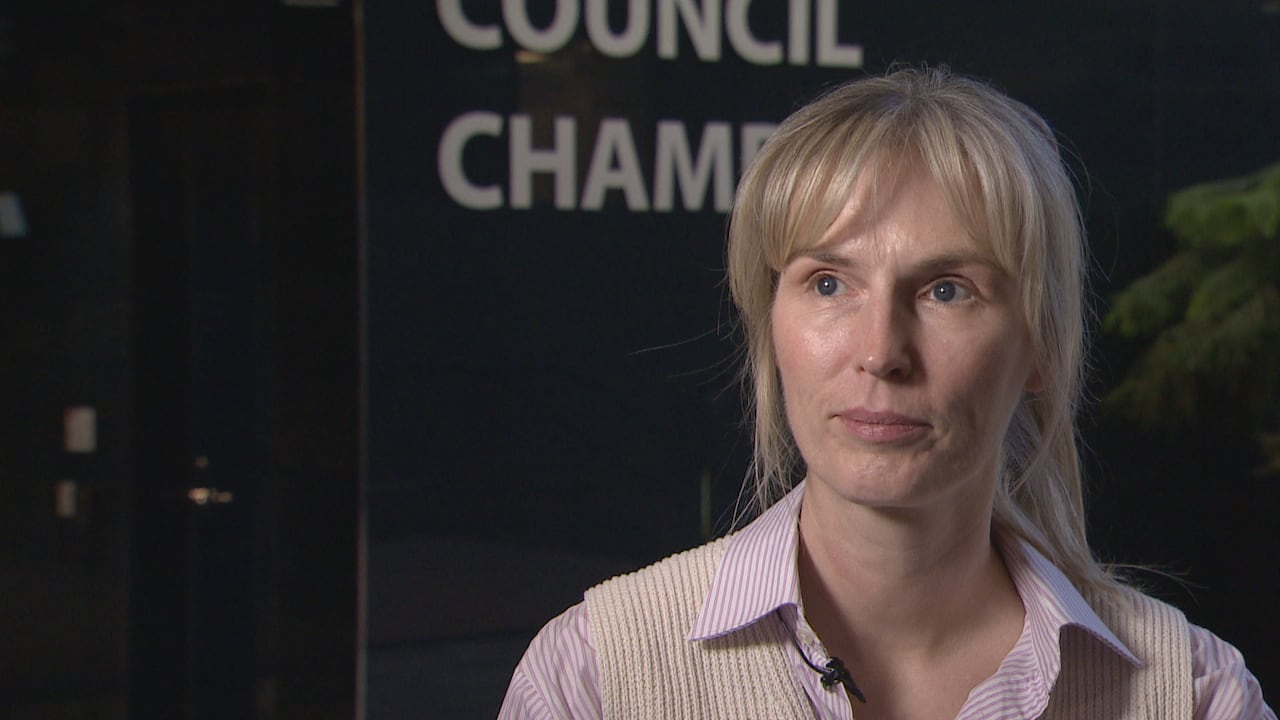 Ward 2 Coun. Jennifer Wyness is worried city council is being pressured to act too quickly in response to an independent panel’s recommendations on Calgary’s water utility. (Brendan Coulter/CBC)
But Ward 2 Coun. Jennifer Wyness stressed that council can’t ignore doing its due diligence to ensure it’s not making decisions that will prove to be too costly for Calgarians in the long run, just because the water system is currently in crisis.
Her comments came as Calgary still has water restrictions in place after the Bearspaw line ruptured again on Dec. 30, leading to significant flooding in the city’s northwest.
“This infrastructure was installed between 1930 and the 1970s, and it’s all blowing up across North America. So let’s get it right,” Wyness said.
The call to accelerate twinning the Bearspaw feeder main could lead to errors if the city doesn’t take the proper time to plan for disruptions and for where the new pipe would be built, Wyness added.
She said she’s worried council is being pressured to act too quickly, and that the city will be criticized even more if it rushes a new pipe’s construction leading to unnecessary costs or future breaks that stem from poor planning.
Now also isn’t the right time to discuss introducing a new water utility department, Wyness said.
“You do not start making organizational decisions during a failure of infrastructure,” Wyness said.
“You have to get the pipe up and running, start providing water to the region, before you start debating what the next step is or going on a witch hunt on who to blame.”
When administration advises council on the city’s next steps in February, Wyness said she wants to see more costing of the panel’s recommendations to know how the suggested changes could impact Calgarians’ utility bills.
Ward 10 Coun. Andre Chabot has also expressed skepticism about the report’s recommendations — especially around introducing a standalone corporation to manage water, similar to Enmax on electricity.
He said he’s unsure why the panel said city council isn’t moving quickly enough, when from his perspective they’re working as fast as they can while following legislative obligations.
“Administration has to weigh in about how they’re going to action it, where the money’s going to come from, where the funding source is going to be, whether it’s property taxes, debt, reserves,” Chabot said.
“All of these things are things council has to take into consideration when moving forward with the recommendations.”
‘No such thing as moving too quickly’
Other council members support more urgent action.
Mayor Jeromy Farkas said Monday he welcomes a robust debate on council, but argued the city can’t move too quickly to improve its water system’s reliability.
“We are committed to doing absolutely everything necessary to ensure that we solve this for good, not just for next week, not just for next year, but for the next hundred years. Our council is tasked, rightly or wrongly, with solving this once and for all,” Farkas said.
“We cannot afford to continue to pass the buck. So no, there’s no such thing as moving too quickly on this. Calgarians need to know that their water supply is safe and reliable.”
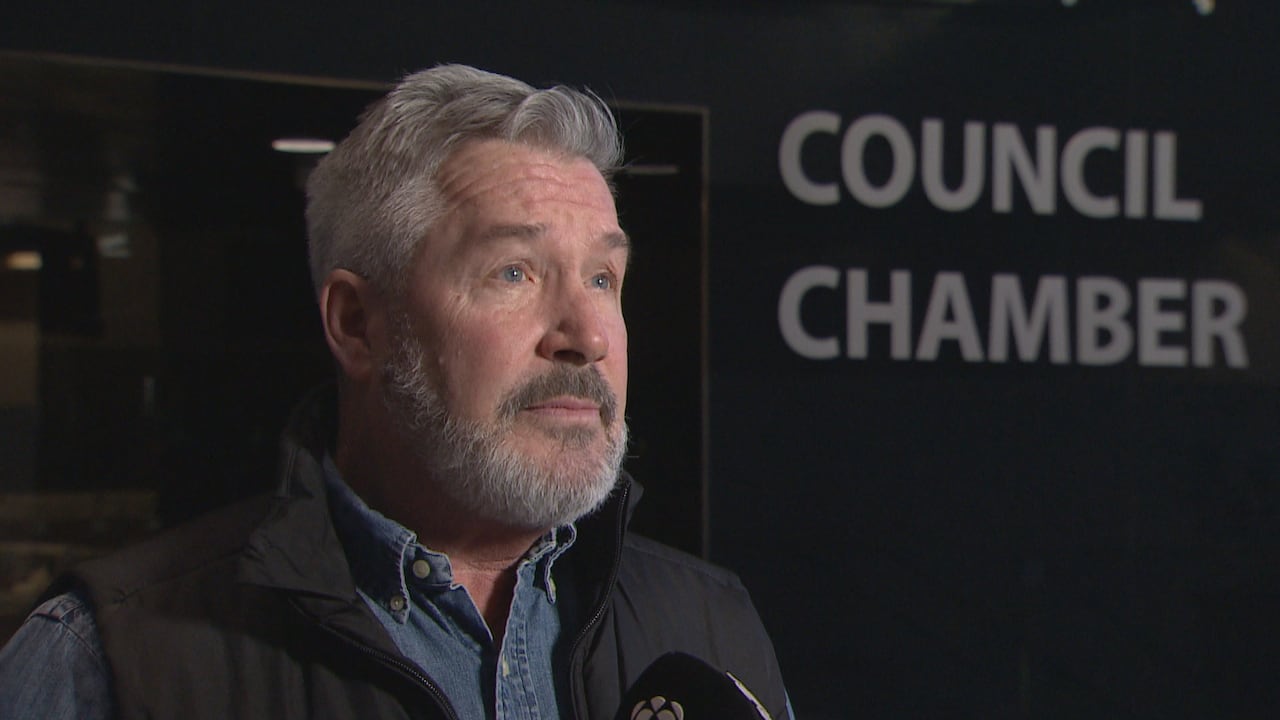 Ward 13 Coun. Dan McLean argues city hall must move quickly to implement independent panel recommendations to improve Calgary’s water system. (Brendan Coulter/CBC)
Farkas isn’t alone on council in wanting to see the report’s recommendations implemented quickly.
The mayor said last week that council can’t “cherry-pick” which recommendations it accepts from the panel. Ward 13 Coun. Dan McLean agreed Monday that council should accept all of the panel’s suggestions.
“I think we should act as fast as we can,” McLean said.
“The longer we delay, the more that people are without water. The reason we are in this situation is because we delayed, we procrastinated.”
After council spent last Wednesday extensively questioning the panel, McLean said following up on their suggestions shouldn’t be delayed another month. He added he’ll be suspicious if administration’s suggestions on how to move forward next month differ significantly from what the panel presented.
“If they start mucking around with it, and get their fingerprints all over it … then we’re back to square one,” McLean said.
Panel chair wants urgent items prioritized
Siegfried Kiefer, the panel’s chair, stressed the need for council to act urgently when it comes to the report’s most timely recommendations.
The panel’s suggestions were divided into urgent, near-term and long-term points, and Kiefer said he was disappointed council lumped all of the recommendations into one bucket instead of focusing on the most time-sensitive concerns.
“Let’s deal with the immediate now, let’s get emergency actions taken, such that administration can deal with the current circumstance of an outage and replacing that fragile piece of infrastructure as quickly as we can,” Kiefer said.
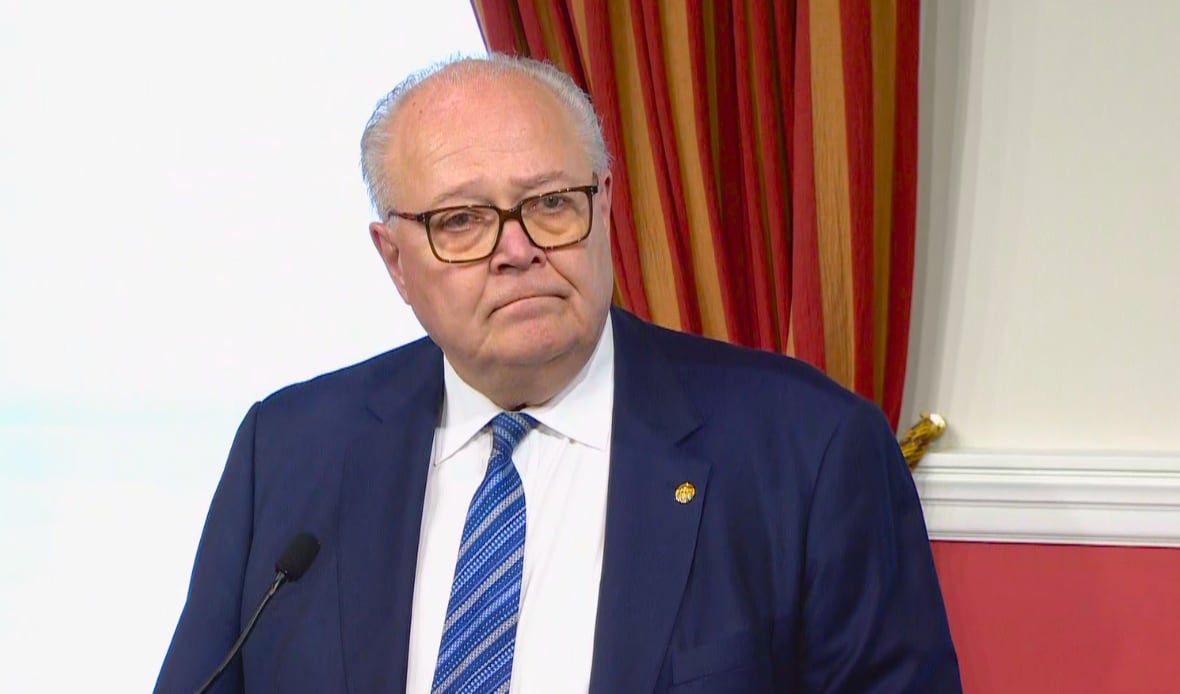 Siegfried Kiefer chaired a panel that studied the 2024 failure of the Bearspaw south feeder main. (CBC News)
Kiefer said longer-term discussions about how to manage the city’s water supply more effectively can be debated later while work to twin the pipe and bolster Calgary’s water supply is prioritized.
Kiefer clarified, though, that the best outcome from the panel’s report will be to have complete transparency around the water utility and how it’s managed. He agreed that how the utility’s management changes should be communicated well with residents.
“We need to present that completely transparently to the citizens, to ensure we are comfortable with what’s going on,” Kiefer said.
“The report essentially says let’s get after being transparent and creating a management structure that is completely accountable to do that.”