
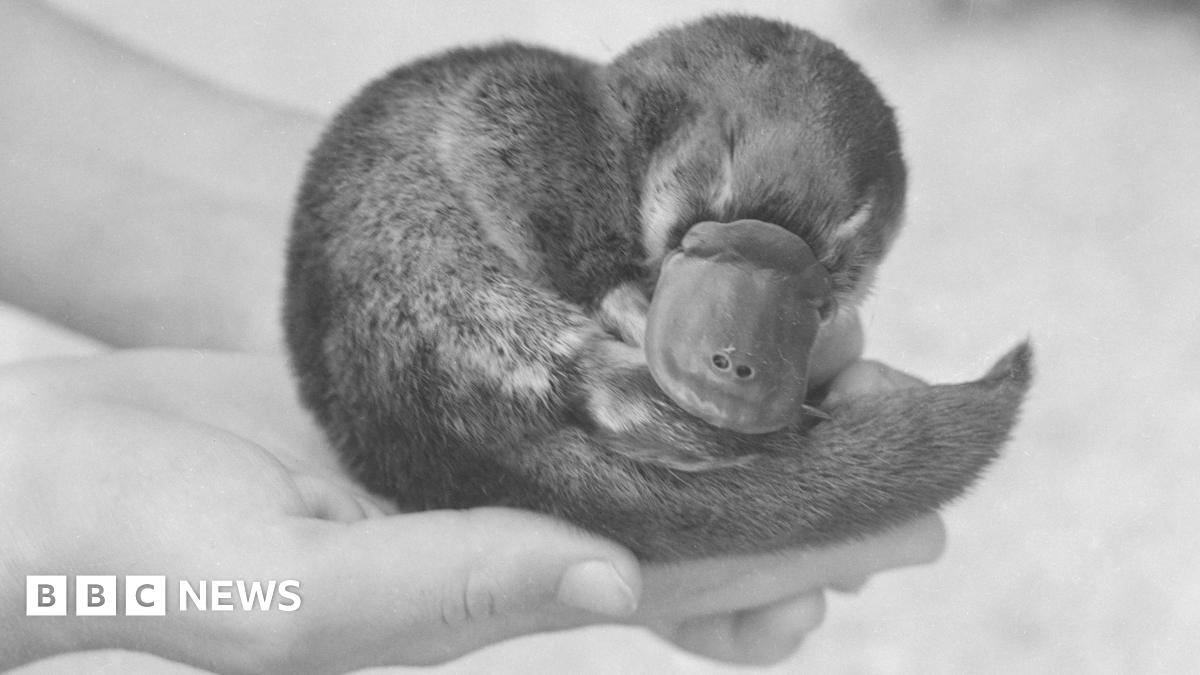
Platypus are solitary creatures, but New York had been promised lovers. And while Cecil was lovesick, Penelope was apparently sick of love. In the media, she was painted as a “brazen hussy”, “one of those saucy females who like to keep a male on a string”.
Until 1953 that is, when the pair had a four-day fling – rather upsettingly described as “all-night orgies of love” – fuelled by “copious quantities of crayfish and worms”.
Alas, Penelope soon began nesting, and the world excitedly awaited her platypups, which were to be a massive scientific milestone – only the second bred in captivity, and the first outside Australia.
After four months of princess treatment and double rations for Penelope, zookeepers checked on her nest in front of a throng of excited reporters.
But they found no babies – just a disgruntled-looking Penelope, who was summarily accused of faking her pregnancy to secure more worms and less Cecil.
“It was a whole scandal,” Mr Cowan says – one from which Penelope’s reputation never recovered.
Years later, in 1957, she would vanish from her enclosure, sparking a weeks-long search and rescue mission which culminated in the zoo declaring her “presumed lost and probably dead”.
A day after the hunt for Penelope was called off, Cecil died of what the media diagnosed as a “broken heart”.
Laid to rest with the pair was any real future for platypus diplomacy.
Though the Bronx Zoo would try to replicate the exchange with more platypuses in 1958, the finnicky beasts lasted under a year, and Australia soon tightened laws banning their export. The only two which have left the country since have lived at the San Diego Zoo since 2019.