
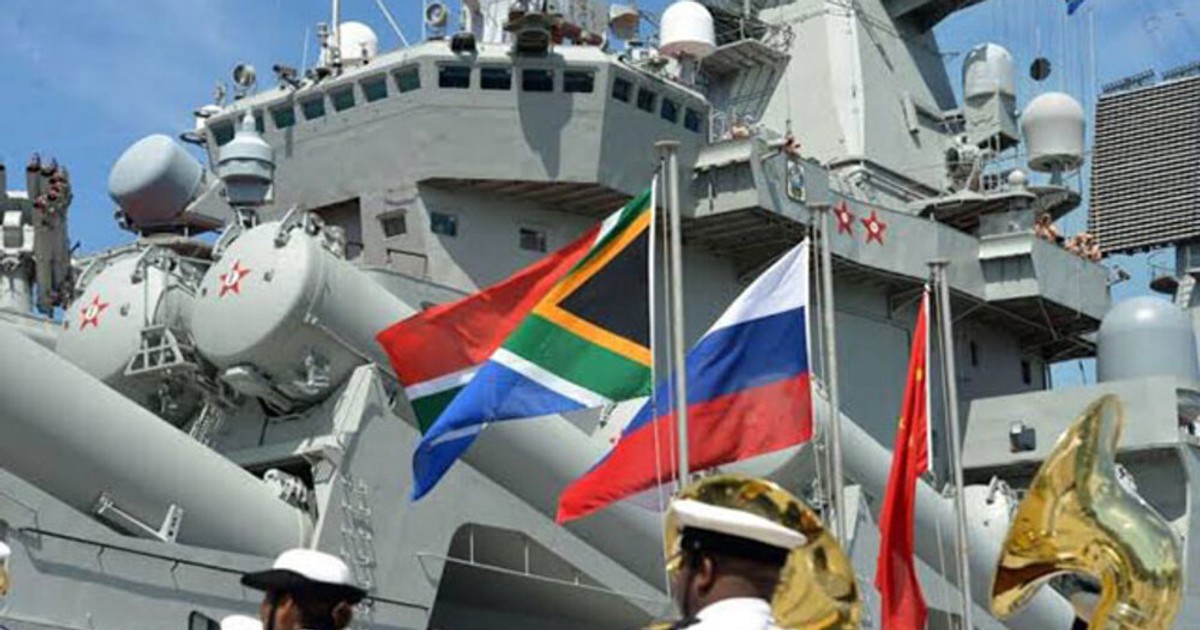
South Africa has asked Iran to withdraw its ships from active participation in the ‘Will for Peace’ naval exercise and instead take part as observers following diplomatic discussions.
According to News24, Iran accepted the request, and two Iranian naval vessels that had arrived at Simon’s Town Naval Base are now expected to withdraw before the exercises begin, reflecting Pretoria’s efforts to avoid worsening tensions with Washington.
South Africa reportedly asked Tehran to step back due to concerns that Iran’s visible military presence could jeopardise sensitive trade and diplomatic relationships with the United States.
The drills, branded “Will for Peace 2026,” are being led by China and involve several BRICS and BRICS-Plus countries, including Russia and South Africa.
“Effective immediately, any country doing business with the Islamic Republic of Iran will pay a tariff of 25% on any and all business being done with the United States of America. This Order is final and conclusive,” Trump said in a post on his Truth Social platform.
Why Trump’s Iran tariff threat rattled South Africa

South Africa is one of the largest beneficiaries of U.S. trade preferences under the African Growth and Opportunity Act (AGOA), which grants duty-free access to the American market for a wide range of African exports.
Pretoria is currently seeking an extension of those benefits, making it especially sensitive to U.S. political and economic pressure at a time of growing global fragmentation.
Iran, meanwhile, remains a major global trading state despite sanctions.
According to the World Bank, the country exported goods to 147 trading partners in 2022, with key markets including China, Iraq, the United Arab Emirates, Turkey and Germany. It is also a member of OPEC, giving it continued strategic importance in global energy markets.
By stepping back from the naval drills, Iran avoids putting South Africa in a more difficult diplomatic position, while Pretoria reduces the risk of being caught in the crossfire between Washington and Tehran.
The episode highlights how U.S. economic leverage – particularly tariffs, can reshape even military cooperation among emerging powers, exposing the limits of BRICS+ solidarity when major trade relationships are at stake.