
Unlock the Editor’s Digest for free
Roula Khalaf, Editor of the FT, selects her favourite stories in this weekly newsletter.
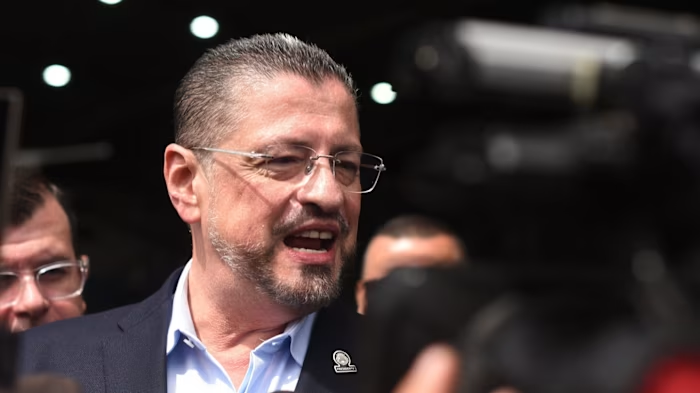
The head of Costa Rica’s intelligence service said on Tuesday an alleged plot to kill outgoing President Rodrigo Chaves had been uncovered ahead of the Central American country’s February 1 elections.
Jorge Torres, head of the Intelligence and National Security Directorate (DIS), reported the allegations to the attorney-general’s office. Torres told reporters the information had been received from a “confidential source” and was “painful”.
He declined to go into details but media reports said a woman had allegedly hired a hitman to kill the conservative leader, who has faced efforts to charge him with corruption. “This is an exceptional case. We can’t take any risks with the life of the president of the republic,” he said.
The country’s reputation as a haven of stability has been undermined by a rise in organised crime, including a transnational crime group dubbed the South Caribbean Cartel.
Chaves, who has an approval rating of 63 per cent according to recent polls, has built a reputation as being tough on crime. However, analysts have criticised the DIS as ineffective. Polls show crime and security are the top voter concern ahead of the February vote.
News of the purported plot came on the day Chaves, who cannot seek re-election, was due to meet President Nayib Bukele of neighbouring El Salvador.
The two leaders were expected on Wednesday to visit the site of a planned high-security prison, modelled on El Salvador’s notorious CECOT jail, and Bukele was set to lay the first stone.
Spokespeople for the Costa Rican and Salvadoran presidents did not immediately respond to requests for comment.
“This is unthinkable,” said one senior Costa Rican official, who asked not to be named. “[Chaves] is a divisive figure but you have to take this seriously.”
Chaves last month avoided the second attempt in six months to strip him of his presidential immunity to face charges of wrongdoing, which he has denied.
Legislators in December blocked a bid by the electoral authority to prosecute him for alleged electoral meddling. Presidents are barred from commenting on elections, including expressing support for their own party.
In July, the country’s Supreme Court had also sought to have Chaves’s immunity lifted so he could be tried on corruption charges, but lawmakers also blocked the move. The president has accused the judiciary and prosecutors of trying to stymie his reform agenda.
Pre-election polls show Laura Fernández of the Sovereign People’s Party and Chaves’s former chief of staff has a commanding lead in a fragmented, 20-strong field in which at least a third of voters are undecided.
Fernández, who has vowed to continue Chaves’s tough stance on crime, is polling around 40 per cent — the threshold needed to avoid a run-off in April — according to an Americas Society/Council of the Americas poll-tracker.