
When news broke of U.S. forces attacking and seizing Venezuela’s Nicolás Maduro earlier this month, Barry Blacklock’s phone began buzzing.
The Calgarian had lived in Venezuela for 17 years, becoming a permanent resident and working in the energy sector before leaving in 2009.
“That night I was getting emails from friends in Canada and since then, 50, 60 different WhatsApp messages, emails, phone calls from people,” he said, during a video call interview from Mexico.
He’s now helping co-ordinate a contingent of companies looking to invest and bring equipment to Venezuela, where there could be a huge wave of demand for their services in the years ahead. He had organized a similar group back in 2019, when it appeared there might be a regime change, though that never materialized.
“Obviously, a change is coming. We’re just not sure what it is yet,” said Blacklock, an entrepreneur with over 40 years of experience in the international oil and gas sector.
Alberta has numerous oil workers and companies with experience all over the world. The recent intervention in Venezuela, along with U.S. President Donald Trump’s stated plan to rejuvenate the country’s oil industry, is creating cautious excitement among some in Alberta’s energy sector. But a plethora of challenges remain, including an unstable government and uncertainty about the level of U.S. involvement.
A potential opportunity
Venezuela has the world’s largest proven crude reserves, at an estimated 303 billion barrels. But its oil industry has been starved of new investment, equipment and technology for two decades, due to government corruption, hostility and state control.
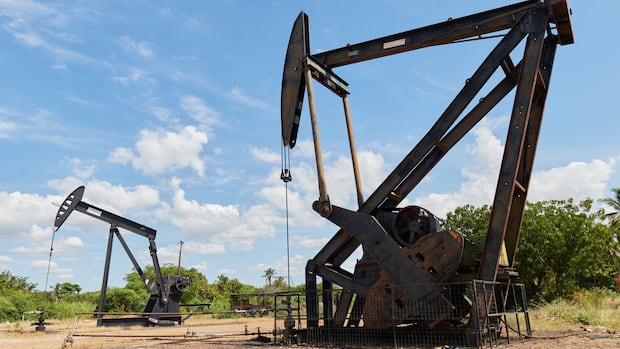
“A lot of the oilfields have been neglected. They’re not producing,” Blacklock said. “The equipment, the wellheads, the pumps — a lot of the equipment on the surface has been stolen or just allowed to deteriorate so it has no value. It will all have to be replaced.”
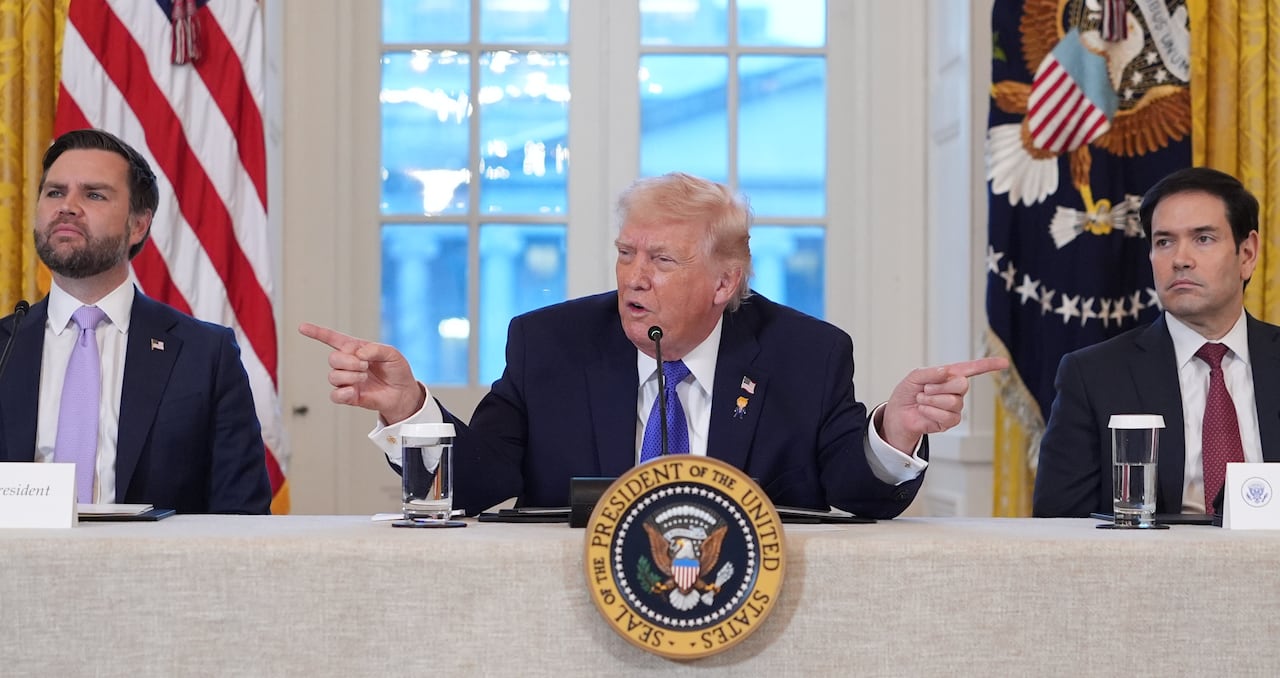 U.S. President Donald Trump speaks during a meeting with oil executives in the East Room of the White House on Jan. 9, in Washington, D.C. (Evan Vucci/The Associated Press)
For foreign companies, there’s potential for profit. That’s especially true for those in Alberta, many of which work with heavy oil similar to the crude found in Venezuela.
“In Canada, we have a great capability and potential to offer Venezuela in bringing all of those technologies,” said Amit Mankekar, who operates consulting companies in Canada and Colombia, “which have advanced significantly over the last few decades that Venezuela has missed.”
Adam Waterous, executive chair of Strathcona Resources, told Reuters this week he would quickly assemble a technical team from his company, Canada’s fifth-largest oil producer, to go to Venezuela if asked.
Healthy hesitancy
Any level of excitement comes with a healthy dose of hesitancy about all the challenges of working in Venezuela.
“What are the taxes going to be? What are the royalties going to be? Is that going to be fair and comparable to other jurisdictions in the world?” said Blacklock.
“Are Canadians going to be safe if they go there to work?”
Meanwhile, U.S. sanctions persist, and it’s not clear how open the U.S. and Venezuelan governments will be in allowing Canadian companies to operate in the country — or how long the U.S. will be involved. The rebuilding effort would likely take several years and billions of dollars, experts say, considering the current state of infrastructure.
WATCH | Trump’s odds of rejuvenating Venezuela’s oil industry:
Can Trump really get Venezuela’s oil flowing again? | About That
The Trump administration is taking over Venezuela’s oil industry following the removal of President Nicolás Maduro. Andrew Chang breaks down the significant obstacles the U.S. faces, President Donald Trump’s claims of ‘stolen’ oil, and explores whether the operation is worth the trouble.
Trump hosted nearly 20 executives of major oil companies at the White House last week and has asked for at least $100 billion US in oil industry spending for Venezuela. No Canadian companies were present.
The response was lukewarm, as many executives expressed caution.
“We have had our assets seized there twice, and so you can imagine to re-enter a third time would require some pretty significant changes from what we’ve historically seen and what is currently the state,” ExxonMobil CEO Darren Woods said at the White House.
“Today, it’s uninvestable.”
‘Family you never saw again’
Any foreign company, including those in the U.S., will need to be assured of government stability, legal protections and certainty that contracts will be honoured, industry leaders say.
There will also need to be security for the workforce.
“Venezuela doesn’t have laws that could be respected by anybody,” said Pedro Pereira-Almao, a former University of Calgary professor, who describes the country as a failed nation.
“How many Venezuelans are going to volunteer to go immediately back there to start working in a hostile environment?”
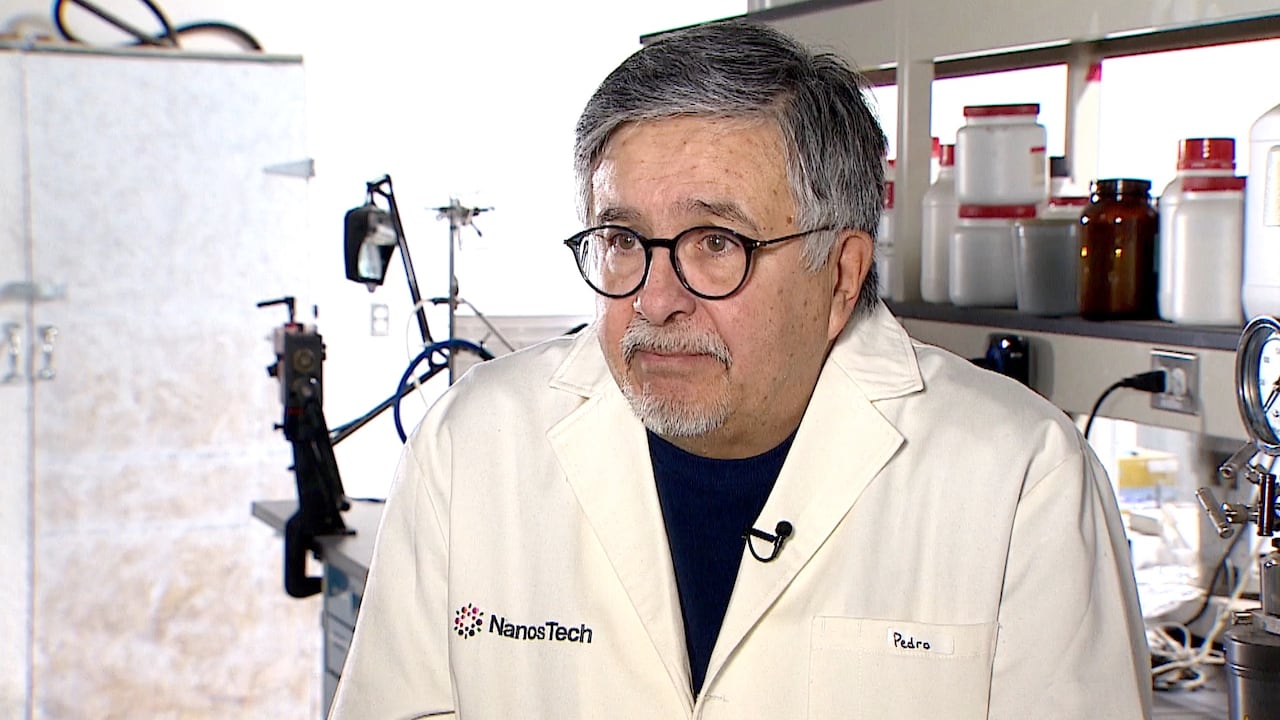 Pedro Pereira-Almao is the co-founder of Calgary-based NanosTech. The company has 22 employees, half of which are Venezuelan. (Monty Kruger/CBC)
It’s a question he himself is pondering. Pereira-Almao grew up in Venezuela and spent 14 years at Petróleos de Venezuela, S.A., the state-owned oil and gas company, including as manager of heavy oil processing.
After Hugo Chavez rose to power in 1999, he took aim at the oil industry by nationalizing the assets of some foreign companies and firing thousands of workers at the state-owned company — primarily management and technical experts — including Pereira-Almao in 2003.
“It was a tragedy for everyone,” he said, becoming emotional as he described that period of his life.
“It’s difficult to see people that worked with you and were killed,” he said. “Friends and family that you never saw again.”
Looking ahead
Before anyone goes to Venezuela, there must also be political and economic support from the U.S., Pereira-Almao said.
He’s still in contact with former colleagues he could see playing some sort of role in Venezuela’s energy industry, if the situation in the country improves.
“Before that, I won’t go,” he said. “Now I feel more confident that people in a year or two years, we can go to Venezuela and contribute.”
He wouldn’t move to Venezuela permanently, he said, but could collaborate with others.
WATCH | Trump wants U.S. oil execs in Venezuela: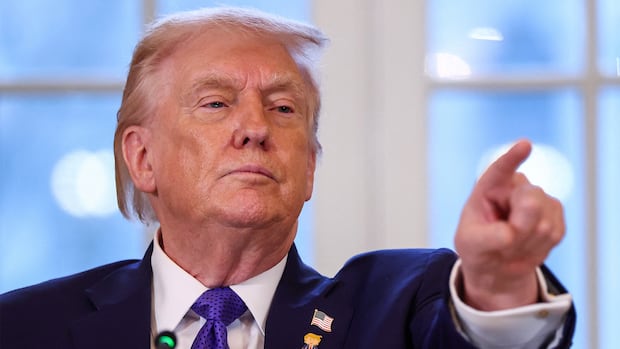
Trump pushes wary U.S. oil execs to move into Venezuela
U.S. President Donald Trump is urging top oil executives to move quickly on developing Venezuela’s vast oil reserves. But few seem eager to jump in with both feet in the days after U.S. forces seized Venezuelan President Nicolás Maduro.
“Do we need technology? What type of technologies? Who are the best providers?” he said, listing off many other ways he could assist as a chemical engineer.
Any increase in output by Venezuela, once one of the world’s largest oil producers, would likely compete with the heavy oil exported from Western Canada, especially to refineries on the U.S. Gulf Coast.
Over the last week, Canadian heavy oil prices have traded at a larger discount to North American prices because of that prospect, even though most of Alberta’s exports are destined for the U.S. Midwest, which experts say would be less impacted.
That reality isn’t lost on Blacklock, who admits there are mixed feelings about the business opportunity for Alberta energy companies in Venezuela.
“Regardless, what happens when that Venezuelan oil, if and when it starts hitting the market, it’s going to impact the Canadian industry,” he said.
“It could very well take away market share.”