
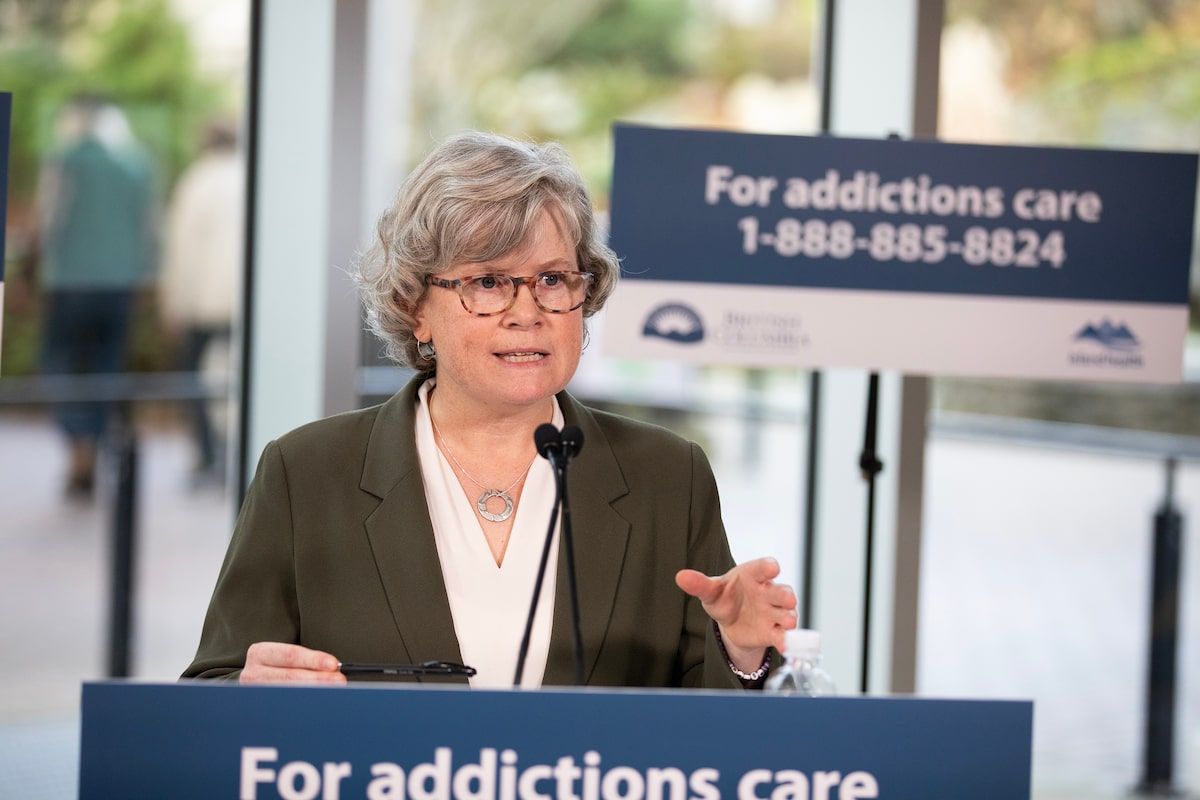
B.C. Minister of Health Josie Osborne says the province’s drug decriminalization pilot ‘hasn’t delivered the results that we hoped for.’CHAD HIPOLITO/The Canadian Press
British Columbia is ending its contentious drug decriminalization pilot.
Health Minister Josie Osborne said Wednesday that the province will not be applying to Health Canada to extend its exemption from the federal Controlled Drugs and Substances Act, which expires Jan. 31.
“Our intention was clear: to make it easier for people who are struggling with addiction to come forward and seek help,” she said.
“From the beginning, this pilot was designed as a time-limited trial with ongoing monitoring built in so we could understand what was working, what wasn’t, and where changes were needed. However, the pilot hasn’t delivered the results that we hoped for.”
André Picard: What has three years of decriminalization of drug possession yielded in B.C.?
Health Canada granted B.C. an exemption from the federal Controlled Drugs and Substances Act to decriminalize personal possession of up to a total of 2.5 grams of opioids, cocaine, methamphetamine and MDMA for people 18 years and older. The exemption came into effect on Jan. 31, 2023.
In removing criminal penalties for personal drug possession, provincial and federal officials sought to lessen the stigma of addiction and steer people away from the justice system and toward health and social services.
However, complaints soon mounted over public drug use – an issue that police said they had limited ability to respond to under decriminalization. The province made successive amendments restricting where the policy would apply, its latest iteration effectively only permitting personal drug possession inside private residences and sanctioned shelters.
Kora DeBeck, a professor in the School of Public Policy at Simon Fraser University, expressed frustration at the notion that decriminalization “failed,” citing data that showed the policy was doing what it was intended to do.
Underexposed Opinion: Living and dying through B.C.’s overdose crisis
One study she co-authored, published in the December edition of the International Journal of Drug Policy, found that young, street-involved drug users in Vancouver reported fewer policing-related barriers to accessing harm-reduction services under decriminalization. Another, published in the same edition of the journal, found the policy led to a significant reduction in criminal justice encounters for drug possession.
Dr. DeBeck said drug decriminalization is a “very limited intervention” and that objectives around stigma reduction and getting more people into treatment were oversold.
“The only thing it can really do is take away some of the well-documented, known harms of criminalization, and of interactions between police and people who use drugs,” she said.
“It wasn’t, and has never been, set up to be a comprehensive approach to managing the challenges of addiction and substance use and the toxic drug supply. In that context, we need housing, we need services, and we need regulated alternatives to the toxic drug supply.”
More to come.